
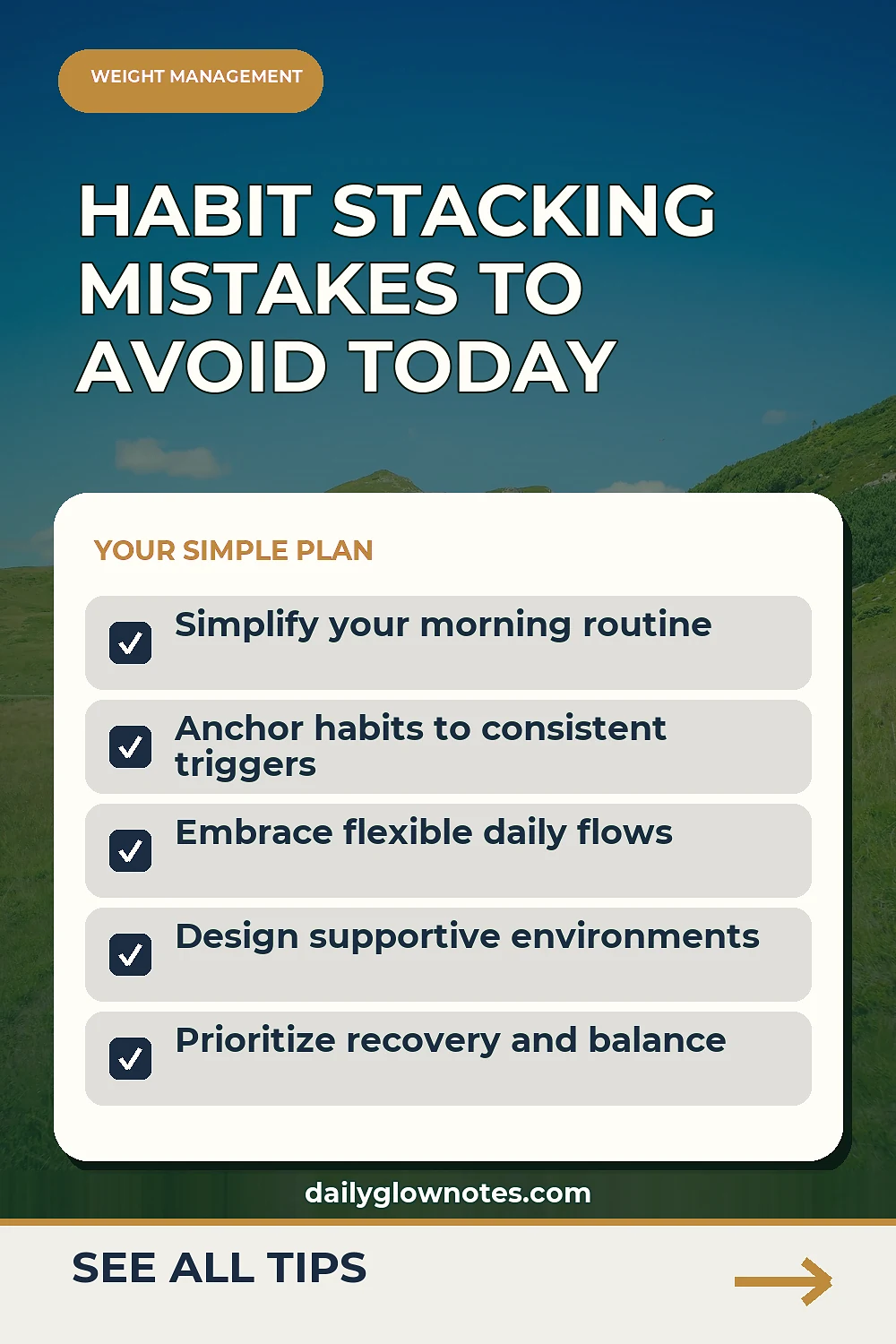
When you first discover the concept of pairing behaviors together, the temptation to stack five or six new tasks onto your morning coffee is overwhelmingly high. You might try to drink a full liter of water, stretch for ten minutes, read a chapter of a book, review your daily to-do list, and plan out your meals all before stepping out the door. Habit stacking mistakes that slow down daily consistency for busy women often start right here, with too much ambition at once. When a routine becomes a complex choreography rather than a simple flow, cognitive fatigue sets in before the day even begins. Sustainable weight management relies on routines you can maintain effortlessly on your most stressful days, not just your most motivated ones. Instead of layering multiple new demands onto an existing anchor like brewing your morning coffee, choose just one supportive habit to integrate. Let your morning cup of coffee simply be a quiet moment with an open notebook and pen, perhaps paired with a single glass of water, keeping your mental energy conserved for the rest of your day.
Overcomplicating Your Morning Routine
Ignoring the Strength of Your Anchor Habit
The foundation of any successful habit stack is the anchor—the established behavior you already perform automatically every single day, such as brushing your teeth or waiting for your tea to steep. A common misstep is attaching a new wellness habit to an anchor that is inconsistent or unpredictable. If you try to anchor a post-lunch walking routine to a lunch break that constantly shifts in timing or duration, the entire stack collapses because the trigger is missing stability. Successful habit stacking requires anchoring new actions, like preparing a balanced lunch with simple high protein meal prep ideas for balanced daily energy, to an anchor that happens at the exact same time and place every day. Look closely at your daily rhythm and identify fixed points of consistency. By anchoring your low-impact movement or hydration goals to these reliable anchors, you remove the friction of decision fatigue and make consistency second nature.
Treating Stacks as Rigid Rules Rather Than Flexible Flows
Life rarely unfolds according to a rigid schedule, yet many women build their daily routines with zero room for error. If your habit stack requires you to complete a strict twenty-minute movement session immediately following your morning routine, missing that specific window can make you feel like the entire day is ruined. This all-or-nothing mindset frequently stalls progress because it turns healthy living into a source of stress rather than support. Effective habit stacking should feel adaptable. If your schedule changes, your routine should be flexible enough to bend without breaking. Consider how you might weave a five-minute movement break into an afternoon lull instead of forcing yourself into an unachievable morning timeline, drawing inspiration from a gentle approach like a five-step morning light and movement sequence to keep your daily activity flowing smoothly. Building adaptability into your habits ensures that minor disruptions never turn into complete derailments.