
A Desk-Side Cooling Routine for Warm Afternoon Work Blocks becomes easier to understand when the main ideas are organized into practical, realistic steps. This guide explains the core considerations and shows how to apply them thoughtfully in everyday life. The three o'clock hour arrives with a familiar wave of warmth that has nothing to do with the office thermostat and everything to do with the shifting rhythms of midlife. Balancing professional focus while managing sudden temperature fluctuations can turn a routine afternoon project into an exercise in endurance. When a wave of internal heat meets a demanding work block, traditional office adjustments rarely offer enough relief. Building a reliable desk-side cooling routine transforms your workspace into a sanctuary of calm, helping you navigate warm afternoon hours with grace and ease.
Sustaining productivity during these challenging hours requires more than just willpower; it requires a proactive strategy that addresses both your physical environment and your mental state. As daily work demands continue throughout the afternoon, having a structured approach prevents you from reaching a point of absolute exhaustion. By identifying your personal comfort triggers early in the day, you can establish a baseline of ease that carries you through the most demanding professional tasks without unnecessary strain.
Setting the Stage for Midlife Workday Comfort
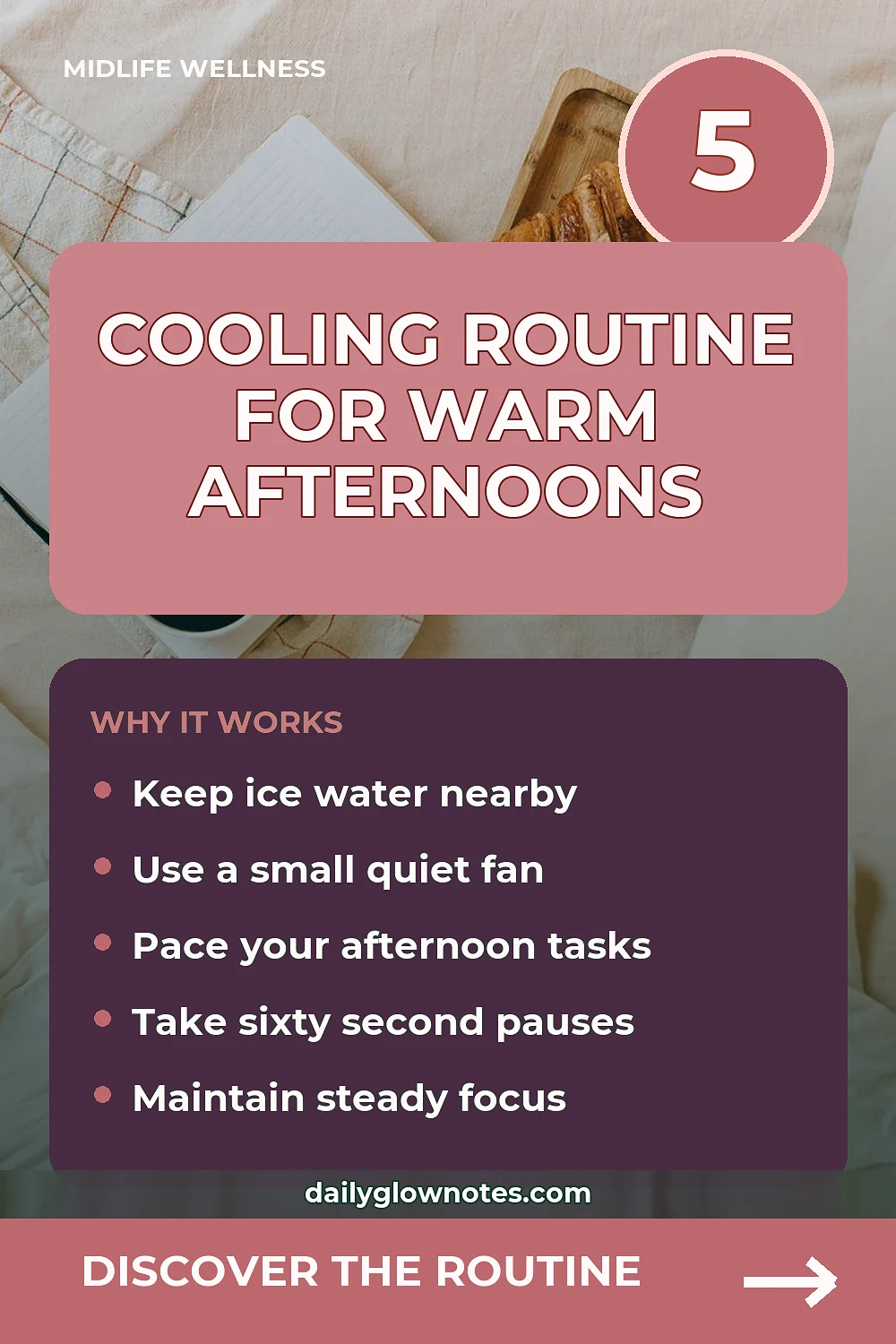
Creating a comfortable workspace begins with understanding your body's changing signals during perimenopause and menopause. Midlife wellness is largely about anticipation rather than reaction. Instead of waiting for a sudden flush to disrupt your concentration, you can arrange your immediate environment to support steady temperature regulation. Keep a glass of ice water within arm's reach, position a small, quiet personal fan to circulate air gently across your workspace, and have a light removable cardigan nearby to manage shifting office climates. These small adjustments create a sensory environment that cushions against unexpected physical discomfort. Furthermore, arranging your desk items to minimize physical reaching and unnecessary exertion helps keep your body relaxed, reducing overall physical tension that can otherwise amplify feelings of warmth and fatigue during long stretches of computer work.
The Power of Pacing Your Energy and Temperature
Afternoon fatigue often compounds the sensation of physical warmth, making it difficult to maintain steady focus. Pacing your workload during the warmest parts of the day allows you to conserve energy and prevent stress-induced temperature spikes. When mental fog rolls in alongside a warm spell, resist the urge to push through with excessive caffeine, which can sometimes intensify physical restlessness. For those moments when mental fatigue feels overwhelming, exploring strategies like a Perimenopause Workday Focus Reset can help you clear your mind without relying on stimulants that disrupt your internal balance. Breaking larger projects into smaller, digestible tasks also ensures that you maintain steady momentum without triggering the adrenaline surges that often accompany last-minute deadline rushes.
Micro-Breaks That Cool Both Body and Mind
Stepping away from the screen for just sixty seconds can reset your physiological response to stress and heat. Incorporating micro-breaks into your afternoon routine gives your nervous system a chance to downshift. Stand up, stretch your shoulders, take a few slow breaths with your eyes closed, and let the gentle breeze from your desk fan cool the back of your neck. These mini-pauses are not a waste of productive time; they are an essential investment in your sustained well-being throughout the workday. Consistent micro-pauses help bridge the gap between intense periods of concentration, ensuring that your cognitive stamina remains steady from the morning hours straight through to your final afternoon tasks.