
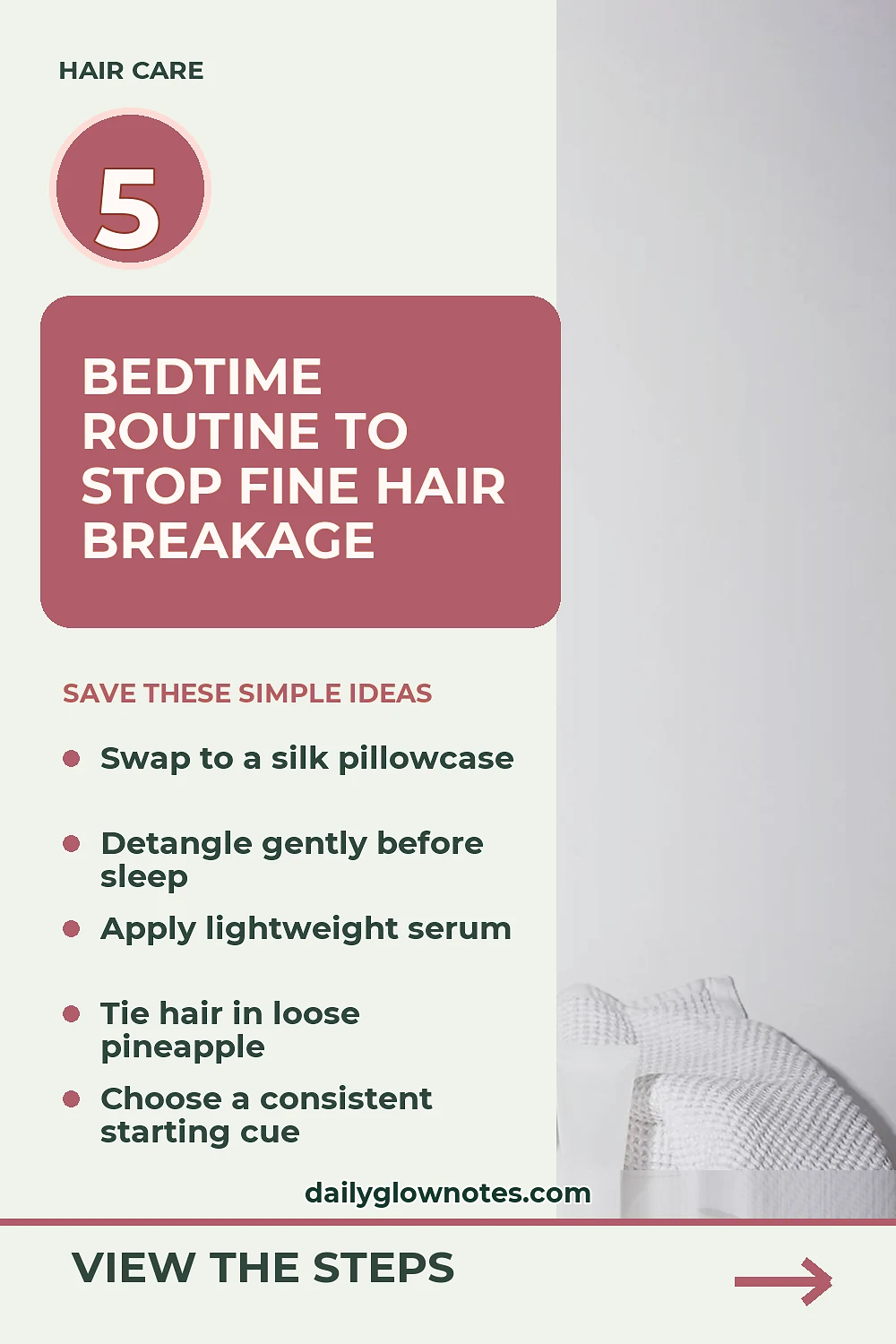
Fine and fragile strands require a specialized bedtime routine for fine hair breakage prevention to maintain their structural integrity while you sleep. Tossing and turning on standard cotton pillowcases creates microscopic friction that roughs up the hair cuticle, leading to split ends, mid-shaft snaps, and frustrating morning tangles. When hair is delicate, thinning, or prone to excessive shedding, these nightly mechanical stresses compound quickly. Protecting your hair before bed is not just about aesthetics; it is an essential part of preserving overall strand strength and supporting a healthy hair growth routine over time. Implementing a dedicated evening regimen is particularly crucial because hair is in its most vulnerable state when we are asleep, rubbing against various surfaces for hours at a time without conscious intervention to adjust or protect it.
Understanding Overnight Friction and Fine Hair Breakage
Fine hair inherently possesses a smaller diameter and a thinner protective cuticle layer than coarse or medium hair types, making it vastly more susceptible to environmental and mechanical stressors. Every time you shift your head during sleep, the individual strands experience tension, stretching, and abrasive friction. Over months and years, this continuous wear and tear results in structural fatigue, causing hairs to snap midway down the shaft rather than simply shedding naturally from the follicle. Recognizing this mechanical vulnerability is the first step toward transforming your approach to nighttime hair care, shifting away from reactive styling and moving entirely toward proactive preservation.
The Friction Audit: Identifying Hidden Culprits in Your Sleep Environment
Before introducing new nighttime habits, take a close look at what your hair touches during those eight hours of rest. Standard cotton and linen fabrics absorb natural moisture from your hair and create excessive traction. Swapping out your bedding for smooth silk or satin alternatives immediately reduces surface friction, allowing fine strands to glide effortlessly across the pillow without catching on rough fibers. Additionally, consider how your winter wardrobe interacts with your strands before you even reach the bedroom; mirroring the protective steps outlined when shielding fine hair from wool scarf friction and winter snapping can drastically reduce mechanical damage during colder months. Eliminating rough surfaces is the foundational step of any effective nighttime hair care protocol, ensuring that your hair encounters only soft, sliding textures from the moment you lie down until you wake up.
A Simple Four-Step Nightly Protocol for Delicate Strands
Establishing a consistent wind-down ritual helps safeguard vulnerable lengths without weighing them down. Follow this gentle four-step process just before bed to minimize tangling and breakage: