
When dealing with persistent breakouts, it is easy to fall into the trap of over-using aggressive active ingredients. Salicylic acid, benzoyl peroxide, and retinoids are popular choices for targeted spot care, but applying them too frequently can compromise your delicate cutaneous shield. Over-exfoliated blemish-prone skin often responds with intense localized redness, tightness, stinging during basic cleansing, and a paradoxically increased production of oil as the skin attempts to compensate for a severe lack of hydration.
Understanding Over-Exfoliated Blemish-Prone Skin
A damaged stratum corneum struggles to retain moisture and keep environmental irritants out. When your moisture boundary is disrupted, your skin becomes vulnerable to increased inflammation, which often leads to fresh breakouts. Recognizing the signs of over-exfoliation is the first step toward breaking this cycle and restoring a calm, balanced complexion. Many people mistake the resulting flakiness for dry skin that needs more scrubbing, whereas it is actually a sign of trauma that requires deep soothing and protection. By shifting your mindset from attacking blemishes to nurturing your skin cells, you create an environment where natural healing can finally take place without constant interruption.
The 7-Day Active Ingredient Elimination Protocol
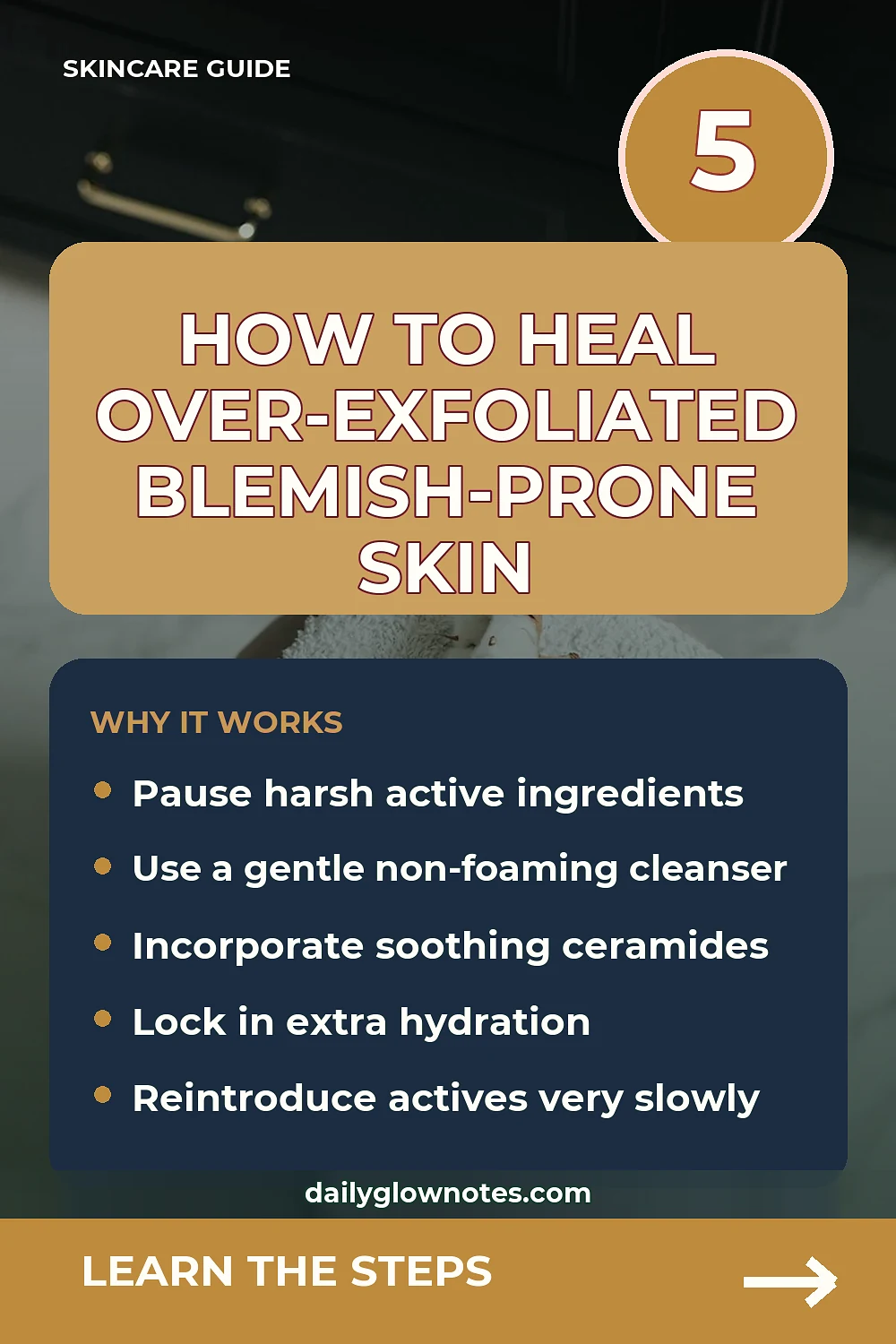
Restoring your skin requires an immediate pause on harsh interventions. For the next seven days, set aside all chemical exfoliants, physical scrubs, strong clarifying masks, and targeted spot creams. The goal is to minimize friction and allow your skin's natural repair mechanisms to operate without ongoing stress. Giving your skin a clean slate is essential for resetting its natural pH and allowing the lipid matrix to repair itself.
- Days 1–3: Emergency Relief. Strip your routine down to the absolute basics: a gentle, non-foaming cleanser and a plain, barrier-supportive moisturizer. Avoid hot water entirely, as elevated temperatures strip essential lipids and worsen localized redness. Pat your face dry with a clean, soft towel instead of rubbing.
- Days 4–5: Barrier Stabilization. As initial stinging subsides, continue with your minimalist routine. Focus on consistent hydration to soothe lingering tightness and visible irritation. Apply your moisturizer to slightly damp skin to help lock in extra hydration.
- Days 6–7: Assessment and Balance. Evaluate your skin texture and overall comfort. Redness should be visibly reduced, and your moisture balance should feel significantly restored, preparing your face for the next phase of gentle care.
For additional strategies on balancing active care with skin comfort, explore Restoring Your Skin Barrier: A Gentle Approach to Blemish-Prone Skin.
Selecting Soothing and Hydrating Ingredients
During a barrier reset, ingredient selection is crucial. Look for comforting components that help lock in water while calming visible inflammation and supporting long-term resilience:
- Ceramides: Essential lipids that naturally occur in the skin, helping to rebuild the protective outer layer and prevent moisture evaporation.
- Centella Asiatica (Cica): A plant extract renowned for its ability to soothe redness and speed up comfort in compromised skin tissues.
- Panthenol (Pro-Vitamin B5): A powerful humectant that attracts moisture while supporting overall skin softness and elasticity.
- Hyaluronic Acid: Helps draw water into dehydrated skin cells without clogging pores, keeping the skin plump and hydrated.
Avoid ingredients known to aggravate sensitive tissue during this period, including synthetic fragrances, essential oils, simple alcohols, and heavy comedogenic oils that might trap heat and debris.