
Long work shifts in climate-controlled office environments take a quiet toll on adult complexions. As the afternoon rolls around, many desk-bound professionals notice an oily sheen building across the T-zone. The immediate reaction is often reaching straight for the compact powder or adding a fresh layer of liquid foundation to restore a polished morning finish. Unfortunately, layering makeup over unmanaged midday perspiration and sebum can create a dense, suffocating barrier over pores. When makeup mixes with natural skin oils, trapped office dust, and ambient indoor pollutants, it forms a microscopic plug that sets the stage for unexpected blemishes, inflammation, and uneven texture.
The Midday Shine Trap at Your Office Desk
Understanding how routine touch-ups interact with your skin barrier is essential for maintaining a clear complexion during demanding work weeks. Commuting to work through dry or polluted air also stresses the skin before you even sit at your desk, much like dealing with Public Transit Dry Cabin Air Skin Comfort Habits for Adult Blemish Prone Complexions. When you layer cosmetics on top of uncleaned, weathered skin, you lock impurities in place rather than refreshing your look.
Artificial heating and cooling systems pull humidity out of office air. In response to this ambient dryness, the skin often overcompensates by accelerating sebum production. This creates a confusing state where the surface feels greasy while the deeper epidermal layers are actually dehydrated. Applying heavy makeup onto this compromised surface compounds congestion, leaving the skin looking dull and feeling irritated by the time your shift ends.
The Hidden Cost of Powder Layering Throughout the Day
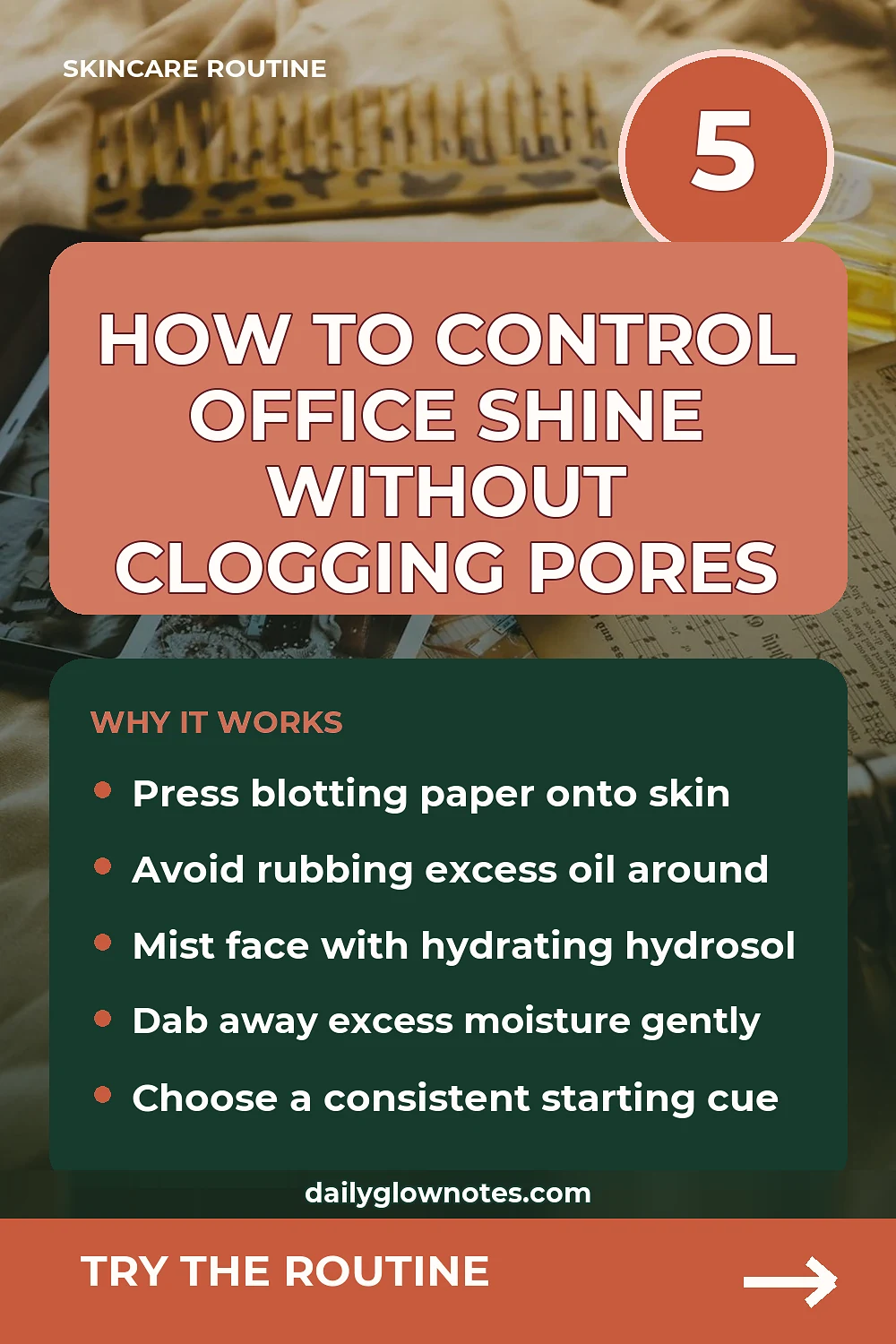
Reapplying pressed or loose powder every few hours feels like a quick fix for midday shine, but it introduces heavy binders, waxes, and pigments directly into active sebum production. Instead of absorbing oil cleanly, traditional powders often clump together when they meet moisture and natural lipid secretions on the skin's surface. This creates a cakey texture that settles into fine lines and traps oil underneath a semi-solid crust.
Over time, this mechanical buildup interferes with the skin's natural ability to breathe and shed dead skin cells normally. Blemish-prone skin thrives on breathability and gentle care. When heavy cosmetics are repeatedly pressed into warm pores with a shared makeup sponge during a stressful afternoon meeting, the risk of bacterial accumulation and pore blockage increases significantly. Breaking this cycle requires shifting from masking oil to managing it gently and hygienically.
Why Afternoon Sebum Surges Happen
Sebaceous glands follow a natural circadian rhythm, often peaking in activity between mid-morning and early afternoon. Combined with elevated workplace stress, which triggers cortisol release, your skin naturally produces more surface lipid during these hours. Cortisol not only increases oil production but also thickens sebum, making it more likely to stick inside hair follicles.
When you add office factors like prolonged screen time, touching your face while thinking, and resting your chin on your hands during calls, bacteria are continuously transferred to vulnerable pore openings. Recognizing that afternoon shine is a normal physiological response helps reframe how you address it. Rather than fighting your skin with aggressive powdering, working alongside its natural rhythm yields far better long-term clarity.