
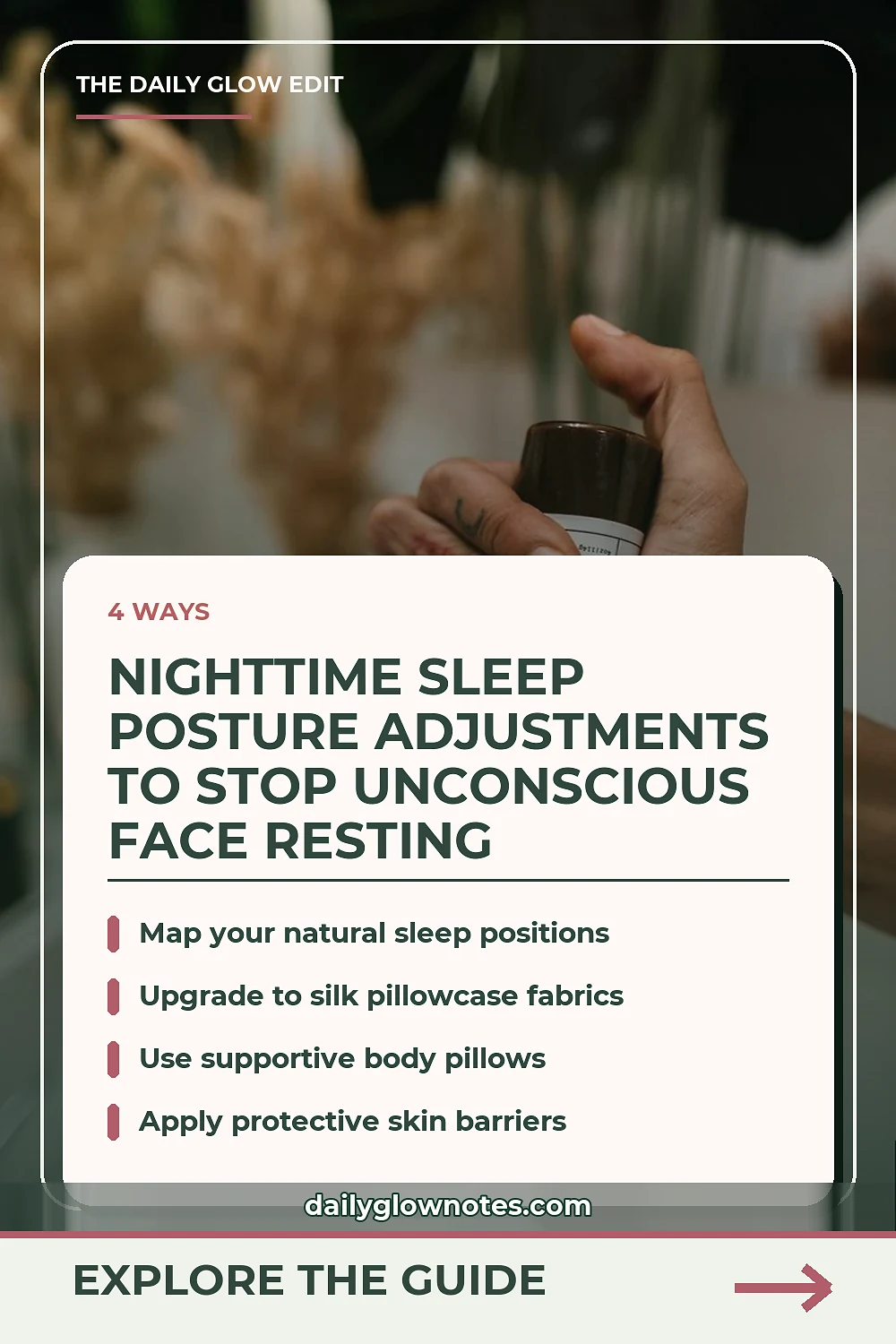
Nighttime Sleep Posture Adjustments to Stop Unconscious Face Resting becomes easier to understand when the main ideas are organized into practical, realistic steps. This guide explains the core considerations and shows how to apply them thoughtfully in everyday life to protect your skin barrier and reduce friction.
Waking up with unexpected blemishes or tenderness on just one side of your face can be a frustrating puzzle, especially when your daytime skincare routine is completely dialed in. Many adult side sleepers unknowingly press their cheeks, jawlines, and temples directly against their hands, arms, or textured pillows for hours at a time.
Mapping Your Natural Sleep Position and Hand Placement
Before you can change your nighttime habits, you need to recognize what your body does when you are fast asleep. Side sleeping naturally encourages the hands to drift upward to support the head, tuck beneath a cheek, or press firmly against the jaw. This unconscious positioning traps heat and sweat against the skin while applying continuous pressure that can congest pores over time. Spend a few minutes before turning off the lights noticing where your hands naturally want to rest.
Understanding your baseline movement requires patience. Many people find it helpful to keep a small journal on their nightstand to record any morning observations regarding where their hands were positioned upon waking. By building this self-awareness, you train your conscious mind to recognize movement patterns that usually happen completely out of awareness.
Designing a Friction-Free Pillow Setup
Your pillowcase and pillow loft play massive roles in how your skin reacts to nightly pressure. Traditional cotton or textured fabrics can tug at delicate facial skin as you shift positions throughout the night, leading to surface irritation and clogged pores. Upgrading to smooth, breathable silk or high-grade satin pillowcases allows your skin to glide effortlessly rather than catch and pull.
In addition to fabric choice, the firmness and height of your pillow matter immensely. If a pillow is too high, it forces your head and neck into an unnatural angle that accentuates side compression against the face. Choosing a medium-loft pillow that supports proper spinal alignment helps keep your head stable, reducing the urge to constantly shift and mash your face into the bedding.
Creating Gentle Physical Barriers
If your hands stubbornly find their way back to your face in the dead of night, you may need subtle physical reminders to interrupt the cycle. Placing an extra supportive body pillow or a rolled-up blanket behind your back or against your chest can gently discourage you from rolling entirely onto your side. Some individuals also find comfort in wearing lightweight, breathable cotton sleep gloves.
Physical barriers work best when they feel comfortable rather than restrictive. If a sleep setup feels claustrophobic or uncomfortable, you are likely to toss it aside in your sleep. Experiment with different configurations, such as hugging a long bolster pillow or placing a secondary pillow between your knees, to naturally anchor your body in a neutral, relaxed sleeping posture.