
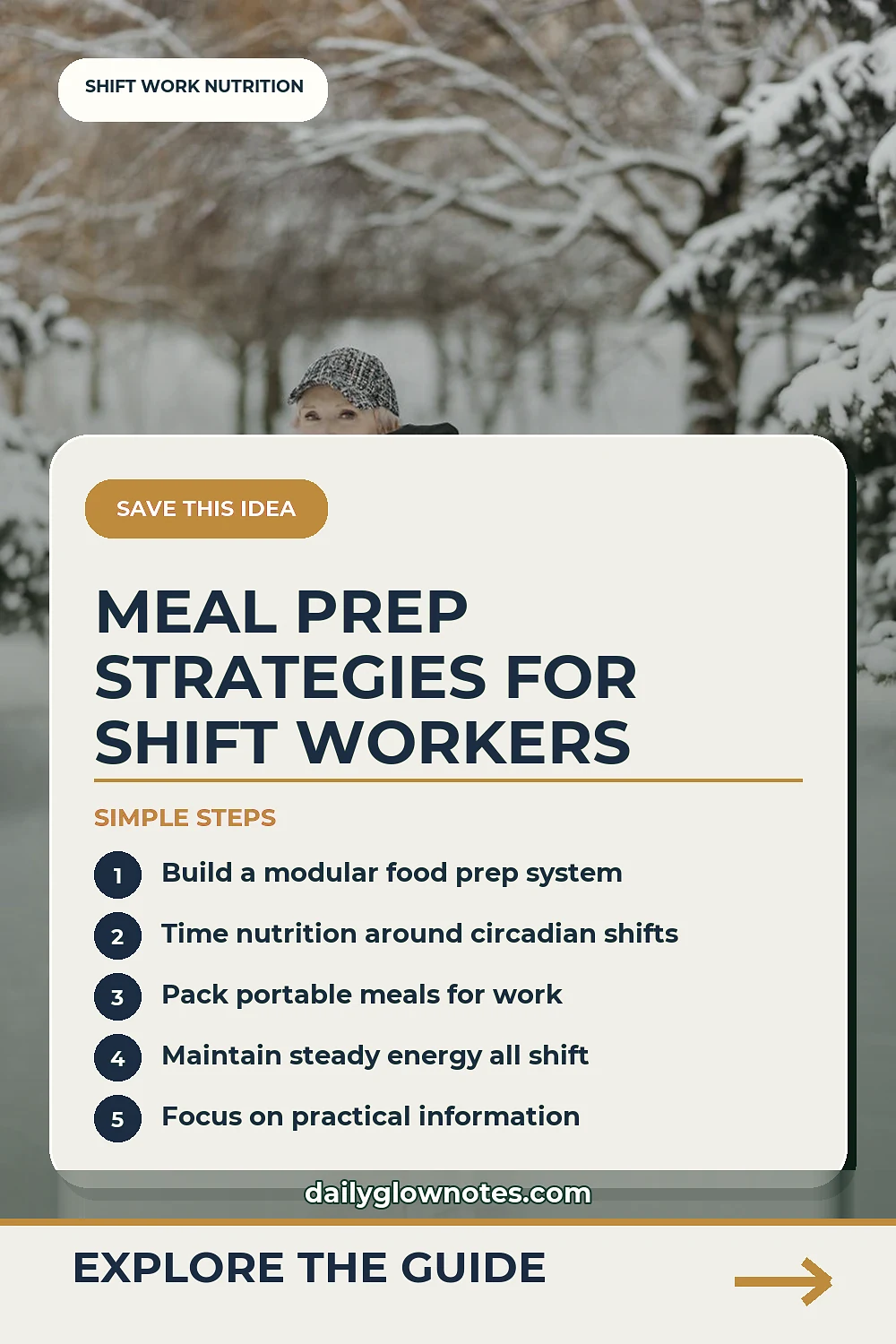
Simple Meal Prep Strategies for Shift Workers Managing Erratic Schedules becomes easier to understand when the main ideas are organized into practical, realistic steps. This guide explains the core considerations and shows how to apply them thoughtfully in everyday life, helping you maintain steady energy and focus.
Working rotating shifts or overnight hours changes how your body handles time, hunger, and daily energy. When your alarm clock rings at midnight or your shift ends just as the rest of the world is waking up, standard meal routines rarely work. Finding balanced meal prep for shift workers on erratic schedules can feel like solving a puzzle where the pieces keep moving. Yet, nourishing your body consistently is entirely possible with a flexible approach that focuses on preparation rather than rigid meal times, ensuring you always have wholesome food ready when hunger strikes.
Designing a Modular Prep System for Rotating Hours
Instead of preparing meals designated for strict breakfast, lunch, or dinner slots, shift workers benefit from a modular food prep system. Cook versatile base ingredients that can mix and match depending on whether you are waking up for a night shift or winding down after an evening rotation. Roast a large tray of mixed vegetables like sweet potatoes, zucchini, and bell peppers alongside clean proteins such as chicken breast, baked tofu, or tempeh. Pair these with a reliable grain like quinoa or brown rice. Storing these components separately in glass containers allows you to assemble a light plate before a night shift or a satisfying meal afterward without spending extra time in the kitchen.
Furthermore, this modular technique drastically cuts down on cooking monotony. When ingredients are stored as individual building blocks, you can easily transform a basic grain and vegetable base into a warm savory bowl, a quick cold salad, or a comforting wrap depending on your current appetite and the temperature of your workplace breakroom. Embracing this style of cooking removes the mental friction of deciding what to eat when you are already exhausted from a demanding shift.
Timing Your Nutrition Around Circadian Disruptions
Eating during unconventional hours requires listening closely to your internal cues rather than looking at the clock. When navigating irregular sleep-wake cycles, heavy meals can sometimes cause sluggishness when you need to stay alert, while overly light options may leave you searching for energy halfway through your shift. Focus on combining complex carbohydrates, quality protein, and healthy fats in moderate portions. This combination supports steady energy release, helping you avoid the peaks and crashes often associated with convenience store snacks or fast food runs. For inspiration on keeping your daily nutrition straightforward and satisfying, explore our guide on simple high protein meal prep ideas for balanced daily energy to discover easy ways to upgrade your weekly rotation.
It is also helpful to establish anchor meals that signal biological time to your body, even if those anchors happen at unusual hours. For instance, treat your first meal upon waking up as your breakfast, regardless of whether that happens at 4:00 PM or 4:00 AM. This psychological and physiological cue helps ground your digestion and provides a sense of routine amidst an otherwise chaotic weekly schedule.