
That heavy, sluggish feeling that hits right around two in the afternoon is rarely just about a poor night of sleep. If you find yourself staring blankly at your monitor, rubbing your eyes, and wondering how you are supposed to finish the rest of your workday, your physical workspace routine might be working directly against your natural energy levels. Office work feels passive, yet the physical constraints of sitting for hours create a unique kind of fatigue that coffee alone cannot fix. To troubleshoot low energy during a desk job with quick movement breaks, understanding the hidden physical toll of prolonged sitting is the first step toward reclaiming your afternoons.
The Hidden Toll of Static Posture
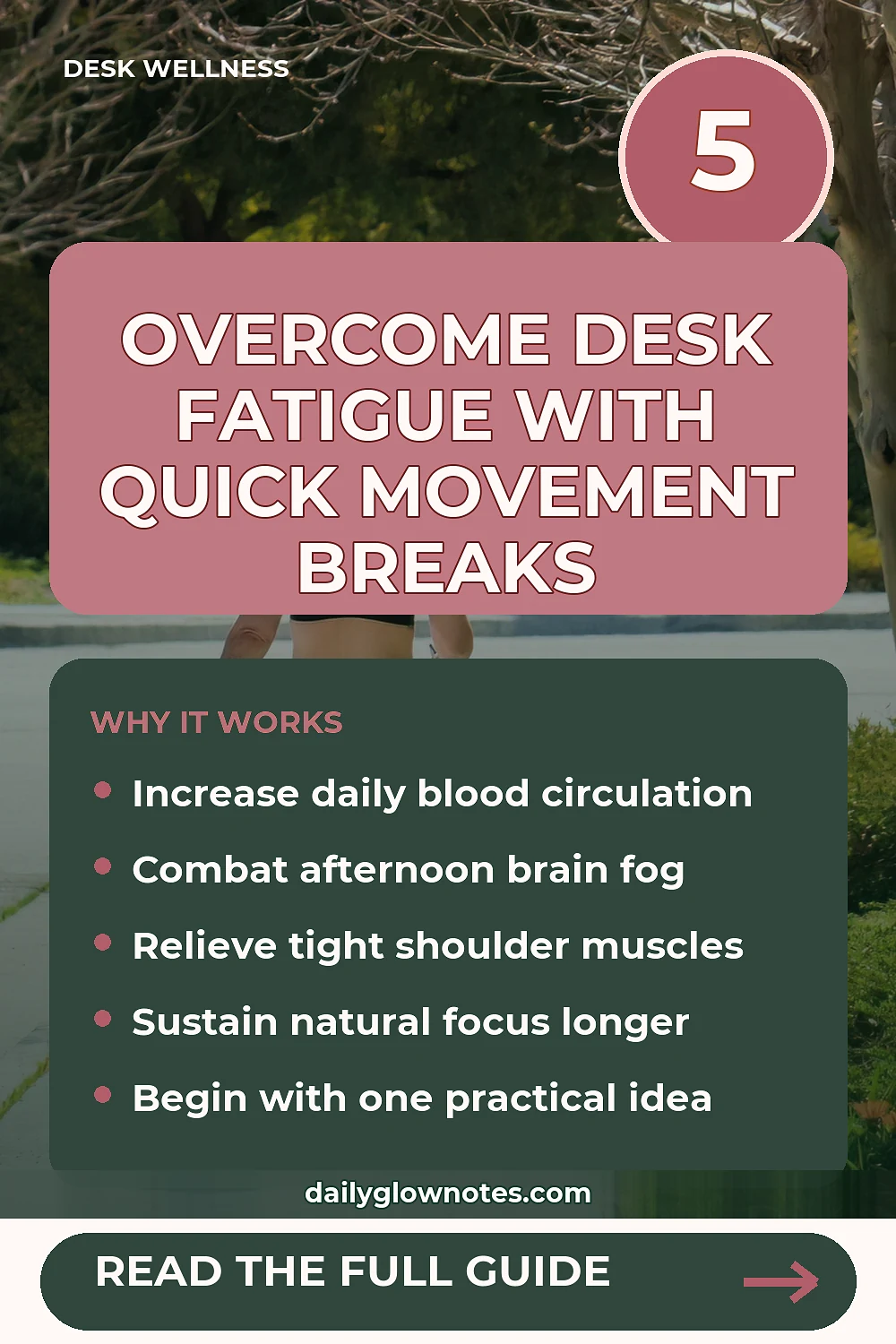
Sitting still for hours at a time causes blood circulation to slow down significantly, particularly in your lower body. Without regular muscle contraction, oxygen delivery to your brain and muscles decreases, which directly triggers that brain fog and mental heaviness. Your body interprets stillness as a cue to power down, lowering your metabolic rate and making you feel far more exhausted than the actual mental workload warrants. Furthermore, subtle muscle tightening in your shoulders, neck, and hips places constant, low-grade physical stress on your nervous system. Addressing this requires more than just forcing better posture; it requires introducing dynamic movement that signals your body to wake up and engage.
When you maintain a fixed posture for too long, specific muscle groups like your hip flexors shorten and tighten, while your glutes and upper back muscles become underactive. This muscular imbalance not only drains your physical stamina but also forces your nervous system to expend extra energy just to keep you upright. Introducing brief, intentional shifts in your physical positioning helps disrupt this fatigue cycle before it fully takes hold of your productivity and mood.
Identifying Energy Drains in Your Workspace
Take a close look at how you actually spend your working hours. Do you sit for three uninterrupted hours until you feel desperate for a snack or a caffeinated beverage? That pattern creates sharp energy spikes and crashes. Another major culprit is dehydration, which creeps up quietly when you are deeply focused on a project. When your glass of water sits untouched beside your keyboard, your cognitive performance drops before you even feel thirsty. Additionally, staring at a screen without looking away taxes your visual system, which translates directly into systemic fatigue.
Environmental factors in your office space also play a critical role in how alert you feel throughout the day. Poor lighting, inadequate ventilation, and excessive ambient noise can quietly drain your mental resources, compounding the physical exhaustion caused by prolonged sitting. By evaluating these subtle environmental triggers alongside your daily habits, you can pinpoint the exact moments when your energy begins to dip and intervene proactively.