
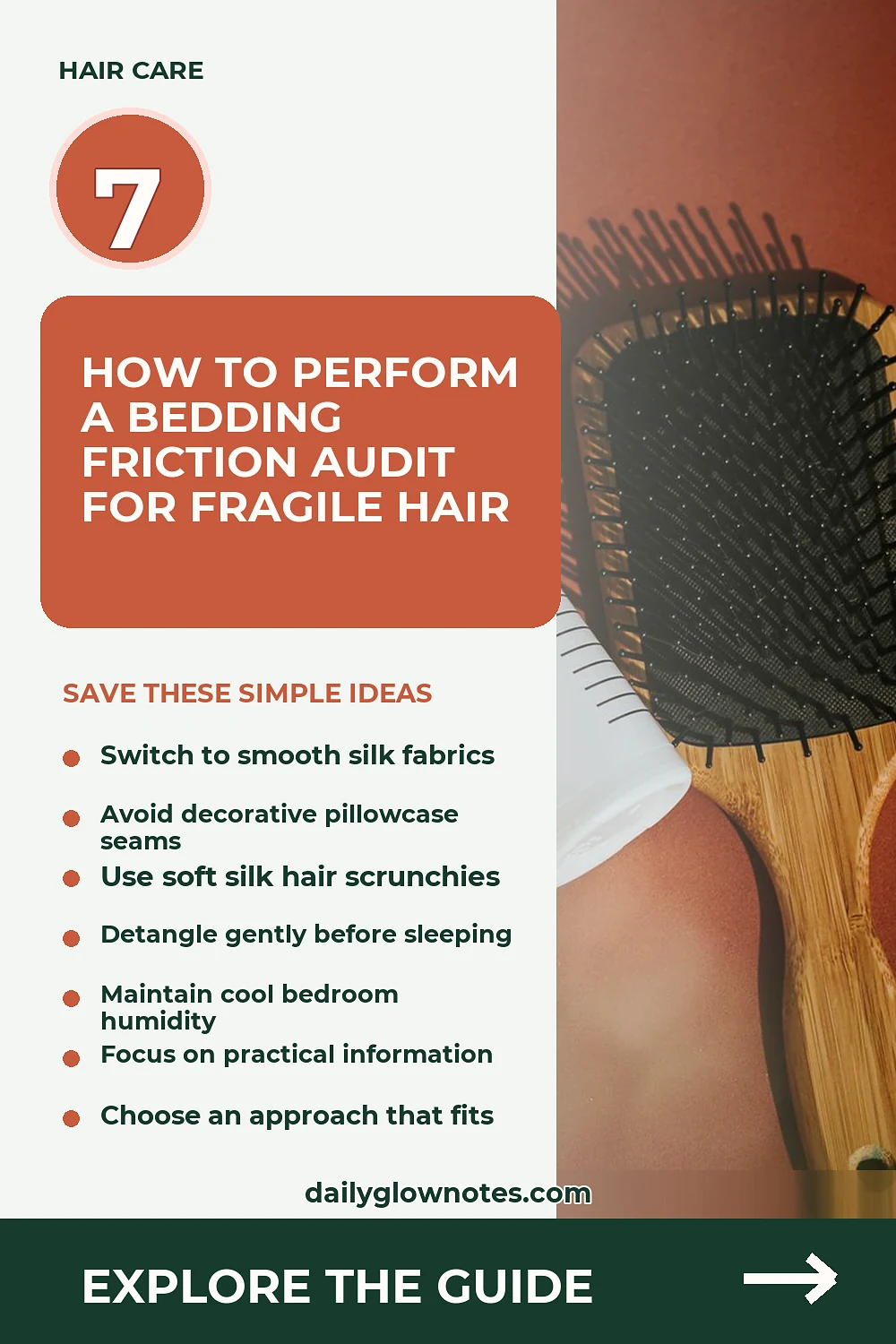
A Bedding-Friction Audit for fine, fragile hair becomes easier to understand when the main ideas are organized into practical, realistic steps. This guide explains the core considerations and shows how to apply them thoughtfully in everyday life to preserve the integrity of your strands. By shifting our perspective on what constitutes 'sleep hygiene,' we can begin to view our bed not just as a place of rest for the body, but as a critical environment for the health and maintenance of our hair.
Waking up to a tangled, knotty mess is a frustrating reality for many women with fine or fragile hair. You might spend your day carefully styling, conditioning, and protecting your strands, only to undo that effort in the hours you spend asleep. When your hair is prone to breakage or thinning, the very surface you rest your head on can act like a piece of sandpaper, slowly compromising the integrity of your hair cuticles throughout the night. Performing a bedding-friction audit is a simple, proactive step to minimize mechanical damage and help your hair recover its natural resilience. By examining the micro-environment of your sleep space, you can identify hidden sources of stress that contribute to morning breakage and unnecessary shedding, allowing you to reclaim your morning routine from the battle against knots.
Evaluating Fabric Texture and Surface Smoothness
The most immediate factor in overnight hair damage is the material of your pillowcase. Traditional cotton, while breathable and comfortable for the skin, has a microscopic texture that can grip individual hair strands. For fine hair, which often lacks the structural density to withstand constant tugging, this grip creates tension. Every time you shift your head during sleep, that friction can cause hair to snag, fray, or break. Transitioning to smoother materials like high-quality silk or satin can offer a significant reduction in drag. These fabrics allow hair to glide effortlessly across the surface rather than catching on woven fibers. If you prefer to keep your current bedding, consider a protective sleep bonnet or a hair-friendly wrap. The goal is not to achieve perfection, but to create a low-friction zone that supports your hair as you rest. Nurturing stronger hair through consistent daily habits often begins with these small, environmental shifts that accumulate into meaningful results over time.
The Hidden Impact of Bedding Seams and Decorative Edges
Look closely at the construction of your pillowcases. Decorative elements such as ruffles, lace, or prominent seams are frequent culprits for mechanical hair breakage. If you notice specific areas of your hair—perhaps around the nape of the neck or the sides—that seem shorter or more prone to tangling, check if your pillowcase has a thick, embroidered, or gathered edge that sits right where your hair rests. These rigid edges can act as a trap for delicate strands, pulling them taut when you turn over. A simple solution is to rotate your pillow so the decorative side faces away from your head, or to invest in 'envelope' style pillowcases that feature hidden, flat closures. Ensuring your sleep surface is as smooth and unobstructed as possible eliminates those tiny catch-points that lead to split ends and premature breakage. It is often the subtle, architectural features of our bedding that cause the most significant, unseen damage to our hair cuticle.