
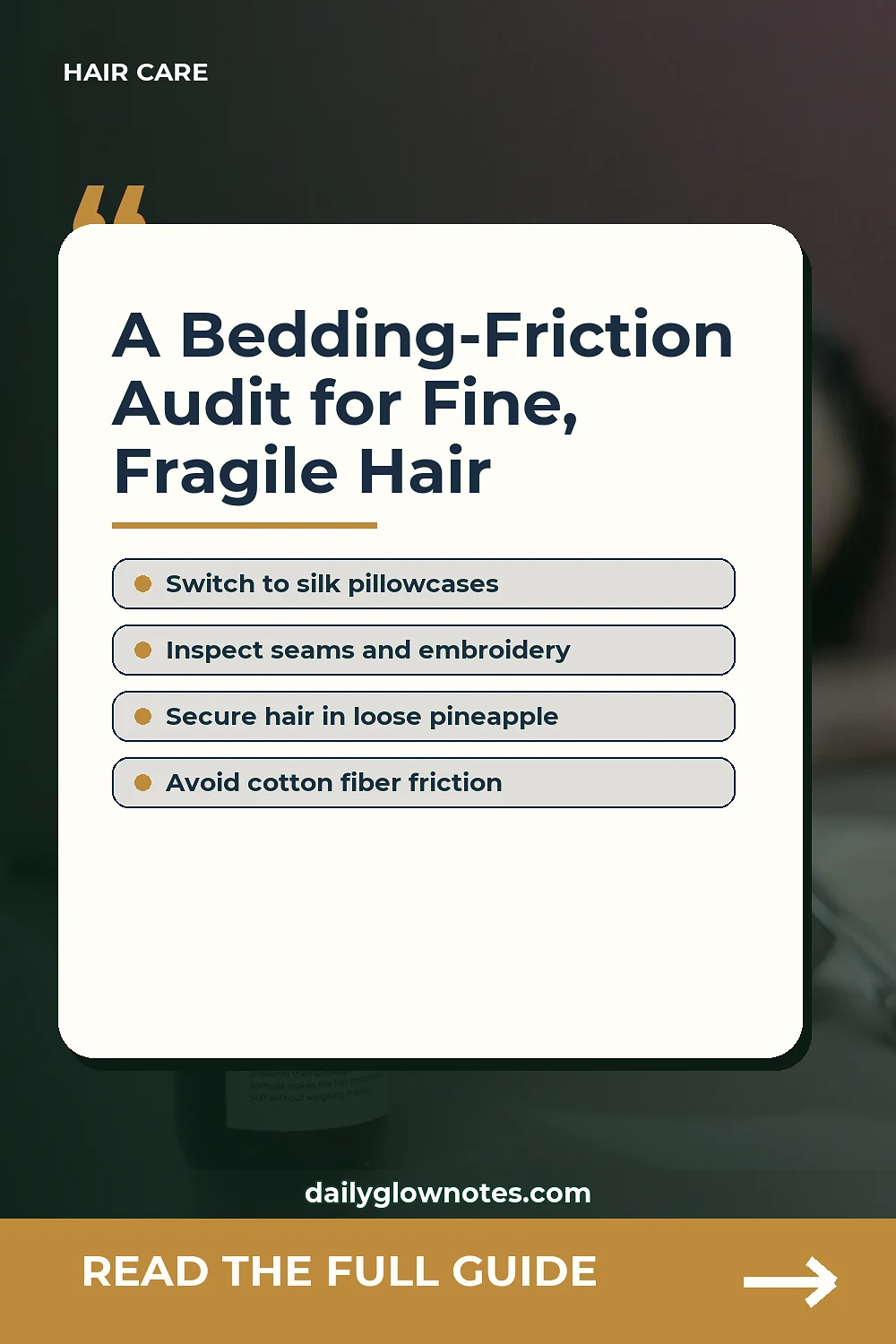
A Bedding-Friction Audit for Fine, Fragile Hair becomes easier to understand when the main ideas are organized into practical, realistic steps. This guide explains the core considerations and shows how to apply them thoughtfully in everyday life to preserve the integrity of your delicate locks.
Waking up with a halo of stubborn tangles, random bends, or tiny broken strands is a frustrating morning ritual for anyone trying to nurture fine and delicate hair. While much of our energy goes into expensive conditioners, scalp serums, and gentle detangling brushes, the eight hours we spend resting our heads against pillows often go entirely unexamined. Every toss and turn creates microscopic friction against cotton fibers, rough seams, and textured pillowcases, leading to cumulative mechanical stress on already vulnerable strands. Conducting a bedding friction hair audit is a practical, low-effort way to uncover hidden snag points in your bedroom setup and protect your hair from unnecessary breakage while you sleep.
Assessing Your Pillowcase Fabric and Weave
Standard cotton pillowcases feature a matte, porous weave that feels crisp to the touch but creates microscopic traction against individual hair fibers. As you move during the night, fine strands catch on these tiny cotton fibers, resulting in friction and morning frizz. Shifting to a smoother surface allows fine hair to glide rather than catch. Silk and high-grade satin weaves provide a slippery texture that significantly reduces the mechanical drag responsible for overnight tangling. When evaluating your sleep environment, look closely at the tactile finish of your bedding. If a fabric grabs your fingertips when you rub your hand across it quickly, it will likely create similar resistance for fragile hair shafts over the course of seven or eight hours. Choosing the right fabric means understanding that not all weaves are created equal, and investing in high slip is an investment in hair longevity.
Examining Seams, Closures, and Decorative Embroidery
Even when the main body of a pillowcase feels reasonably smooth, hidden hardware or finishing details can become major hazard zones for fine hair. Enclose-style pillowcases with bulky hidden zippers, envelope closures with raw inner edges, and decorative embroidery or textured piping frequently lie right where we rest our heads. A stray strand slipping beneath a stiff embroidered edge or catching on a zipper tooth can easily snap under the weight of a turning head. Take time to inspect your pillowcases inside and out, ensuring that the resting surface is completely uniform and free of rigid decorative elements that might trap delicate hair. Simple adjustments, like turning pillowcases so closures face away from your resting position, can make an immediate difference.