
When you step out of the shower, your hair is at its most vulnerable. Water swells the hair shaft, lifting the delicate outer cuticle layer and leaving fine, fragile strands highly susceptible to mechanical damage. For anyone managing thinning hair, excessive shedding, or everyday breakage, the traditional habit of rubbing wet hair with a standard terrycloth towel can spell disaster. The rough loops of a standard towel catch on damp strands, creating friction that pulls, stretches, and snaps weak hair. To protect your length and preserve scalp wellness, upgrading your post-wash routine is essential. Two popular low-friction alternatives dominate modern hair care: the plush microfiber hair wrap and the humble cotton t-shirt. Choosing between them comes down to understanding how absorbency, weight, and surface texture interact with fine hair during the delicate drying phase.
The Physics of Post-Wash Hair Friction
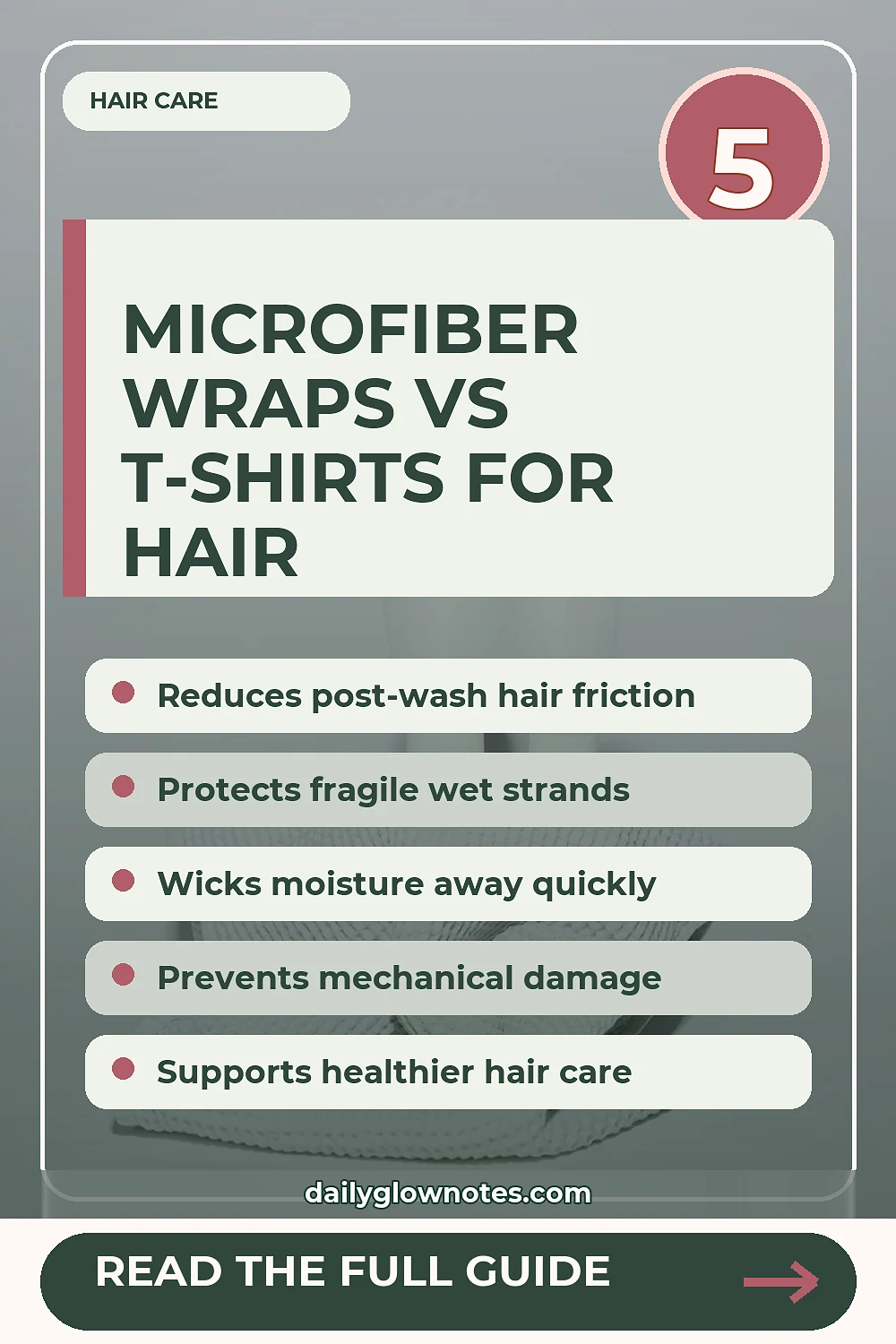
Hair strength relies entirely on the integrity of the cuticle, the microscopic shingle-like protective layer that shields the inner cortex. When hair is saturated with water, these scales swell and lift away from the shaft. Rubbing or twisting heavy fabric around wet hair creates severe mechanical abrasion. Over time, this friction leads to split ends, mid-shaft breakage, and a frizzy, uneven texture that makes fine hair look even sparser. Minimizing mechanical strain means finding a drying method that wicks moisture away quickly without requiring any vigorous rubbing or heavy wringing. Both microfiber wraps and cotton t-shirts eliminate the need to scrub your hair, but they do so through different material mechanics. Evaluating how each option handles moisture absorption helps you build a gentler, more protective everyday routine for your strands.
Microfiber Wraps: High-Tech Absorption for Fragile Strands
Microfiber is a synthetic blend, typically composed of polyester and polyamide, engineered with split fibers that create a vast surface area. This ultra-fine web traps water droplets quickly and efficiently, drawing moisture away from the hair surface through capillary action rather than friction. Because microfiber wraps are specifically contoured for the head and often feature secure button-and-loop closures, they stay comfortably in place without slipping. This hands-free design is a major asset for anyone dealing with fragile hair or recovering from postpartum shedding, as it removes the temptation to twist damp strands into a heavy, tension-heavy turban. Furthermore, the smooth texture of high-quality microfiber glides effortlessly over lifted cuticles, reducing snagging. However, not all microfiber is created equal. Extremely cheap, low-grade synthetic versions can sometimes feel uncomfortably clingy or overly electrostatic if the fabric is too coarse, making it important to choose a plush, soft weave designed specifically for cosmetic use.
Cotton T-Shirts: The DIY Gentle Classic
Long before specialized hair towels flooded the market, savvy stylists and individuals with fine, curly, or breakage-prone hair turned to plain cotton t-shirts as a zero-cost drying hack. A worn, well-laundered 100% cotton tee offers a remarkably smooth, uniform knit surface compared to the looped pile of a traditional bath towel. When you wrap your damp hair in a cotton t-shirt, the fabric absorbs surface water at a moderate pace without stripping every trace of necessary moisture or roughing up the cuticle scales. Because t-shirt cotton lacks the heavy nap of terrycloth, it places very minimal friction on the hair shaft. It is also an accessible option for anyone who wants to test a gentle drying method before investing in specialty hair accessories. On the downside, standard cotton t-shirts lack the tailored ergonomics of a dedicated wrap. They can feel bulky, unanchored, and prone to unwinding unless carefully pinned or knotted, and cotton holds onto moisture longer than advanced microfiber, increasing the total drying time.