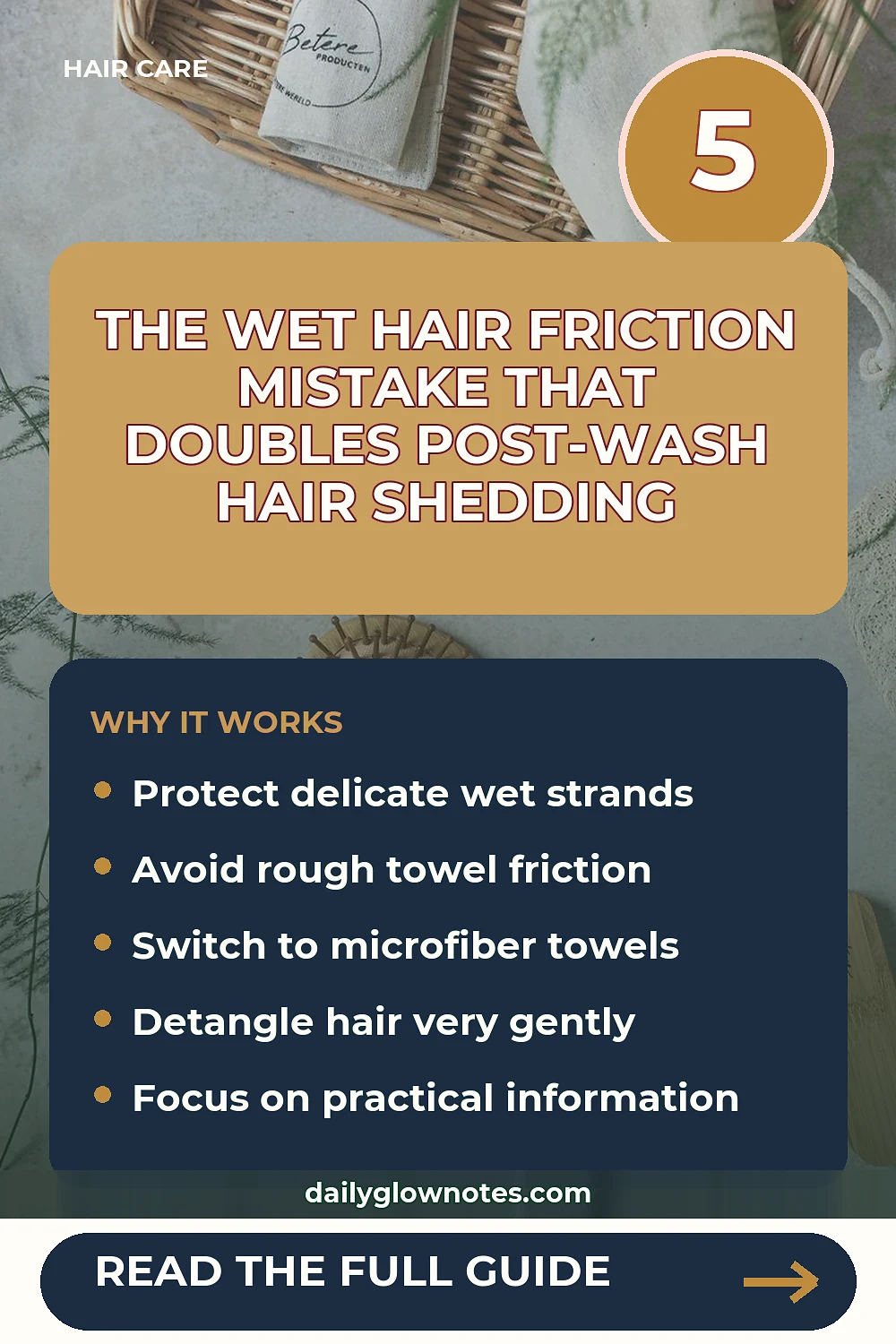

Wet or damp hair exists in its most fragile physical state. When water disrupts the hydrogen bonds within the protein structure of your strands, elasticity rises while structural resistance drops. Pulling a dense brush or fine-toothed comb through fragile, damp hair creates severe mechanical tension that stretches hair beyond its elastic limit, causing snap-breakage and premature shedding at the root level. Adopting a gentle detangling routine fragile hair requires rethinking how you physically handle your locks right after washing them.
For adult women experiencing thinning, excessive seasonal shedding, or delicate strand texture, wash day often becomes a source of anxiety. Seeing handfuls of hair gather in the comb or drain can make you feel powerless, yet much of this daily loss stems from simple mechanical friction rather than internal changes alone. By conducting a systematic tension audit and adopting zone-by-zone handling practices inspired by texture-care wisdom, you can dramatically protect fragile hair from unnecessary snapping.
The Physics of Wet Hair Vulnerability
When healthy hair is dry, its outer cuticle layer lies relatively flat, forming an protective barrier that guards the inner cortex. Exposure to warm water and shampoo swells the hair shaft and lifts these protective cuticle scales. In this temporarily weakened state, any sudden force, rough tugging, or tight gripping causes the strand to stretch and fray.
Standard brushing habits—such as pulling a brush straight down from roots to ends—accumulate friction as the bristles drag through existing knots. By the time the brush reaches the bottom third of your hair, the concentrated force can snap delicate strands mid-shaft or tear weak follicles directly from the scalp. Replacing this harsh downward motion with a deliberate, tension-free approach protects the physical integrity of every single strand.
Rule 1: Saturated Slip and Product Mapping
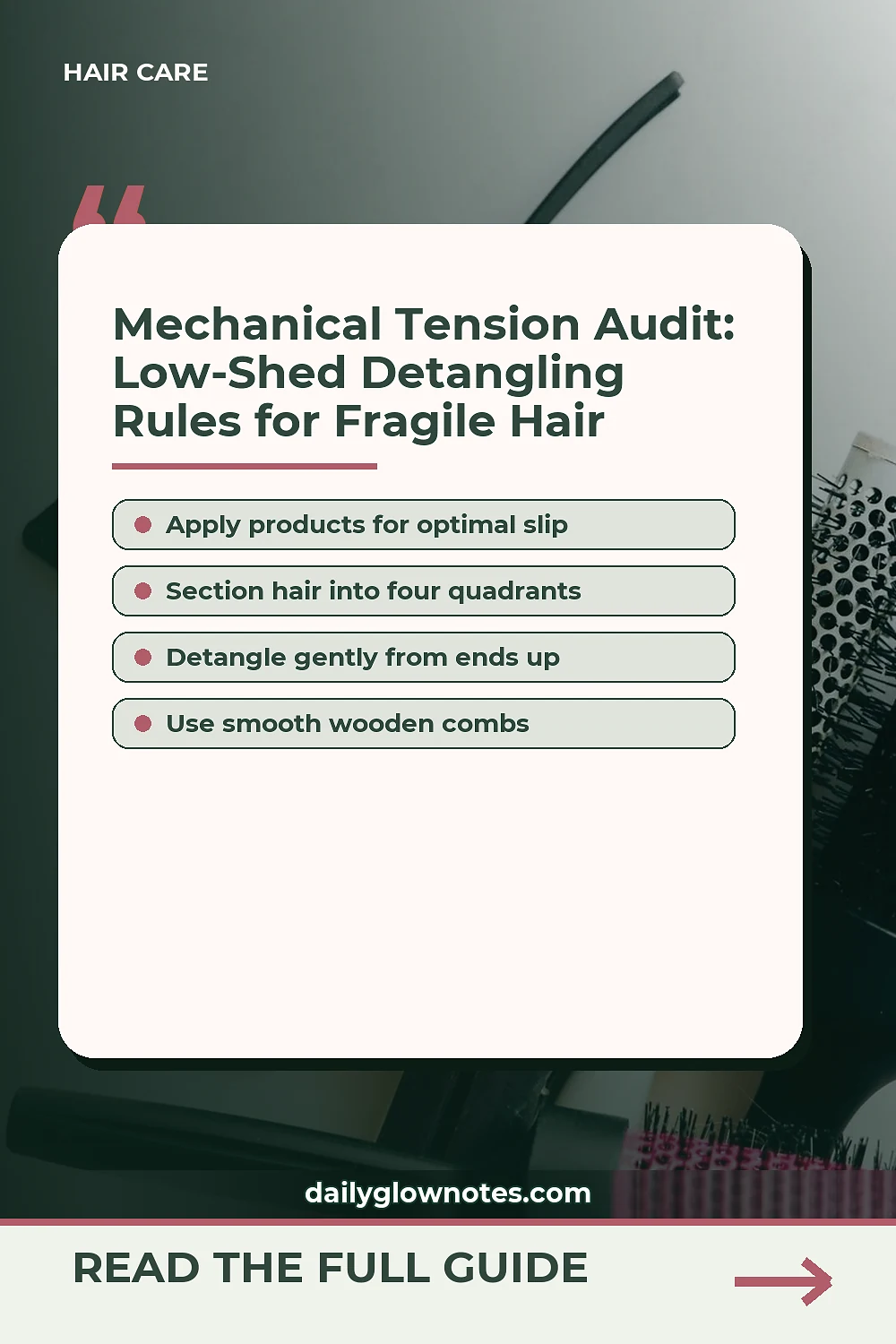
Never attempt to comb or detangle fragile hair when it is merely damp without adequate lubrication. True mechanical protection requires optimal slip, which reduces the friction coefficient between your tool and your hair. Applying a rich, melt-in leave-in conditioner or a silicone-free detangling cream while your hair is still thoroughly wet creates a protective coating over lifted cuticles.
- Sectioning: Divide your hair into four manageable quadrants using smooth sectioning clips. Working with smaller sections prevents unseen knots from compounding under your comb.
- Distribution: Smooth your chosen conditioning product down each section using flat palm movements—often called smooth palms or hands—rather than rake-like finger movements that pull on roots.
- Water content: Keep a spray bottle nearby. If a section begins to dry out before you finish detangling, lightly mist it with water to re-establish the necessary slip.
By prioritizing moisture and lubrication before introducing any tool, you lower mechanical stress on fragile strands. Proper pre-treatment is just as vital as the detangling technique itself, a concept detailed in our guide on a wash-day temperature and handling audit for fragile hair.
Rule 2: Bottom-Up Zone Detangling
The cardinal rule of a low-shed detangling technique is working strictly from the ends upward toward the roots. This bottom-up method ensures that knots are untangled individually rather than pushed down into a dense, unbreakable cluster.
Begin by isolating the last two to three inches of a single section. Hold the hair firmly above the area you are working on to absorb any pulling force, ensuring that zero tension transfers to your scalp or hair follicles. Gently work through the ends with a wide-tooth wooden comb or a flexible-bristle detangling tool until the teeth pass through without resistance. Move up another two inches and repeat the process, working gradually toward the scalp. This zone-by-zone mechanical care draws heavy inspiration from global texture-care principles, including ancient shielding fine hair from wool scarf friction and winter snapping strategies that prioritize friction reduction above all else.