
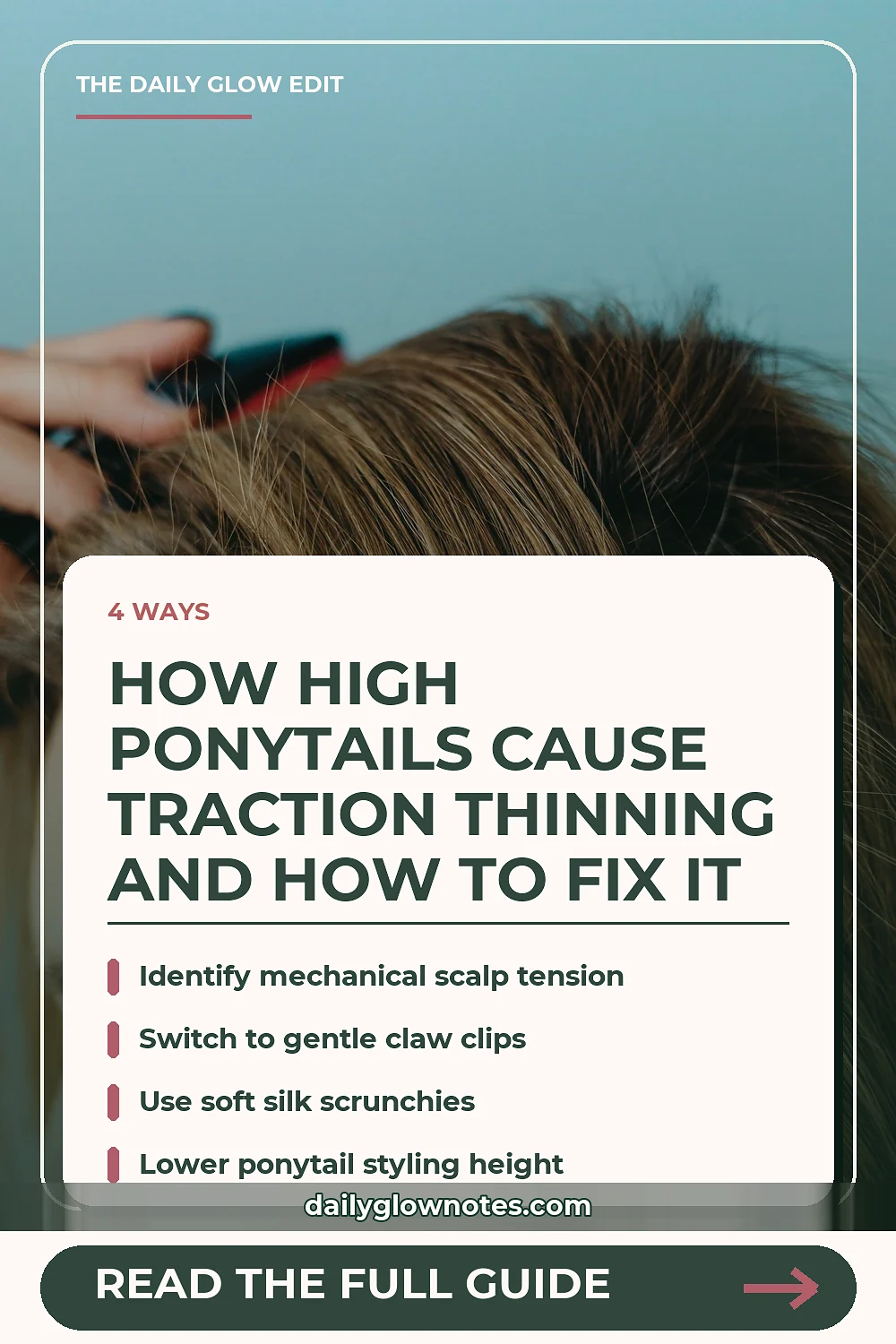
A high ponytail or sleek topknot offers an instant pulled-together look, but wearing tight styles repeatedly creates continuous strain on delicate hair roots. Over time, constant tension weakens the anchor of the hair shaft along the hairline and temples, leading to localized thinning and breakage. Conducting a gentle ponytail tension audit for thinning hair allows you to identify where daily styling habits may be stressing your scalp and how to transition toward low-friction, protective routines.
Understanding the Mechanics of Mechanical Stress on the Hairline
Traction thinning occurs when continuous physical pulling strains the hair follicles. Unlike hormonal or genetic shedding, this form of stress is entirely mechanical. When you pull your hair back securely, the constant force tugs on the front sections, particularly near the forehead and temples. Over time, this constant pull weakens the hair shaft, causing strands to snap prematurely or shed from the root before completing their natural growth cycle.
Recognizing early signs of mechanical strain helps prevent long-term damage. Common indicators include small tender spots along the scalp after taking your hair down, tiny broken hairs fringing the hairline, or an widening appearance around the temples. Addressing these signs early allows the hair to recover naturally before follicle fatigue becomes more pronounced.
Conducting a Daily Styling Stress Audit
To assess whether your daily routines are contributing to mechanical tension, take a moment to evaluate your current styling habits. A thoughtful hair audit looks closely at how often you apply tension, the tools you use, and how your scalp feels at the end of the day.
- Tension Frequency: Are you securing your hair in the exact same high ponytail or tight bun more than three days a week?
- Elastic Pressure: Do you use traditional thin rubber bands or exposed elastic ties that dig directly into the hair shaft?
- Scalp Discomfort: Do you feel immediate relief or mild tenderness when releasing your hair at night?
- Removal Friction: Do you slide elastics down the length of your ponytail, causing surface snapping and friction?
If you answered yes to several of these points, your hairline is likely experiencing unnecessary physical stress. Incorporating gentle handling techniques, such as those recommended in Microfiber Wraps vs. T-Shirts: Which Minimizes Post-Wash Hair Friction?, helps minimize overall daily friction from wet handling through styling.
Switching to Low-Stress Styling Structures
Reducing tension does not mean sacrificing a polished appearance. Swapping high-tension ties for supportive, low-stress styling tools allows you to maintain an elegant silhouette while giving your hairline room to breathe. Soft silk scrunchies, wide fabric bands, and smooth claw clips distribute weight evenly across the crown rather than concentrating pull on the front edges.
A loose claw clip style positioned at the nape of the neck provides a chic, minimalist look that eliminates hairline strain completely. When gathering your hair, allow the front sections to remain soft and slightly relaxed. Securing hair lower on the head leverages the natural drape of your strands, minimizing gravity-induced pull on delicate temple hair.