
When winter temperatures drop, pulling on a cozy wool scarf becomes second nature. Yet for those with fine and thinning hair, that daily layer of warmth often brings an unwelcome side effect: sudden breakage around the neckline. Heavy winter fabrics, stiff coat collars, and rough knits create constant mechanical friction against delicate strands. Over weeks of cold weather, this friction leads to split ends, flyaways, and noticeable snapping right where your hair rubs against your clothing.
Protecting vulnerable strands requires a thoughtful winter scarf friction protection routine for fine and thinning hair. By shifting how you style, secure, and nourish your hair during the coldest months, you can keep your neckline smooth and prevent seasonal breakage.
Understanding the Impact of Winter Outerwear on Delicate Strands
Fine hair has a smaller diameter and a more delicate cuticle layer than coarse hair, making it exceptionally vulnerable to environmental stressors. When a heavy wool or synthetic scarf rubs against the nape of your neck with every step you take, the microscopic fibers act like tiny sandpaper. They catch on fragile cuticles, lifting them and leaving the inner cortex exposed to damage.
Static electricity during dry winter months only compounds the issue. Charged strands lift and wrap around coarse scarf fibers, resulting in severe tangles that snap easily when you unwrap your winter gear. Recognizing this mechanical stress is the first step toward building a healthier cold-weather routine that keeps your length intact.
Smart Styling Adjustments to Keep Hair Away From Fabrics
The simplest way to prevent neckline breakage is to change how your hair interacts with your clothing. Leaving fine hair loose inside a heavy coat collar almost guarantees friction damage. Instead, consider tucking your hair completely inside your garments using protective styling techniques.
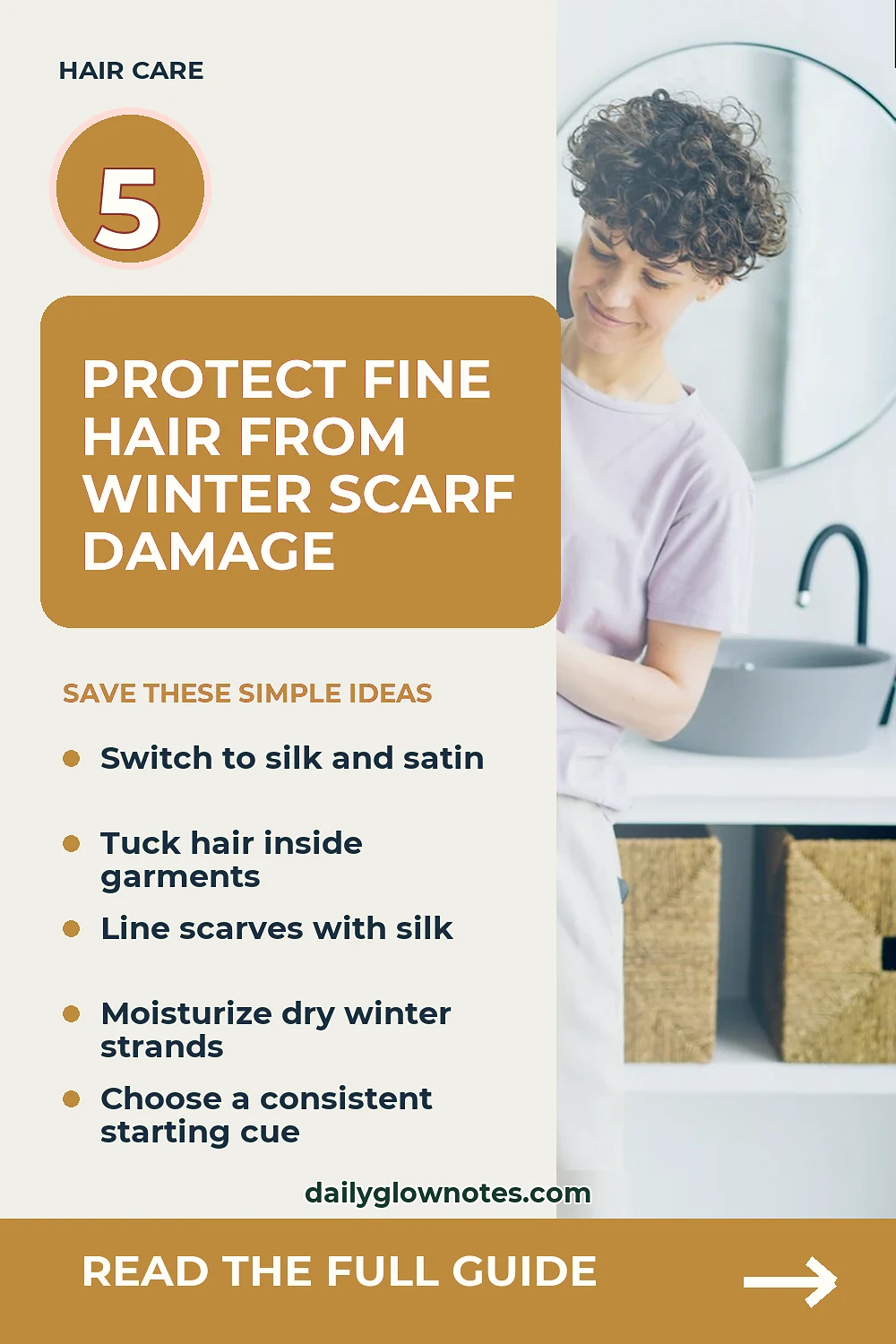
Gather your hair into a loose, high topknot or a soft braided style that sits well above your collar line. Secure your hair with snag-free silk scrunchies rather than traditional elastic bands with metal clasps, which can pinch and snap weakened strands. If you prefer wearing your hair down, drape a smooth silk or satin scarf around your neck first as a protective barrier before putting on your heavy wool outerwear.
Upgrading Your Winter Wardrobe Layers
You do not have to abandon your favorite wool scarves to keep your hair safe. The secret lies in creating a gentle physical barrier between coarse textiles and your delicate neckline.
Many people find success by lining the inner edge of their winter scarves with a strip of soft silk, satin, or lightweight cotton fabric. This prevents rough wool fibers from directly gripping individual hairs. Additionally, choosing smoother coat linings, such as polyester or rayon blends instead of abrasive tweed or heavy wool, significantly reduces daily friction as you move your head throughout the day.