
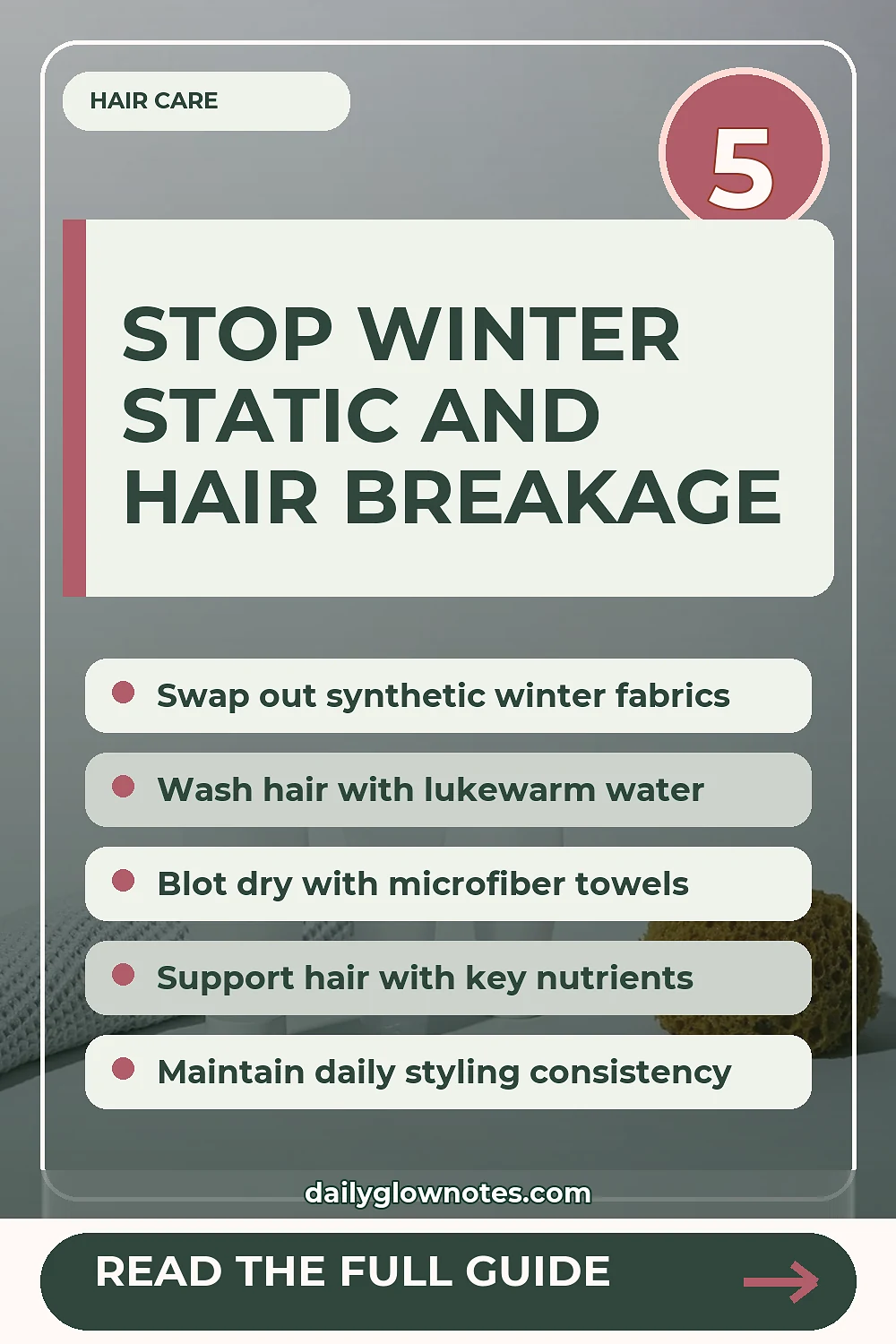
Cold winter months bring a unique set of challenges for fine and fragile hair. When outdoor temperatures drop and indoor heating systems crank up, relative humidity plummets, turning the air into a moisture sponge that aggressively draws hydration away from delicate strands. For anyone with fine hair, this seasonal shift instantly manifests as flyaways, clingy scarves, and sudden mechanical snaps. How to stop winter static hair breakage for fine hair becomes an urgent daily puzzle rather than a mere aesthetic annoyance. Unlike thick or coarse textures that easily weather seasonal dryness, fine hair features a smaller diameter and a more vulnerable cuticle layer. When high-friction winter fabrics like wool and acrylic rub against these delicate strands, static electricity causes individual hairs to repel one another, lifting the cuticle and creating micro-weakness points that eventually snap.
The Physics of Winter Static and Fine Strands
Static electricity is fundamentally an imbalance of electric charges within the hair shaft, caused by friction between dry surfaces. During winter, the lack of atmospheric moisture prevents these charges from dissipating naturally into the air. Instead, they build up on the surface of fine hair, making individual strands positively charged and desperate to push away from neighboring hairs or cling stubbornly to your favorite turtleneck sweater. Because fine hair lacks the protective heft and natural lipid reserves of coarser textures, it succumbs much faster to this electrical tension. Every time you pull a wool coat over your shoulders or remove a snug beanie, thousands of microscopic friction events occur, placing immense stress on already dry cuticles.
Addressing this mechanical vulnerability requires looking beyond surface-level smoothing agents and examining how your daily wardrobe and styling habits interact with your hair. Many people resort to heavy oils or silicone-laden serums to weigh down flyaways, but these products often leave fine hair looking limp and greasy without actually solving the underlying structural dryness. Protecting your strands means minimizing friction points while simultaneously supporting your hair from within to enhance overall resilience against seasonal environmental stress.
Wardrobe Modifications and Fabric Audit
Your winter wardrobe plays a surprisingly direct role in your hair's daily breakage statistics. Synthetic fibers like polyester, nylon, and acrylic are notorious static generators, constantly trading electrons with dry hair strands. When these materials rub against your crown or nape throughout the day, they create continuous micro-friction that frays the hair cuticle. Swapping synthetic linings for smooth, natural alternatives can dramatically reduce the daily static load on fine hair.
Consider lining the inside collars of your favorite winter coats with a strip of silk or satin, or simply wear a lightweight silk scarf as a protective barrier between your hair and rough wool sweaters. When selecting winter hats, look for styles lined with satin or charmeuse rather than raw acrylic knits. These small adjustments prevent the hair from catching on microscopic fiber loops, significantly cutting down on the random snapping that occurs every time you get dressed or commute in the cold.