
Waking up with tangled, stubborn knots around your crown and unusual shedding on your sheets can turn every morning into a frustrating routine. For adult women with fine or thinning strands, side sleeping often creates a concentrated friction zone. As you shift throughout the night, your hair repeatedly rubs against standard pillowcases, creating mechanical stress that leads to premature breakage around the temples and sides of the head. Building an effective overnight hair protection routine for side sleepers with fine thinning strands can dramatically reduce this daily friction damage.
Protecting fragile strands starts long before you turn off the bedside lamp. Understanding how your nightly sleeping posture impacts hair integrity allows you to make subtle, powerful adjustments to your evening routine without sacrificing comfort. By taking a proactive approach to your bedtime preparations, you create an environment where fragile hair can rest safely, free from the continuous wear and tear of standard sleeping habits.
The Mechanics of Sleep Friction on Fine Hair
Fine and thinning hair fibers have a more delicate outer cuticle layer, making them particularly vulnerable to physical abrasion. When your head rests directly on standard cotton or polyester pillowcases, the microscopic fibers of the fabric grip the hair shaft. As you turn your head from side to side, these fibers act like tiny hooks, pulling at the cuticle and causing micro-tears that eventually result in split ends and broken strands.
Side sleepers face a unique challenge because the entire weight of the head presses the hair against the bedding on a localized area. This constant pressure not only increases friction but can also place minor tension on the scalp and roots. Over time, this repetitive mechanical trauma leaves hair looking frizzy, uneven, and prone to excessive shedding upon waking up. Recognizing these microscopic interactions is the first step toward safeguarding your hair length and structural integrity.
Upgrading Your Sleep Surface and Accessories
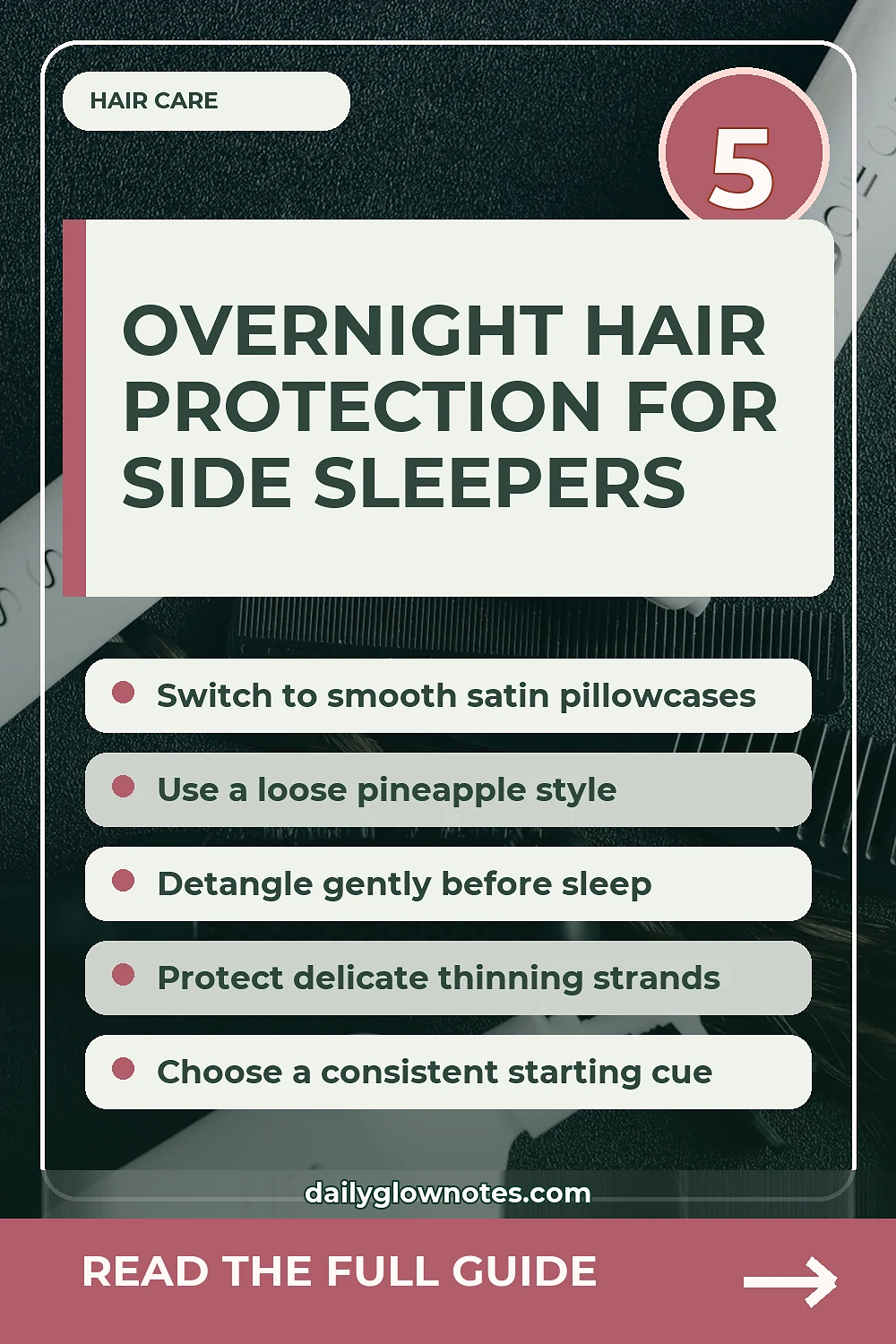
Switching your bedding materials is one of the simplest ways to minimize friction. Traditional woven fabrics create high resistance against hair cuticles. Replacing standard pillowcases with smooth, tightly woven alternatives like high-grade satin or silk allows hair strands to glide effortlessly across the surface as you move during the night. Because these smooth materials absorb less moisture than cotton, they also help your hair retain vital hydration until morning.
In addition to your pillowcase, how you secure your hair before bed matters immensely. Avoid tight elastics, rubber bands, or traditional metal-clasped hair ties that pinch and snap delicate strands. Instead, gather your hair loosely near the top of your head in a very gentle scrunchie, creating what many call a loose pineapple style. This keeps your hair out from underneath your head and shoulders, entirely eliminating the risk of crushing your strands against the mattress while preventing uncomfortable scalp pulling.