
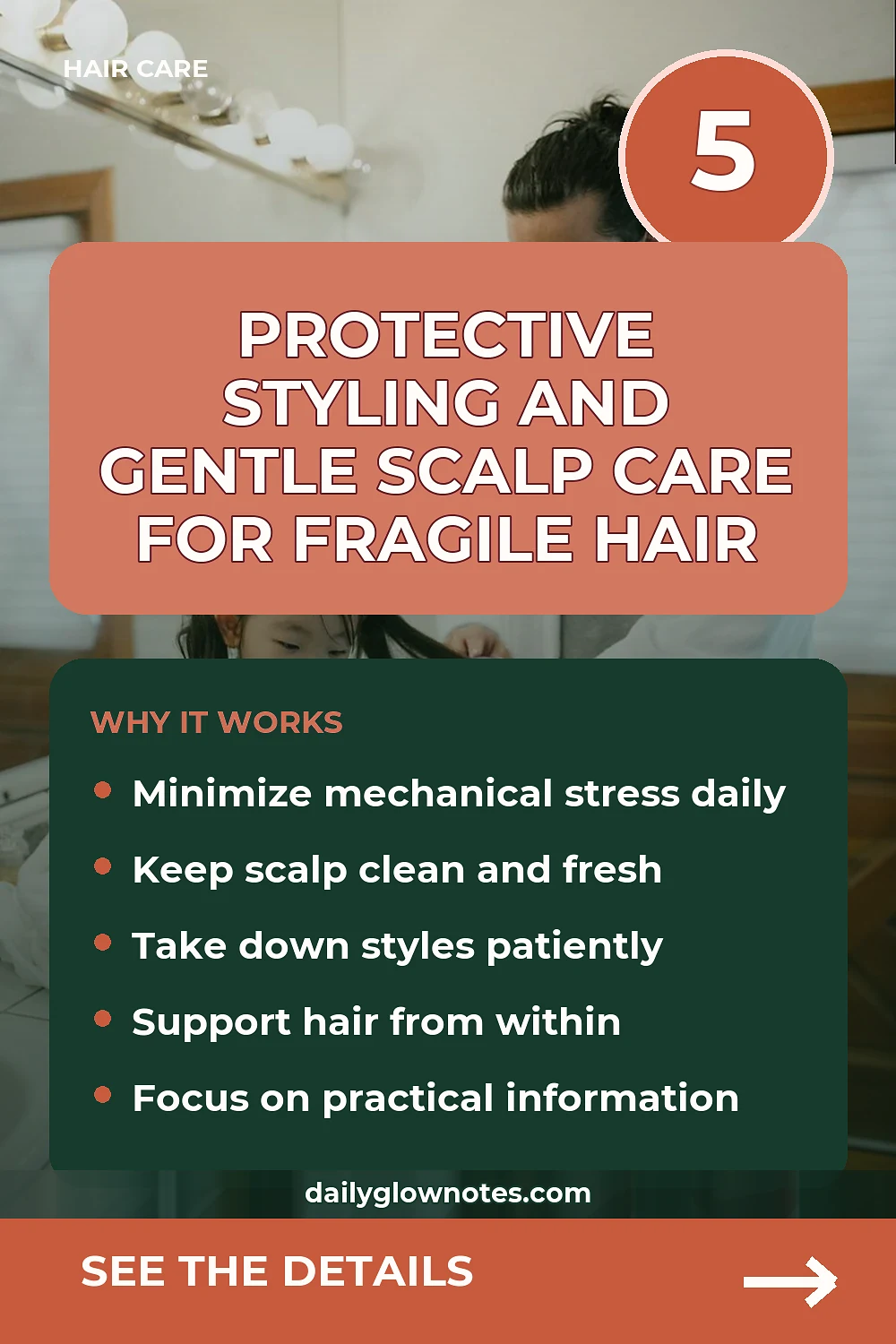
Finding the right balance between keeping fragile strands tucked away and maintaining a healthy scalp can feel like walking a tightrope. Protective styling and gentle scalp care for fragile hair require a mindful approach that prioritizes low tension over tight perfection. When hair is prone to snapping, shedding, or thinning, weekly styling sessions should feel like a sanctuary rather than a stress test for your roots. Adult women wearing low-manipulation styles often face the dilemma of wanting longevity from their hairstyles without compromising their delicate hairlines. Building a sustainable routine means looking beyond the aesthetic finish and tuning into how your scalp feels day after day.
Traditional styling methods often rely on excessive pulling to achieve a sleek look, but fragile hair thrives on breathing room. Transitioning to tension-free techniques protects the hair follicle from unnecessary physical strain. By focusing on scalp comfort checkpoints during your styling routine, you can prevent common issues like traction discomfort and follicle fatigue. Consistency in your gentle hair-care habits establishes a solid foundation for overall hair strength and resilience.
Understanding the Mechanics of Low-Tension Styling
The core principle behind protecting fragile strands is minimizing mechanical stress. When braids, twists, or locs are installed too tightly, they place continuous pressure on the roots, which can lead to premature shedding and breakage around the edges. Opting for looser parting and avoiding overly tight anchoring points allows the scalp to relax. This approach mirrors the care needed when shielding fine hair from wool scarf friction and winter snapping, where external elements are managed gently to preserve the cuticle integrity.
Instead of pulling hair into rigid geometric patterns, consider organic partings that follow your natural hair growth direction. This simple adjustment reduces daily tension on the most vulnerable areas of the scalp. Additionally, giving your hair routine a careful evaluation after washing helps determine whether your current styling method is too abrasive. If you notice tenderness or redness immediately after styling, it is a clear signal to loosen the grip.
Nurturing the Scalp Beneath Your Protective Style
A healthy scalp is the absolute anchor for healthy-looking hair. When hair is tucked away, the skin underneath still requires breathable care and gentle cleansing routines. Buildup from styling products, natural sebum, and environmental debris can accumulate quickly, leading to irritation and flakes. Keeping the scalp refreshed without disrupting the style involves using targeted cleansing applicators and lightweight hydration mists that soothe the skin without heavy residues.
During the drying phase, moisture management is equally vital. After washing your hair, how you handle moisture makes a significant difference in preventing surface friction. Utilizing microfiber wraps vs. t-shirts which minimizes post-wash hair friction can guide your choice in selecting tools that absorb water delicately without roughing up the hair cuticle before your styling session begins.