
Fine, tangle-prone hair requires a delicate touch. When strands are thin and delicate, everyday friction from clothing, wind, and even sleep can cause microscopic friction points that escalate into stubborn knots. Rushing through your routine with a standard brush often snaps weak strands instead of smoothing them. Adopting a methodical approach to handling your hair makes all the difference in preserving length and preventing unnecessary breakage. By mapping out how you approach each area of your head, you reduce mechanical tension and protect your scalp from harsh pulling.
Understanding Fine Hair Fragility
For those dealing with seasonal shedding or general thinning, minimizing daily stress on the hair shaft is a fundamental step. When strands are vulnerable, mechanical manipulation is one of the primary culprits behind daily hair fall. Creating a predictable, gentle routine helps preserve the integrity of each strand, allowing your hair to look smoother, feel stronger, and maintain its natural vitality over time.
Mapping the Lower Nape and Crown
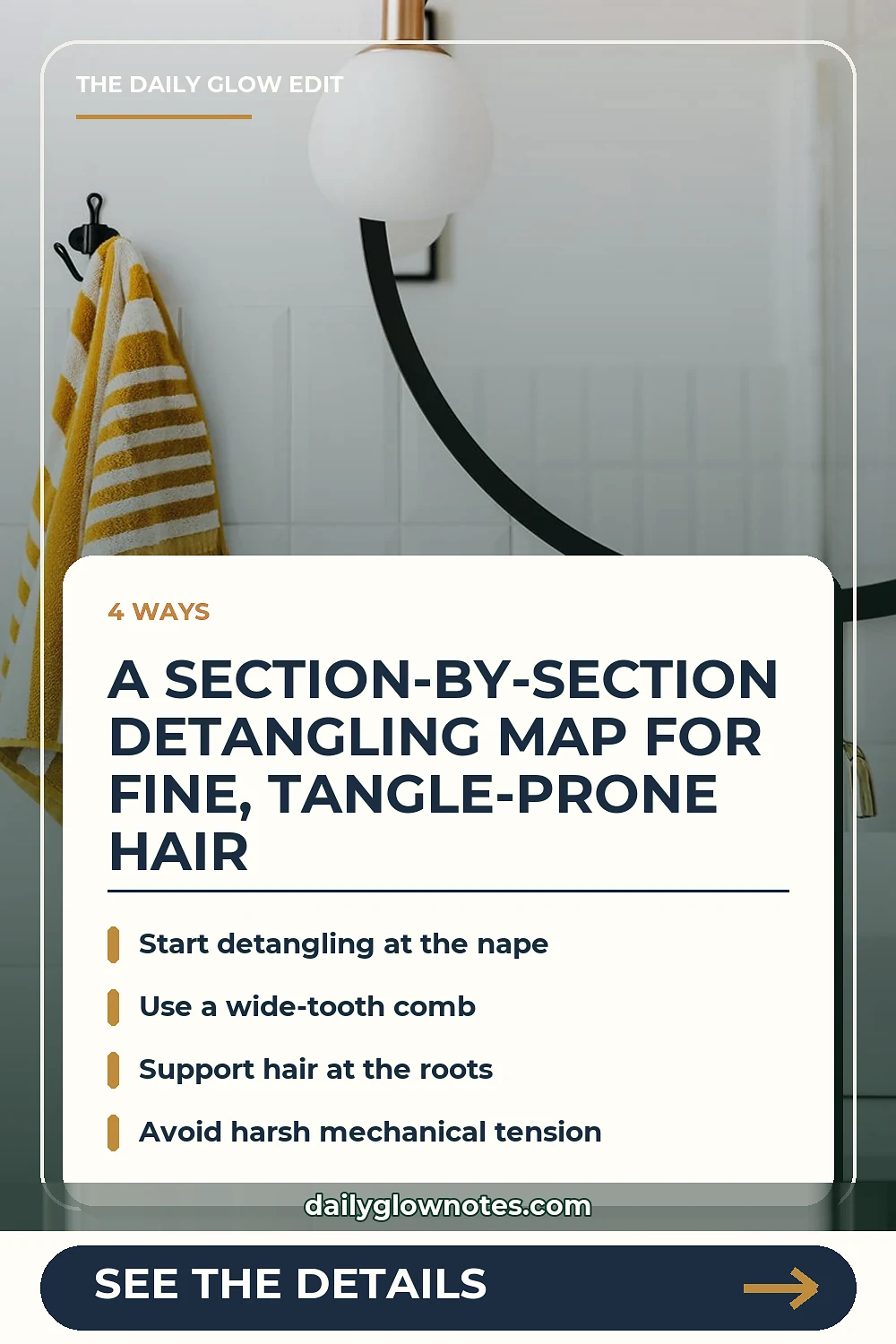
The lower nape area is often the primary zone for friction knots because hair constantly rubs against shirt collars, scarves, and jacket hoods. Start your detangling routine here before moving anywhere else. Gently section the hair at the nape using your fingers, holding the base of the section near the scalp to prevent pulling at the roots. Using a wide-tooth comb with smooth, seamless teeth, begin at the very ends of the hair. Work your way upward in micro-increments only after the bottom inch is completely free of tangles.
Once the lower nape is smooth, move upward to the crown. This region frequently experiences tangling from resting against pillows or leaning against chair backs. Treat the crown with the same patient pacing. For more detailed advice on handling daily environmental friction, you might explore our guide on Managing Winter Static Breakage: A Practical Guide for Fine Hair, which outlines additional strategies for cold-weather hair defense.