
High humidity transforms fine hair into a delicate web of snags, where a standard brush stroke can easily snap fragile strands. When the air carries heavy moisture, the hair cuticle swells, causing individual hairs to interlock and tangle with frustrating speed. For adult women managing fine, thinning hair or seasonal shedding, aggressive pulling during detangling causes unnecessary breakage. Establishing a low-friction routine specifically designed for humid days protects delicate lengths and preserves strand integrity without relying on harsh mechanical force or unverified growth treatments.
Fine hair requires a specialized approach when the weather turns muggy. Unlike coarse or thick hair that can tolerate heavier oils or vigorous styling, fine textures lack structural density and break under minimal tension. A thoughtful humid-weather detangling routine focuses on minimizing friction, utilizing the right tools, and handling strands only when their tensile strength is best equipped to endure it. By shifting your technique to accommodate atmospheric moisture, you reduce daily shedding caused by mechanical trauma.
The Pre-Shower Slip Phase
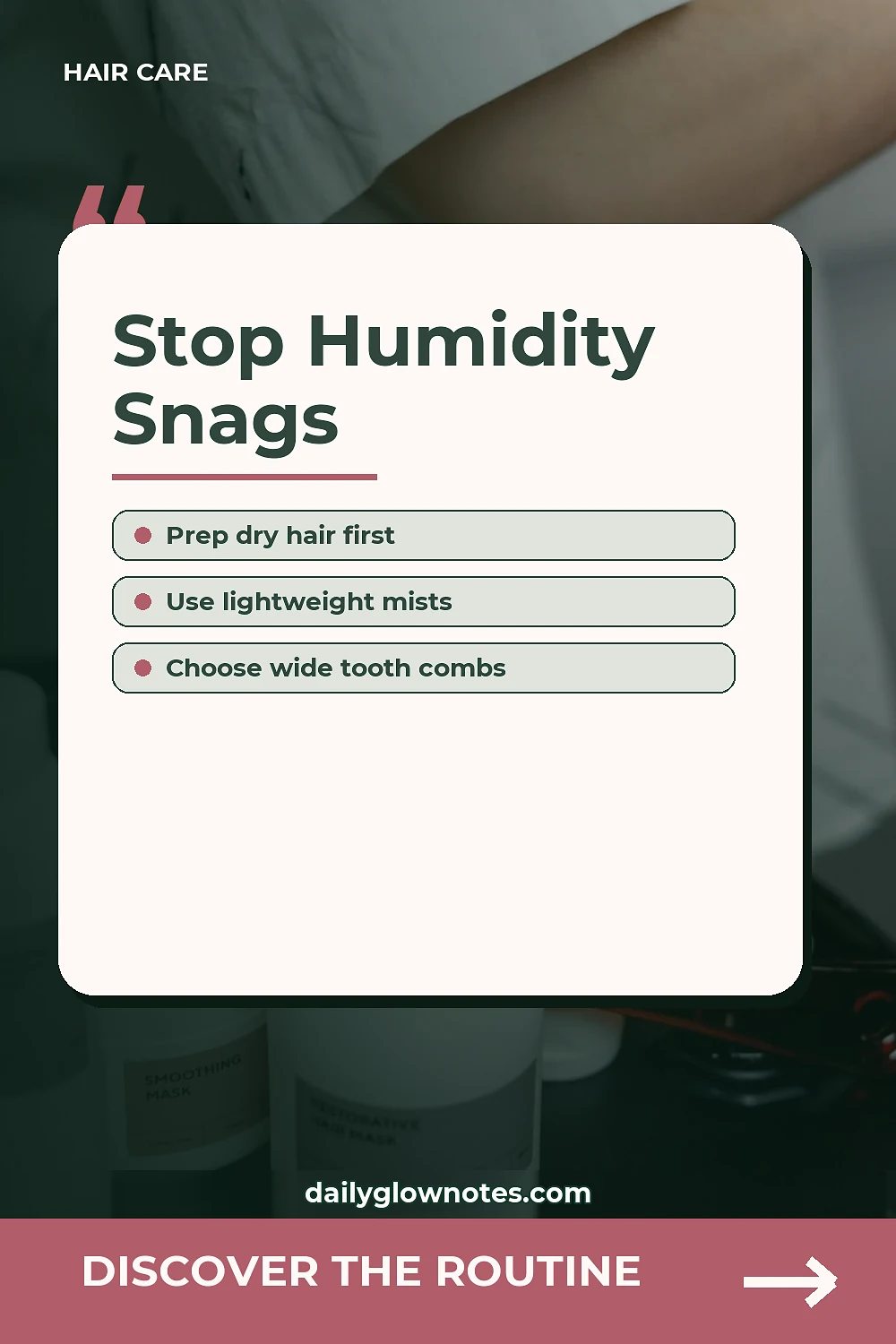
Before water touches your hair, preparing the strands can dramatically reduce post-wash tangles. On humid days, avoid stepping straight into the shower with unbrushed hair, as water causes the hair shaft to swell further, locking existing knots into place. Gently work a wide-tooth comb or a flexible-bristle brush through dry hair, starting from the ends and slowly working your way up toward the crown. This preliminary step removes loose hairs that would otherwise entwine with wet strands, creating stubborn clumps. Taking your time during this phase establishes a smoother foundation before cleansing, supporting your broader goal of nurturing stronger hair through consistent daily habits.
Selecting the Right Moisture-Resistant Slip Agents
Applying the correct slip agent is essential when detangling fine, humid-stressed hair, but heavy products will quickly weigh delicate strands down. Look for lightweight, water-based detangling sprays or ultra-fine mists containing humectants like glycerin or panthenol, which impart slip without leaving a greasy residue. Avoid thick silicones that can trap environmental moisture or heavy oils that exacerbate limpness. Apply the product sparingly from mid-length to ends, allowing it to penetrate for a minute before introducing any tool. This temporary barrier reduces surface friction, letting your comb glide smoothly through the hair matrix. Furthermore, understanding how your hair responds to varying dew points helps you adjust product amounts so your strands remain airy, voluminous, and entirely free of heavy buildup throughout the day.