
Dealing with fine hair when the humidity climbs can quickly turn a simple morning styling session into a frustrating battle against friction and knots. High moisture in the air causes delicate strands to swell and absorb ambient water vapor, lifting the hair cuticle and making neighboring hairs cling together. For those who already navigate fragile strands, shedding, or seasonal thinning, this daily tug-of-war introduces unnecessary breakage. Protecting vulnerable lengths requires more than just a standard conditioner; it demands a mindful, low-manipulation approach specifically designed for humid climates.
Why Humidity Amplifies Fine Hair Tangling
Fine hair lacks the structural density of coarser textures, leaving each individual strand more susceptible to environmental shifts. When humidity levels rise, the outer layer of the hair shaft reacts to the atmospheric moisture. Because fine strands have a smaller diameter, they twist and interlock easily when damp or exposed to sweat and moisture. This creates microscopic snags that tighten throughout the day, turning minor ripples into stubborn knots.
Attempting to brush through these damp or swollen strands with force often results in snapping near the mid-shaft or pulling hair out from the root. Recognizing how moisture alters hair elasticity helps shift the focus from aggressive brushing to preventative care. Minimizing mechanical stress during wash days and transition moments preserves the structural integrity of delicate lengths, supporting long-term hair resilience.
Pre-Wash Preparation to Minimize Snagging
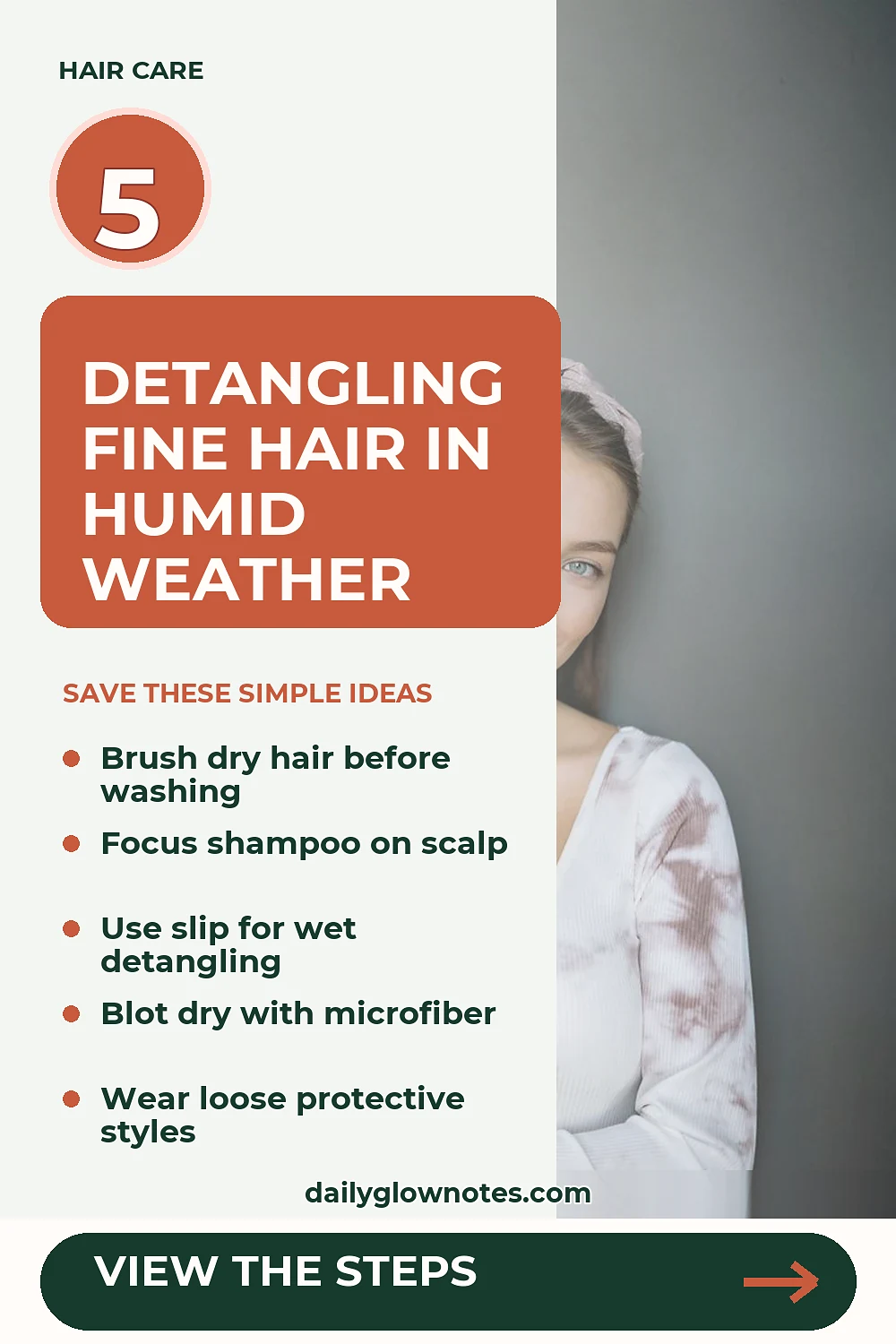
One of the most effective ways to manage a humid weather detangling routine is to address knots before water ever touches the hair. Dry hair has distinct boundaries and is often easier to guide apart than hair that has been weighted down and tangled further by running water. Using a wide-toothed wooden comb or a flexible-bristle brush on dry hair before stepping into the shower helps clear out existing shedding before the cleansing process begins.
Working gently from the ends upward toward the scalp prevents tension from concentrating on fragile roots. This preparatory step also reduces the amount of manipulation needed later when the hair is in its most vulnerable, wet state. For those exploring comprehensive hair support, incorporating internal wellness steps—such as daily nutritional routines featuring targeted supplements like Locerin—can complement external care by nourishing strands from within to support overall hair strength and resilience over time.
Smart Washing and Conditioning Techniques
In humid weather, the way cleansing products are applied makes a significant difference in how easily hair detangles afterward. Shampoos should be massaged primarily into the scalp to lift excess oils and buildup without stripping the delicate lengths. Allowing the suds to gently cleanse the mid-lengths and ends as they rinse out prevents unnecessary friction and tangling.
When applying conditioner, focus the product generously through the middle and ends where fine hair is oldest and most prone to dryness. While the conditioner sits, use wide fingers or a specialized wet-detangling brush to gently glide through the strands while they are fully saturated with slip. This lubrication is essential for easing out knots without pulling. Rinsing thoroughly with cool water helps seal the cuticle down, reducing the surface roughness that invites humidity-induced frizz later in the day.