
Wet hair is remarkably fragile. When strands absorb water, the internal protein bonds stretch and weaken, making fine or thinning hair exceptionally susceptible to mechanical damage. For adult women navigating excessive shedding or weak strands, the standard post-shower routine can inadvertently trigger daily breakage before styling even begins. Traditional drying habits—such as aggressive rubbing with a standard terrycloth towel or twisting damp hair into a tight, heavy turban—create intense friction and tension that delicate follicles simply cannot handle. Adopting an air dry handling routine for fragile hair changes this dynamic completely, shifting the focus from rushed friction to patient, protective moisture management.
Understanding the Vulnerability of Wet, Thinning Hair
Protecting your hair starts the moment you step out of the shower. Minimizing physical manipulation while strands are saturated reduces the risk of cuticle lifting and snapping. By treating damp hair with the same care you would accord to fine silk, you preserve the overall density and appearance of your hair over time. This mindful approach aligns seamlessly with broader efforts to audit your daily habits, much like conducting a Hidden Culprits: A Breakage Audit for Women Over 40 to uncover overlooked sources of daily wear and tear.
The Microfiber Press: Gentle Moisture Extraction
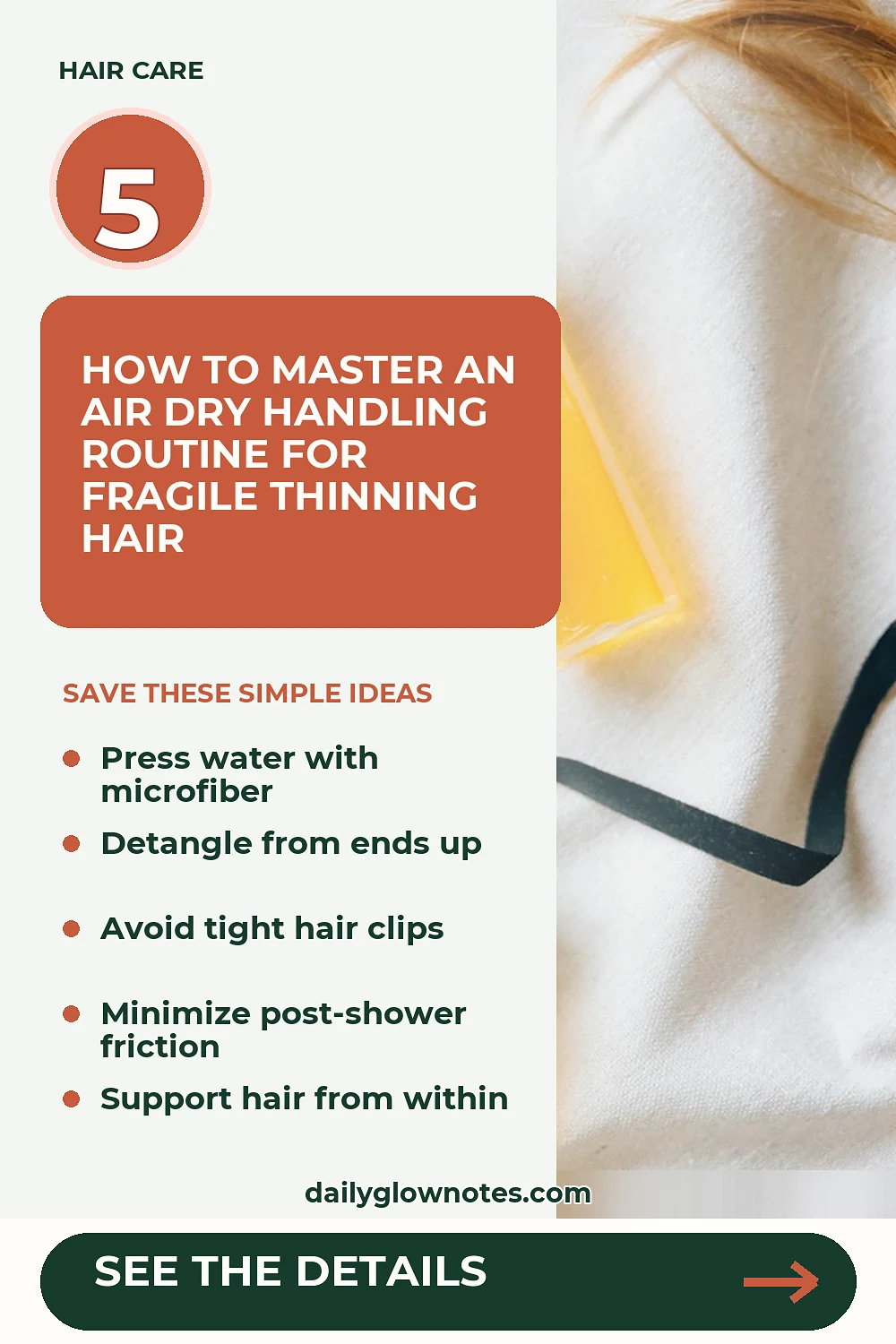
The first physical step in a breakage-preventing routine involves how you remove excess water. Standard cotton towels feature rough loops that catch individual hair fibers, snagging weak areas and creating frizz or snaps. Instead, swap your towel for a smooth, plush microfiber option or a clean cotton t-shirt.
Gently press and blot the hair section by section, starting from the roots and moving downward toward the ends. Never wring, twist, or rub the hair. Imagine you are pressing water out of a delicate sponge rather than drying a sturdy fabric. This pressing technique extracts heavy moisture efficiently without stretching the hair shaft beyond its elastic limit. Taking your time here sets the foundation for a smooth, tangle-free air-drying process that respects your scalp and strands.
Detangling with Care While Damp
Detangling is often where the most severe mechanical damage occurs. When thinning hair is wet, pulling a fine-toothed brush through knots will stretch and snap fragile strands. The golden rule of fragile hair care is to detangle only when necessary, using the right tools and the right preparation.
Apply a lightweight, rinse-free detangling mist if your hair requires slip, then use a wide-tooth comb with smooth, rounded teeth. Always begin detangling at the very ends of the hair, gently working out small knots before moving higher up toward the scalp. Hold the hair section just above the comb with your free hand to absorb the tension so it never pulls directly on the root. This patient, bottom-up method prevents unnecessary shedding and keeps your strands intact.