
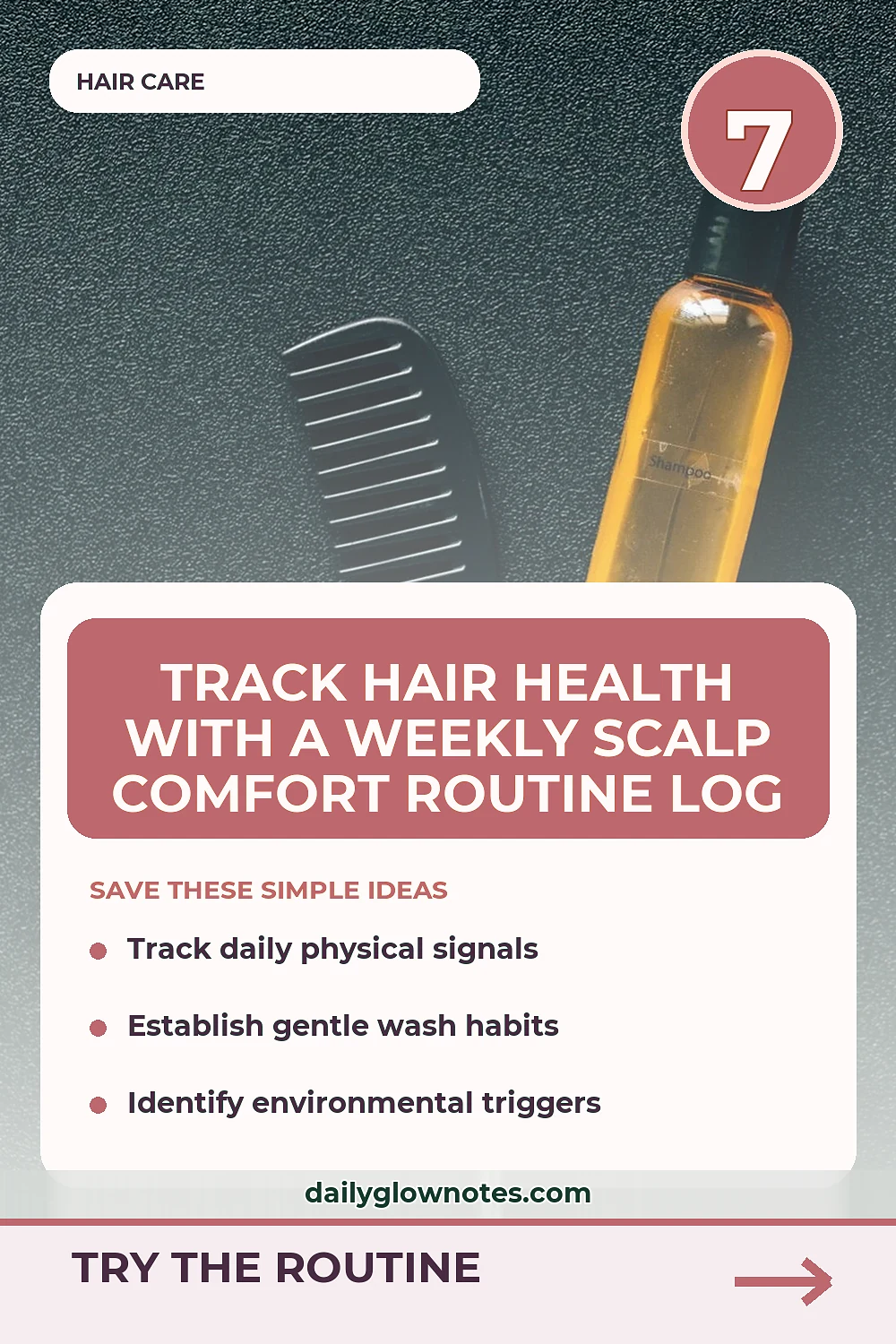
When your scalp feels dry, tight, or slightly uncomfortable, the standard reaction is often to purchase a new shampoo, a soothing serum, or an exfoliator. However, swapping formulas every few days makes it nearly impossible to determine what actually helps and what might be causing further irritation. Constant product cycling frequently over-sensitizes fragile roots and worsens hair shedding or breakage. Implementing a weekly scalp comfort routine log offers a simple, zero-product way to track everyday physical signals, isolate environmental triggers, and build a stable routine that protects fine, thinning hair.
By shifting focus from instant cosmetic fixes to calm weekly observation, you give your scalp time to rebalance. Keeping a streamlined record helps you spot clear patterns—such as how your scalp reacts to washing frequency, heat styling, or seasonal changes—before you spend money on unnecessary bottles.
Mapping Daily Physical Signals Instead of Switching Formulas
When uncomfortable sensations arise, jumping straight to a new product often masks the underlying cause. Keeping a basic journal entry takes less than two minutes a day and provides clear data on how your scalp actually behaves over a full seven-day cycle.
- Morning Comfort Check: Record whether your scalp feels tight, oily, or normal upon waking. Note if you notice excess hair shedding on your pillow.
- Wash Day Reactions: Note how your scalp feels immediately after washing and six hours later. Persistent tightness often points to water temperature or overly aggressive cleansing rather than a need for new leave-in treatments.
- Styling Sensations: Document any tenderness after wearing your hair in tied styles, using blow dryers, or applying dry shampoo.
Documenting these subtle shifts prevents panic-buying. When you review your notes at the end of the week, you may realize that discomfort spikes only on days you use high heat or wear tight hairstyles, rather than being a continuous issue that requires a heavy clarifying mask.
Establishing Baseline Rules for Your Wash Calendar
Frequent shampooing can strip essential natural lipids, while waiting too long between washes allows buildup to accumulate, potentially straining fragile follicles. Rather than altering your hair care line, test minor timing adjustments while keeping your core products fixed.
Maintain your current shampoo and conditioner for at least two consecutive weeks. Use your log to track comfort levels on day one, day two, and day three post-wash. If tightness peaks on day one, lower your water temperature from hot to lukewarm. If heaviness and mild itching appear consistently on day three, that serves as your natural marker to cleanse, eliminating the need to guess or apply heavy leave-in sprays.
Identifying Environmental Triggers and Mechanical Stress
Scalp sensitivity and strand breakage are frequently caused by external daily habits rather than product failure. Tracking environmental factors alongside physical comfort helps pinpoint everyday stressors that weaken thinning hair.
Tension and Friction Points
Tight hair ties, heavy clips, and rough pillowcases create localized tension that can leave the scalp feeling sore by evening. Note in your log which days you wear your hair up and whether those days correlate with increased scalp tenderness or visible strand breakage. Switching to loose styles or soft silk scrunchies often resolves localized discomfort without extra topical care. To learn more about identifying physical friction sources, read Hidden Culprits: A Breakage Audit for Women Over 40.
Indoor Air and Temperature Shifts
Central heating and air conditioning rapidly deplete ambient humidity, leading to surface dryness that is easily mistaken for a dry scalp condition. Note indoor heating exposure in your weekly scalp comfort routine log before deciding to add heavy oils that might weigh down fine hair.