
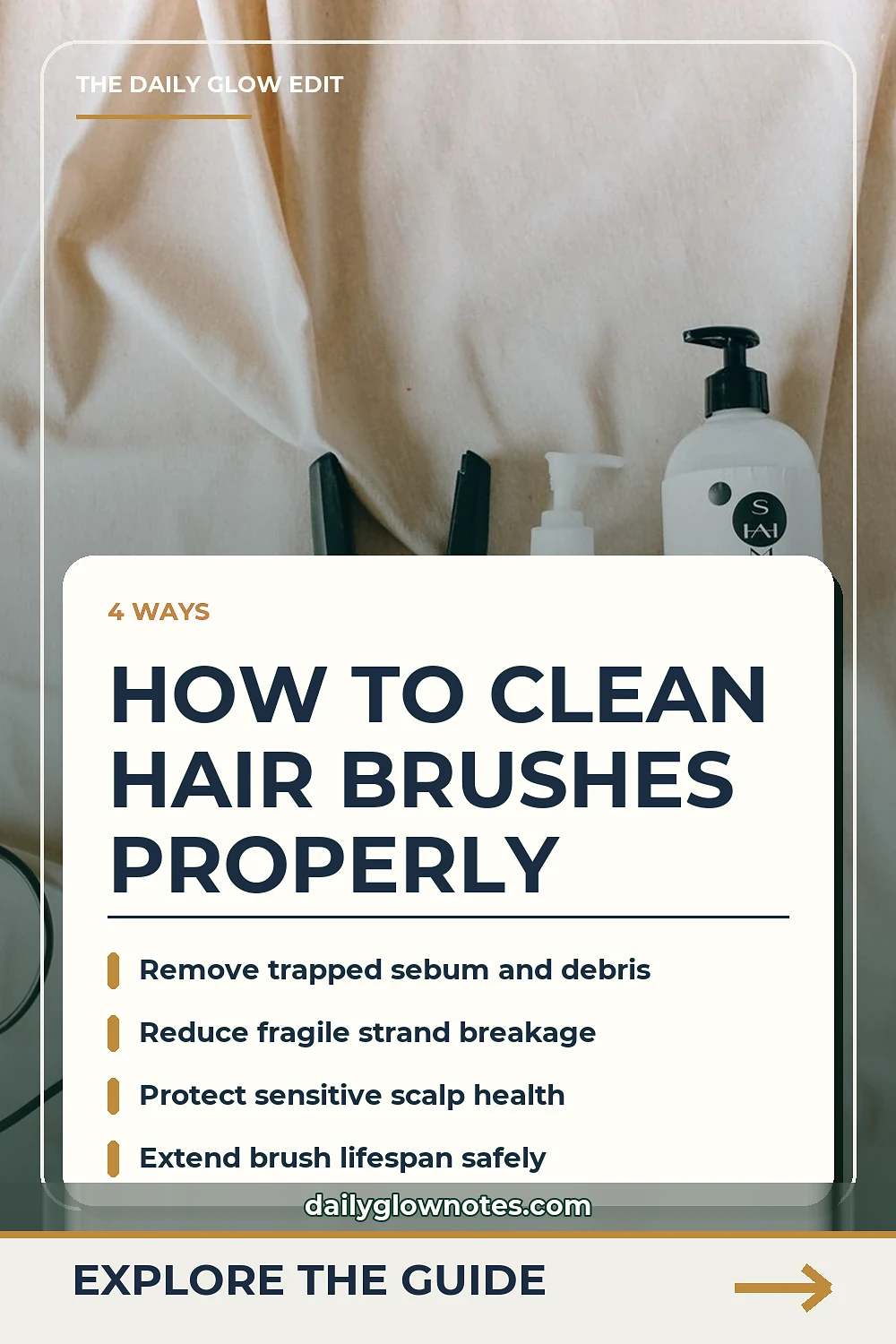
If you have ever noticed a fine layer of greyish dust, lint, or waxy residue clinging to the base of your hair brush, you are looking at a concentrated mix of sebum, dead skin cells, stale styling products, and environmental pollution. For women navigating fine, fragile, or thinning hair, this accumulation becomes more than an aesthetic nuisance. Every time you sweep that tool through your strands, you essentially re-introduce yesterday's shed oils and microscopic debris directly back onto your scalp and roots. Over time, this constant redeposition can weigh down delicate hair, congest hair follicles, and trigger localized irritation.
Understanding how to clean hair brushes for scalp health is an essential yet frequently overlooked step in any comprehensive hair-care routine. Many of us invest heavily in clarifying shampoos, lightweight conditioners, and scalp serums, yet we completely ignore the very instrument we press against our scalps daily. By adopting a reliable maintenance cadence, you protect your scalp environment from unnecessary congestion, reduce unnecessary friction on weak strands, and ensure your hair-care products perform at their best.
The Hidden Toll of Neglected Brushes on Fine and Thinning Hair
Fine hair behaves differently than dense or coarse hair types. Because individual strands have a smaller diameter, they show oil accumulation and buildup much faster. When a hair brush is coated in old sebum and styling residue, the bristles act like a magnet for airborne dust and shed skin cells. Passing this contaminated tool through your hair transfers that buildup straight to the roots, creating a heavy, flat appearance right where you want natural volume.
Furthermore, old buildup alters the structural integrity of your brushing routine. Stiff, matted clumps of hair trapped within the bristles create rigid obstacles. Instead of gliding smoothly, the brush catches on tangles, pulling at fragile strands and causing unnecessary breakage. Women experiencing excessive shedding or hair thinning often misinterpret this mechanical snapping as active hair fall, when it is frequently just physical breakage caused by poorly maintained tools.
Protecting delicate strands involves looking at your entire daily routine, including how you handle seasonal elements. For instance, cold weather introduces a different set of mechanical stresses, as detailed in our guide on Shielding Fine Hair From Wool Scarf Friction and Winter Snapping. Addressing your tools is simply the foundational step toward safeguarding your hair's overall resilience.
A Step-by-Step Cleaning Routine Tailored for Delicate Bristles
Cleaning your hair tools does not require harsh chemical disinfectants or complicated soaking rituals. In fact, aggressive soaking can ruin wooden brush handles, dissolve the glue holding synthetic cushions together, or warp natural boar bristles. A gentle, methodical approach keeps your brushes hygienic without compromising their structural lifespan.
Start by removing all trapped loose hair from the cushion and bristles. You can use a wide-tooth comb, a pair of clean tweezers, or a specialized mini rake tool to lift the hair upward and out. Never pull aggressively, as this can stretch or tear the rubber cushion beneath the pins.
Next, prepare a shallow bowl of lukewarm water mixed with a few drops of a gentle clarifying or sulfate-free shampoo. Dip a clean, soft-bristled toothbrush into the soapy water and gently scrub between the pins or bristles, working your way from the base outward. If your brush features a rubber pneumatic pad with an air hole, take care not to submerge the entire brush head entirely, as trapped water inside the cushion can lead to mold and unpleasant odors. Instead, keep the cushion facing downward while you clean.
Rinse the brush thoroughly by wiping the bristles with a clean, damp cloth dipped in fresh water. Shake off excess moisture and place the brush face down on a clean towel to dry completely in a well-ventilated space.