
Fine hair is inherently delicate, but when strands become saturated with water, their structural vulnerabilities multiply significantly. Water enters the hair cuticle, causing the cortex to swell and temporarily altering the hydrogen bonds that give hair its strength. For women dealing with thinning hair or fragile textures, this means that wet hair operates at the absolute limit of its elasticity. When you pull a comb through soaked fine strands without proper preparation, you introduce mechanical friction that easily stretches the fiber past its threshold, resulting in invisible micro-tears and sudden snapping.
Understanding Wet Hair Elasticity and Fine Strands
Many people assume that applying a generous amount of conditioner automatically makes wet hair indestructible. However, conditioner provides surface lubrication rather than internal reinforcement. If you use the wrong tools or apply tension too aggressively while rinsing or coating your hair in the shower, you risk causing daily breakage that impedes your length and volume goals. Recognizing how mechanical friction damages weak strands is the first step toward building a safer, more resilient hair-care routine.
The Common Wet Brushing Mistake Holding Your Routine Back
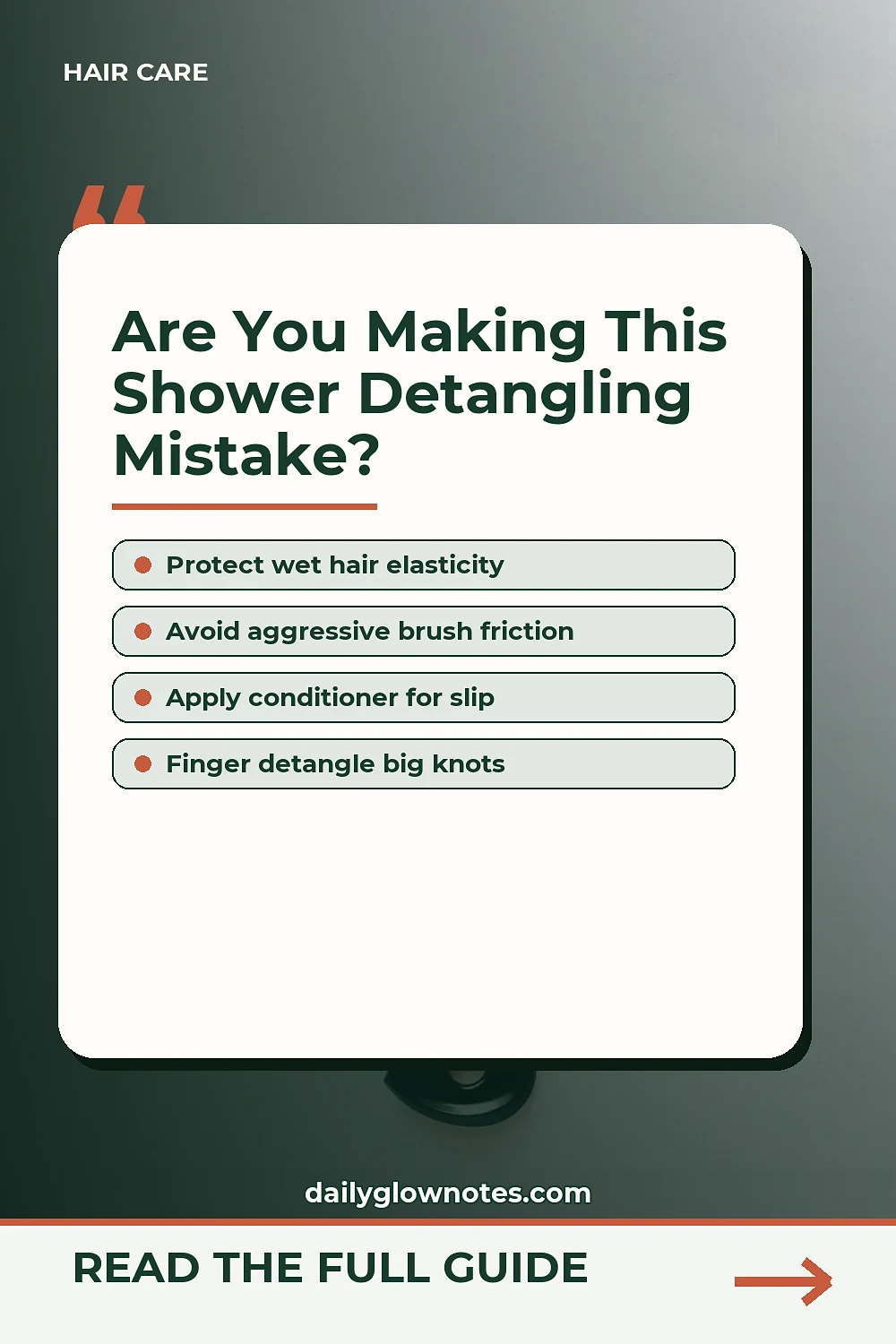
The single most damaging mistake people make in the shower is aggressively dragging a fine-toothed or rigid plastic comb straight through soaking-wet hair starting directly from the roots. When fine hair tangles, knots tend to tighten under the weight of water. Pulling downward through a wet clump creates intense focal points of tension. Instead of gliding through the knot, the teeth of the comb act like a tiny barricade, snapping the delicate hair shaft instead of untangling it.
Furthermore, many individuals perform this detangling step while the showerhead is still running directly overhead, washing away the slip of their conditioner before the product has time to coat the cuticle evenly. This leaves hair unprotected against the friction of brushing. To prevent this, you must pause the water stream, apply your product correctly, and change your mechanical approach entirely.