

While unflavored gelatin is commonly associated with fruit jellies and sweet cold desserts, its culinary history in savory kitchen applications is equally rich. Learning thoughtful savory gelatin recipe planning allows you to transform nourishing broth, roasted vegetable stocks, and fragrant herbs into elegant, nutrient-dense culinary creations. Beyond expanding your cooking repertoire, incorporating plain gelatin into savory preparations provides an approachable way to integrate collagen-supportive amino acids into your daily routine without adding excess refined sugar.
Mastering savory gelatin recipes requires a different approach than sweet dishes, particularly regarding blooming techniques, liquid ratios, and seasoning balances. Sweet recipes often rely on sugar and acidity to mask the neutral taste of plain gelatin, whereas savory formulations highlight subtle, rich flavors. Understanding these structural differences makes it easier to create refreshing savory aspics, rich clear broths, and light cold starters that fit seamlessly into a balanced, mature-skin wellness routine.
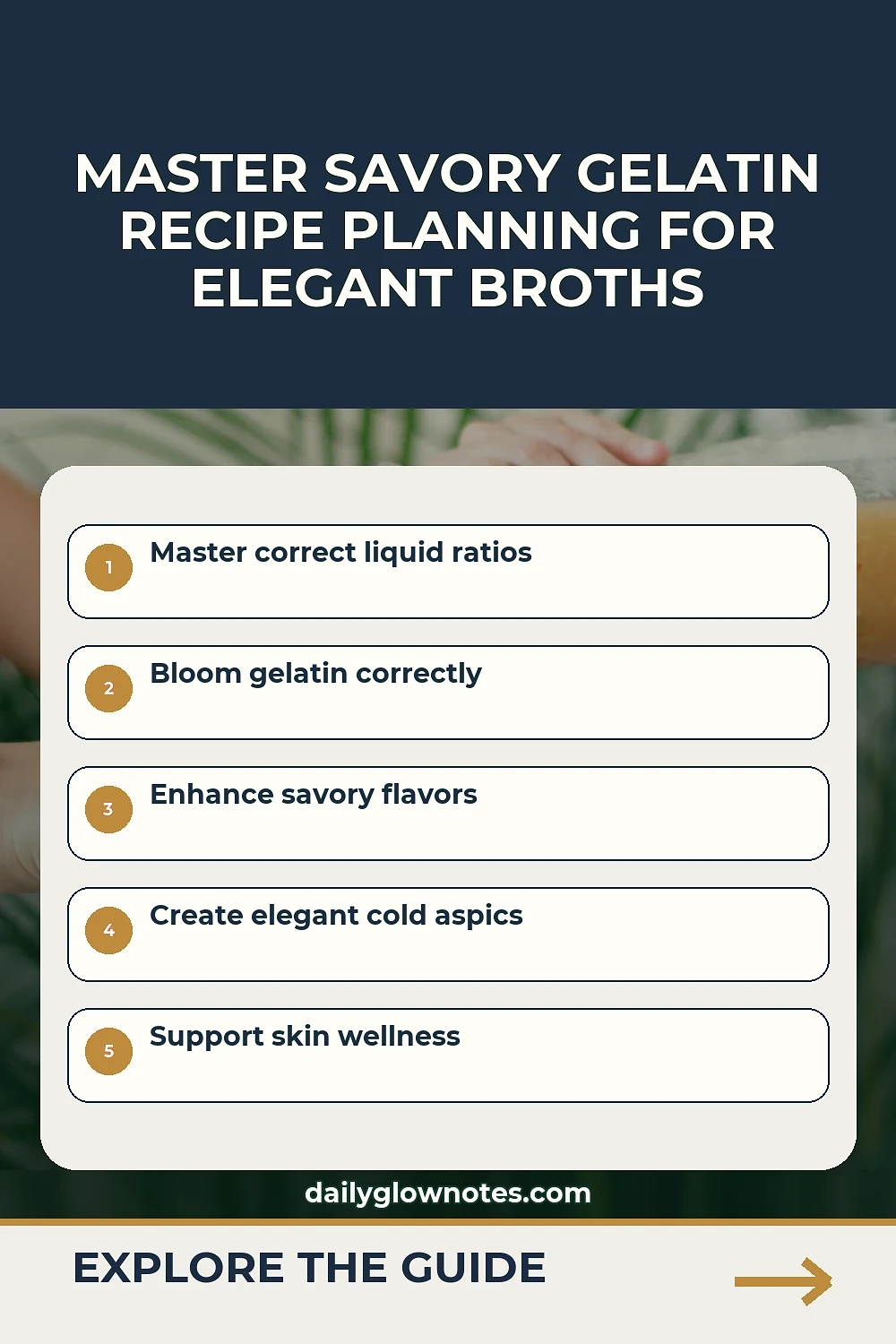
Understanding Liquid Ratios for Savory Gelatin Formulations
The foundation of successful savory gelatin recipe planning lies in mastering liquid-to-gelatin proportions. Sweet desserts often lean toward a firmer, more resilient set to hold heavy fruit or cream, but savory dishes usually benefit from a delicate, melt-in-the-mouth texture. A delicate texture ensures that the dish releases its savory aromas as soon as it meets the warmth of the palate.
As a general standard for savory stocks and light aspics, one tablespoon (or about one standard envelope) of plain powdered gelatin successfully sets approximately two cups of liquid. However, liquid viscosity plays a major role:
- Light Clarified Broths: Require standard ratios (1 tablespoon per 2 cups of liquid) for a clean, sliceable set.
- Rich Bone Broths: Already contain natural gelatin, so you can reduce added gelatin powder by roughly one-third to prevent a dense or rubbery outcome. If you have ever experienced texture failures in the past, understanding how to use gelatin without rubbery texture issues will help you adjust liquid balances accurately.
- Acidic or Herb-Infused Liquids: Highly acidic bases like lemon juice or tomato water slightly weaken gel strength, requiring an extra quarter teaspoon of gelatin per cup of liquid.
Hydration and Blooming Techniques for Clear Broths
Achieving a crystal-clear appearance is a hallmark of refined savory gelatin dishes. The blooming step—allowing the dry gelatin granules to absorb cold liquid and swell before applying heat—is essential for smooth, lump-free distribution.
Always sprinkle powdered gelatin evenly over cool liquid, such as cold vegetable stock or cooled room-temperature broth. Let it sit undisturbed for five to ten minutes until fully saturated. Once bloomed, gently warm the mixture over low heat just until the granules completely dissolve. Avoid boiling the gelatin mixture vigorously, as extreme temperatures can degrade its gelling capacity and alter the delicate flavor profile of your seasoned stock.
Elevating Flavor Profiles with Herbs, Stocks, and Acids
Because cold temperatures dull flavor perception, savory gelatin preparations require bold, well-rounded seasoning prior to chilling. A room-temperature broth that tastes perfectly salted may taste muted once chilled into a solid gel. Strengthening your broth base with concentrated herbs, gentle acids, and umami-rich ingredients ensures a vibrant final dish.
Consider combining classic culinary herbs like fresh thyme, rosemary, parsley, and tarragon with clarifyed tomato water or roasted vegetable stock. A splash of dry white wine or apple cider vinegar adds necessary acidity that cuts through the richness of the base. For those focused on beauty-from-within routines, pairing these mineral-rich vegetable broths with protein sources offers a savory alternative to sweet morning meals. Alternatively, if you occasionally prefer sweet variations in your routine, trying a pineapple coconut smoothie offers a refreshing contrast on warmer mornings.