
You spend hours every week behind the wheel, navigating traffic and planning your day. Yet, while you are focused on the road, your hair might be enduring a subtle, repetitive stressor that contributes to breakage right at the crown. If you have noticed thinning, frizz, or shorter, wispy hairs forming a halo effect at the top of your head, the culprit might be closer than you think. Car headrest friction for crown hair is an overlooked factor in daily hair health, particularly for those of us with fragile, thinning, or breakage-prone strands.
The Mechanics of Commuter Hair Damage
Hair is surprisingly resilient, but it is not immune to the laws of physics. Every time you lean back against your car seat, your hair is compressed between your head and the headrest. If you have a long commute, this creates a sustained period of tension and abrasion. Unlike a pillowcase, which is often made of silk or satin, standard car headrests are typically covered in synthetic polyester, leather, or woven fabrics that can be quite rough on the hair cuticle. Over time, this daily contact can lead to mechanical breakage. This is not just about shedding; it is about physical wear and tear that weakens the hair shaft, making it appear thinner and less vibrant.
The crown area is especially vulnerable because it is the most common point of contact with the headrest. When you adjust your seat to a reclined position, the angle often increases the pressure directly on this part of the scalp. If your hair is already fine or fragile, this repeated friction can cause strands to snap off mid-length, leaving you with shorter, uneven hairs that refuse to blend with the rest of your style.
Adjusting Your Driving Posture for Hair Health
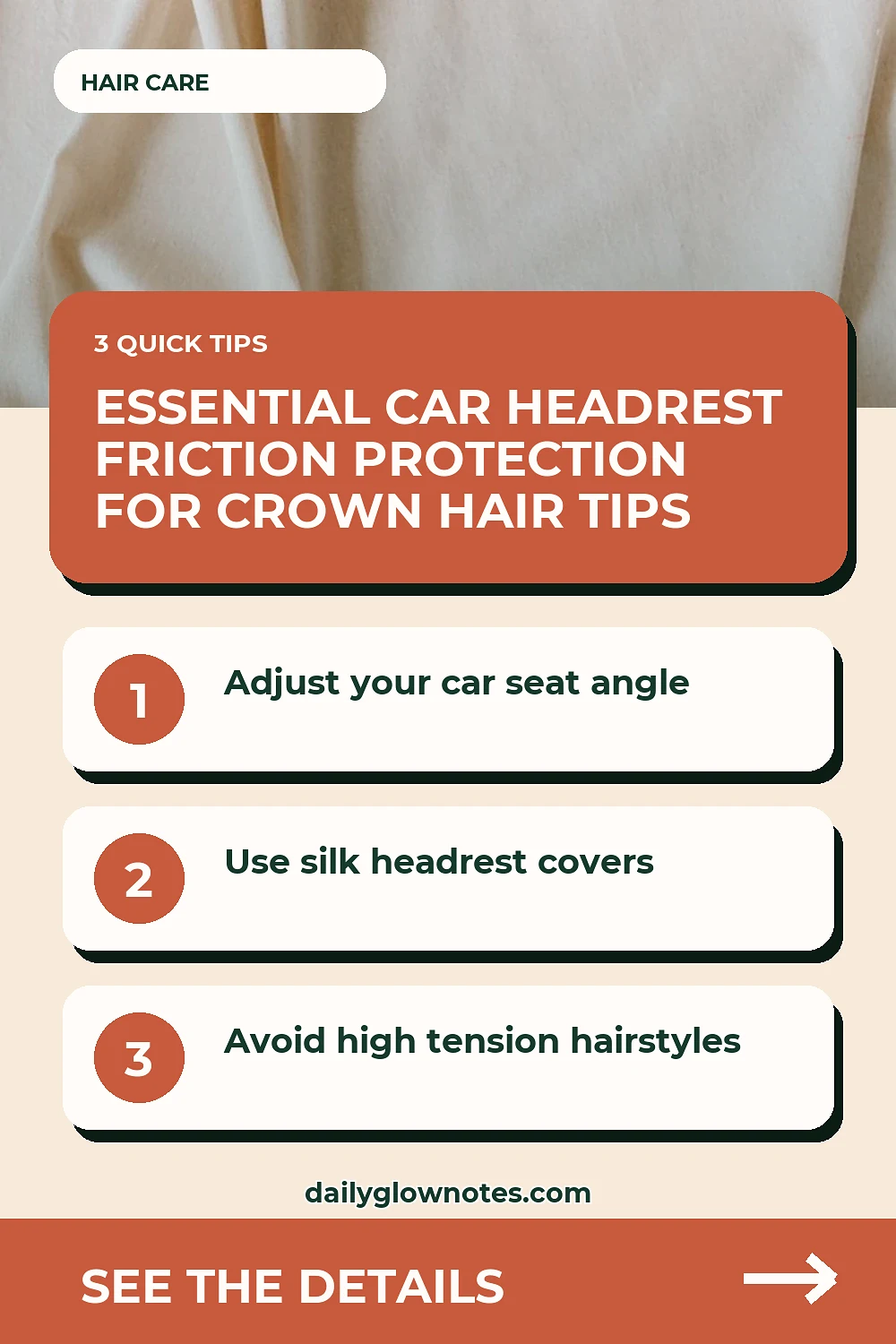
One of the simplest ways to minimize friction is to audit your seat positioning. Many drivers habitually recline too far, which pushes the head forward and forces the back of the head directly into the headrest. By sitting more upright, you can often create a small gap between your head and the seat surface. This shift not only supports better posture for your neck and spine but also reduces the surface area contact that causes friction. If your car seat has an adjustable headrest, try moving it slightly lower or higher to see if you can find a position that supports your neck without directly grinding against your hair.
For those who find it difficult to change their driving habits, consider the texture of the headrest itself. A smooth barrier can make a significant difference. A silk or satin headrest cover—or even a simple silk scarf draped over the top of the seat—can reduce the coefficient of friction, allowing your hair to glide rather than snag. This is a subtle nurturing stronger hair through consistent daily habits approach that removes a daily irritant without requiring a major lifestyle overhaul.
Low-Tension Styling for the Road
How you wear your hair while driving matters just as much as where you sit. High buns, ponytails, and claw clips are common culprits for breakage during commutes. If you wear a high bun, the weight of the bun is pressed against the headrest, creating a massive amount of tension at the root and mid-lengths. This can lead to traction-related breakage and thinning around the crown and temples.
Instead, try styles that keep the hair away from the contact zone. A low, loose braid or a side-swept style can keep the hair off the headrest entirely. If you must wear your hair up, opt for a soft, fabric-covered scrunchie and position it lower on the nape of your neck. These styles allow your hair to move freely, preventing it from getting caught between your head and the seat. When you are rushing to get out the door, it is easy to default to the same hairstyle, but recognizing these 4 clues your carry-on hair routine is missing one key step can help you adapt your daily habits for better long-term hair resilience.