
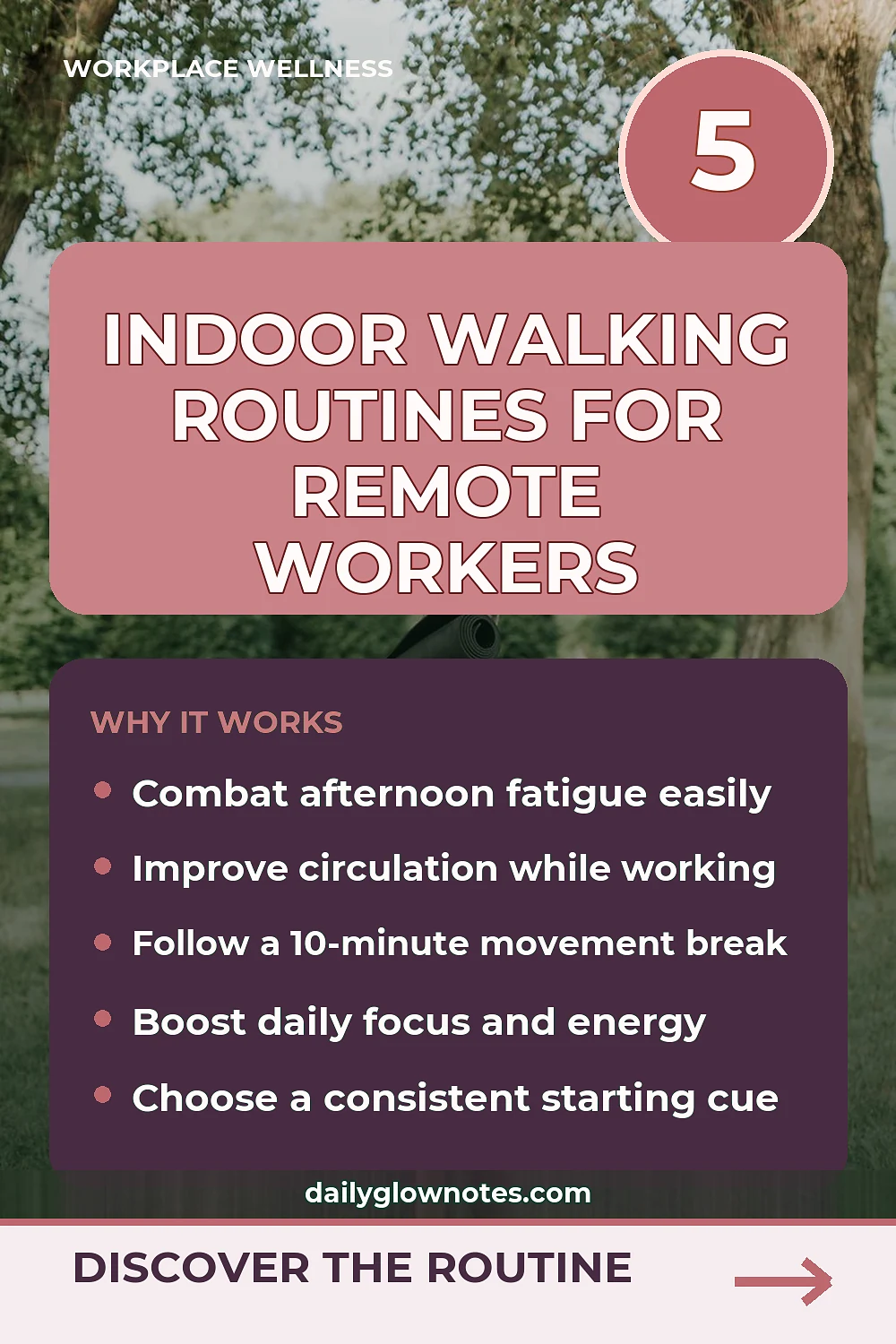
The clock strikes 2:30 PM, your shoulders are tight, and your eyelids feel heavy as you stare at a glowing monitor. For remote professionals and sedentary desk workers, this afternoon energy crash is a familiar hurdle. Hours spent sitting in a home office restrict circulation, leading to physical fatigue and mental fog that makes even simple tasks feel overwhelming. Instead of pushing through exhaustion or reaching for another cup of coffee that might leave you jittery, a quick movement break can completely shift your state. Implementing an indoor walking routine for remote workers during breaks offers a reliable way to restore natural vitality without stepping away from your workspace. When you commit to short bursts of indoor movement, you actively combat the negative physiological impacts of prolonged sitting, such as reduced blood flow and muscle stiffness, which often contribute to chronic lower back discomfort and overall physical lethargy.
Why the Afternoon Slump Hits Remote Workers Hard
The transition from a bustling corporate environment to a home office often leads to a dramatic drop in daily step counts and spontaneous movement. Without the natural walking involved in commuting, walking to meeting rooms, or grabbing lunch outside the building, remote professionals frequently remain anchored to their chairs for hours at a time. This lack of physical stimulation causes blood to pool in the lower extremities, dampening cardiovascular circulation and reducing the delivery of oxygen-rich blood to the brain. Consequently, cognitive function slows down, creativity drops, and the dreaded afternoon slump takes hold. Understanding this physiological mechanism empowers you to take proactive measures. By introducing intentional indoor movement, you counteract the stagnation of sedentary routines, reigniting your metabolism and signaling to your nervous system that it is time to refresh and refocus for the remainder of the workday.
Setting Up Your Space for Indoor Pacing
You do not need a treadmill or an outdoor excursion to reap the physical and mental rewards of walking. Transforming your immediate environment for indoor movement starts with clearing a simple path. Whether it is pacing back and forth across your home office, utilizing a hallway, or stepping purposefully from room to room, creating a designated indoor walking routine for desk workers helps bridge the gap between sedentary hours and active living. Keep your walking path clear of cables or clutter, slip on a comfortable pair of indoor shoes or supportive house slippers, and prepare to spend just a few minutes resetting your posture. Establishing a designated pathway also reduces friction, making it much easier to transition into your walking break when your mind is preoccupied with tight deadlines and full email inboxes.
As you pace your indoor circuit, focus on gentle postural alignment. Roll your shoulders back, engage your core lightly, and let your arms swing naturally at your sides. This intentional focus shifts your mind away from work emails and anchors you firmly in your body, easing physical tension accumulated from hours of typing. Paying attention to your breathing patterns during these pacing sessions further amplifies the stress-relieving benefits, helping to calm an overactive mind and lower cortisol levels that tend to rise during high-pressure work tasks.