
That plush velvet band or flexible athletic grip might feel like the ultimate styling savior on busy mornings, but your delicate front strands could be paying the price. When worn daily or positioned too tightly, common hair accessories create localized friction and mechanical tension right where the hair is finest. If you have ever taken off a favorite accessory at the end of the day only to notice persistent redness, tender skin around your temples, or a scatter of short broken hairs, your styling routine might be causing hidden frontal stress. Protecting fragile fine hair requires more than just gentle washing; it means evaluating how physical pressure impacts the delicate hair matrix along your forehead.
The Hidden Mechanics of Accessory Tension
Hair is remarkably resilient, but the strands framing your face are often significantly finer and more vulnerable than the rest of your mane. When a rigid headband or a tight elastic sports band sits in the exact same spot day after day, it creates a constant point of friction. Over time, this repetitive pressure weakens the hair cuticle and can cause strands to snap right at the root or mid-shaft. Unlike heat styling or chemical processing, which affect the entire length of the hair, accessory tension targets a very specific, high-visibility zone. Understanding how this mechanical stress operates is the first step toward preserving a fuller, healthier hairline without giving up your favorite styling tools entirely.
Four Signs Your Headband Is Causing Stress
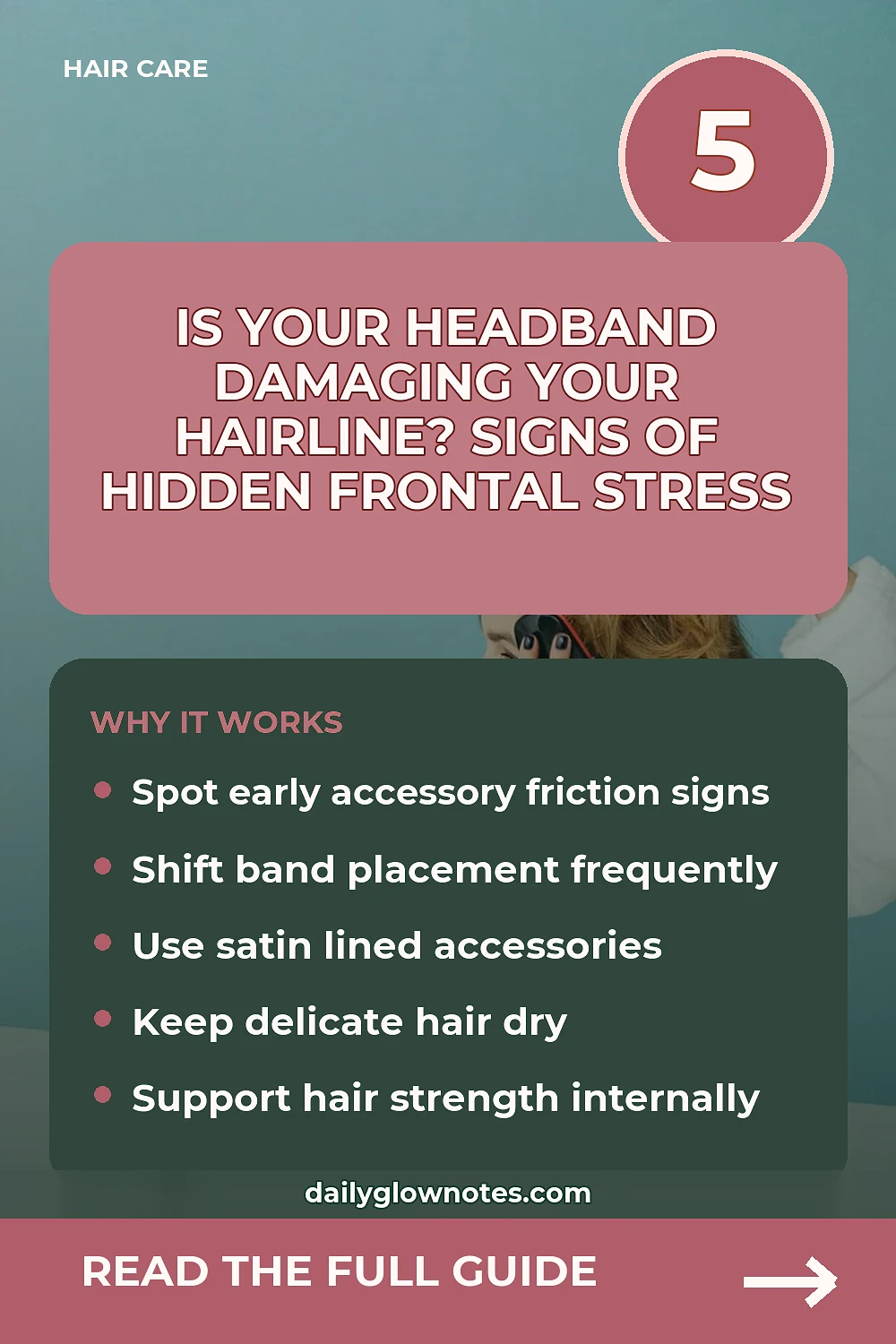
Identifying accessory fatigue early can prevent long-term breakage and keep your front strands strong. Here are four common indicators that your current accessory habits might be too harsh for your hairline:
- Localized Breakage: Finding a collection of short, uneven hairs sticking up near your temples that do not match the rest of your haircut.
- Scalp Tenderness: Experiencing a dull ache or soreness directly along the path where the band rests after wearing it for a few hours.
- Indentations and Redness: Noticing deep red grooves or flattened skin lines that linger long after you remove the accessory.
- Slippage and Recesses: Observing that your hair parts more easily or looks thinner in the exact tracks where accessories grip your head.
Smart Placement and Accessory Adjustments
You do not have to banish hair accessories from your wardrobe to protect your strands. Small adjustments to how and where you wear them can drastically reduce daily friction. Try shifting the placement of your band slightly forward onto the forehead or backward into the crown every few hours to distribute the pressure point. Furthermore, swap out rigid plastic headbands with sharp teeth for wide, seamless silk or satin-lined alternatives that glide smoothly over the hair cuticle instead of gripping it. Keeping your hair completely dry before securing any accessory also prevents the weakened elasticity that occurs when wet strands are stretched under pressure.