
Finding a stray cluster of hair on your desk or pillow can instantly spark a wave of frustration, especially when your strands are naturally fine and prone to breakage. Many of us rely on quick updos to get through a busy workday, twisting our hair up without giving a second thought to the hardware holding it in place. Yet, the daily toll of securing fragile hair can lead to invisible friction damage, localized snapping, and thinning around the crown and nape. When choosing how to style weak or shedding hair, evaluating the mechanical tension of your accessories is just as important as the conditioning products you apply.
Fine hair lacks the structural density of thicker textures, making individual strands exceptionally vulnerable to point-impact pressure. Every time you twist, clip, or pin your hair, you create specific zones of physical stress along the hair shaft. Over time, rigid materials, tight elastics, and abrasive textures can fray the outer cuticle, leading to mid-shaft breakage rather than healthy root growth. Understanding how different accessories interact with delicate hair allows you to protect your strands while maintaining your favorite everyday hairstyles.
Evaluating Traditional Elastics and Silk Scrunchies
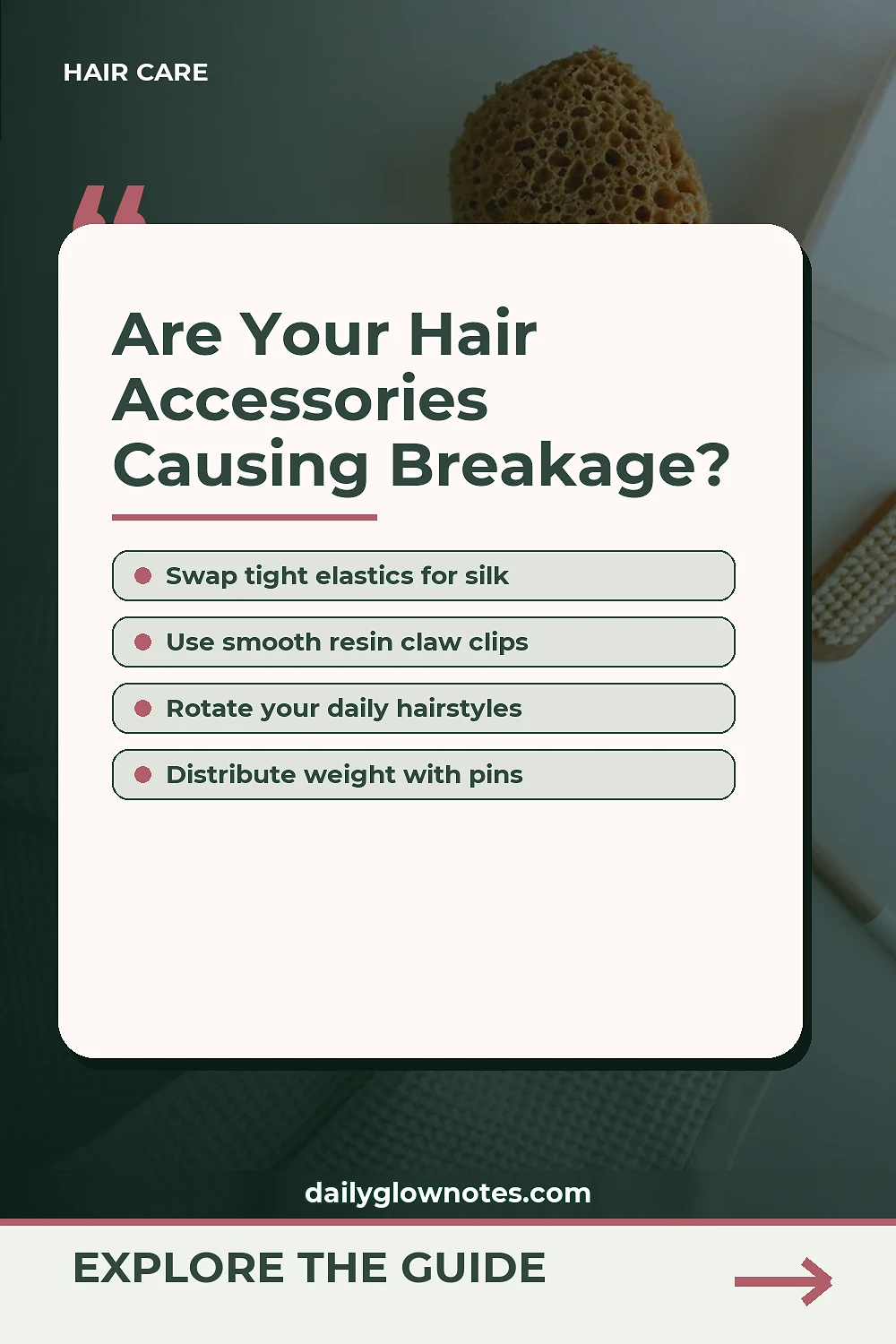
Standard hair ties wrapped in exposed rubber or abrasive cotton threads are notorious for gripping individual strands and creating microscopic tears. When you pull fine hair through a tight elastic, the friction can cause immediate snapping or weaken the cuticle so it breaks later in the day. Replacing these harsh bands with silk or satin-wrapped scrunchies offers a much gentler alternative by creating a smooth barrier between the fabric and your hair shaft.
Silk scrunchies distribute pressure over a wider surface area, significantly reducing localized tension. However, wrapping a scrunchie too tightly can still pull on roots if your updo is too heavy. To get the best results, use silk scrunchies for loose, low ponytails or relaxed buns that do not pull painfully at the hairline. For a deeper look at managing daily friction, consider reading our guide on The Workday Hairstyle Tension Audit: Protecting Thinning Hair and Preventing Breakage to safeguard your strands during long office hours.
The Mechanics of Claw Clips for Fine Hair
Claw clips have surged in popularity because they gather hair into a loose twist without the constrictive binding of an elastic band. For fine hair, a seamless smooth resin claw clip can prevent the localized friction caused by traditional hair ties. By gathering the hair upward and securing it with the teeth of the clip, you eliminate the twisting tension that snaps individual strands.
However, claw clips are not entirely risk-free if chosen incorrectly. Heavy, oversized metal claws or clips with sharp, unpolished inner teeth can scrape against the scalp and pinch fragile strands against the head. When selecting a claw clip, look for smooth, rounded edges and lightweight materials that rest comfortably against the back of your head. Positioning the clip slightly higher or lower on alternating days also prevents constant pressure from resting on the exact same patch of hair.
U-Pins, Bobby Pins, and Precision Placement
Hair pins and traditional bobby pins offer incredible versatility for styling fine hair into sleek twists or half-up styles. Unlike elastics, pins allow you to anchor small sections of hair individually, distributing the weight of your updo across multiple points of contact instead of a single strained area. This targeted approach is especially helpful for anyone experiencing postpartum shedding or seasonal thinning who wants to avoid pulling on vulnerable crown hairs.
The challenge with pins lies in their application. Sliding bare metal bobby pins directly into dry hair can strip the cuticle if the protective rubber tips have worn off. Always check your pins for smooth tips, and gently weave them into the hair rather than forcing them straight across opposing strands. Pairing these gentle styling habits with seasonal adjustments, such as those found in our tips on Managing Winter Static Breakage: A Practical Guide for Fine Hair, helps maintain hair integrity through changing weather.