
Your hair looks flat by noon, no matter how much volume powder or texturizing spray you apply at 7:00 AM. You suspect your favorite styling products might be weighing things down, but you are short on time and cannot afford a lengthy hair-washing experiment. When styling layers begin to stubbornly accumulate, your scalp and strands often send subtle signals long before your hair feels overtly greasy. Recognizing these clues helps you audit your routine efficiently so you can restore natural movement and root lift without overhauling your entire schedule.
1. The Midday Root Collapse and Residue Transfer
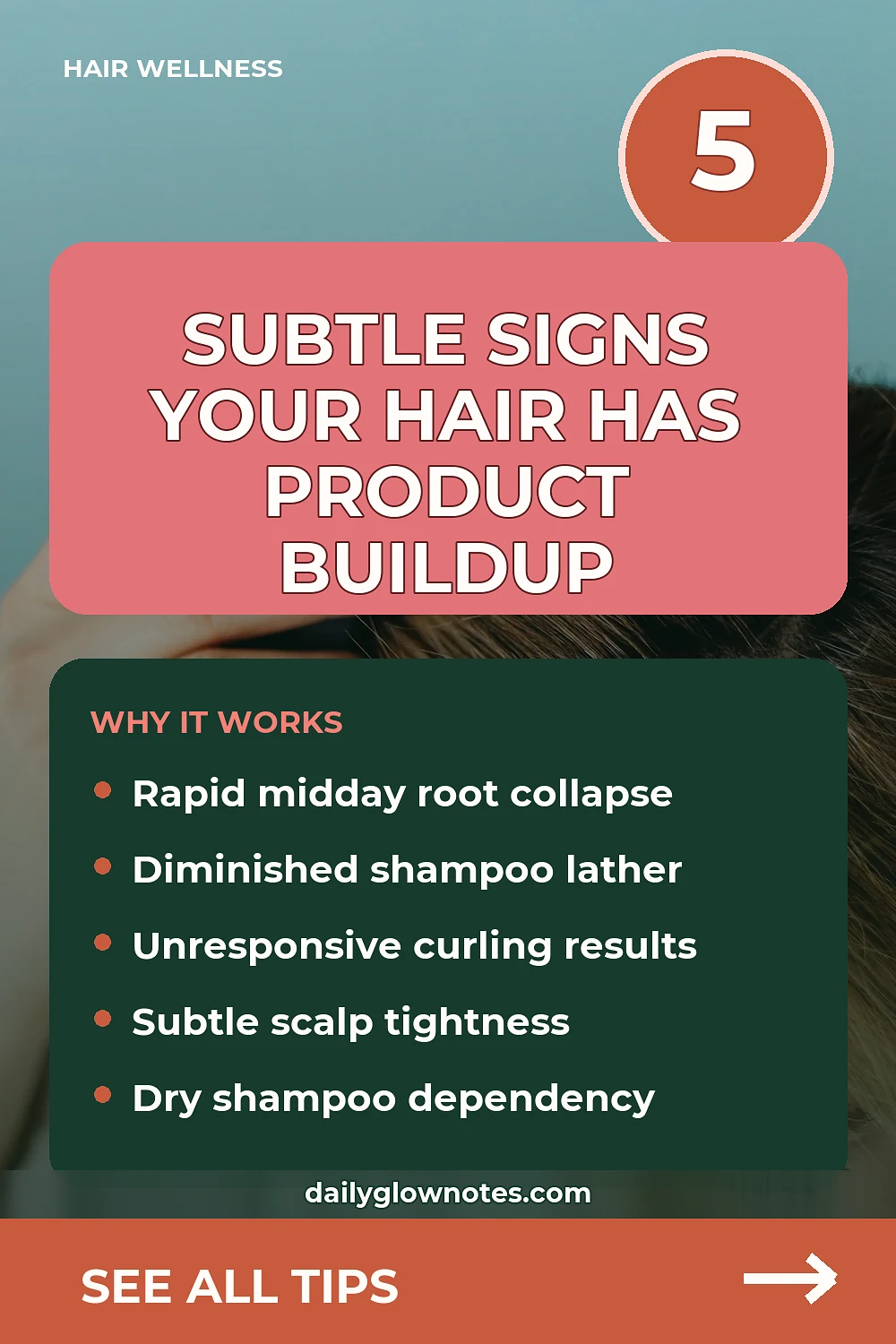
When your blowout loses its lift within hours of styling, it is easy to blame the weather or a weak hairspray. However, a rapid midday collapse frequently points to an invisible film of styling polymers and silicones coating the follicle. This residue adds microscopic weight to the hair shaft. Furthermore, take a close look at the teeth of your everyday hairbrush or comb. If you notice a whitish, grey, or tacky coating clinging to the base of the bristles, your hair is holding onto what you put into it days ago. This buildup transfers back onto your clean hair the moment you style it. Cleaning your tools regularly is essential, but if the residue returns instantly, your leave-in products may simply be too heavy for your daily cadence.
2. Diminished Lather and Dullness
Have you noticed that your shampoo refuses to create a rich lather on the first wash lately? That lack of suds is often a chemical indicator. Surfactants in cleansers bind to oils and styling polymers. When your hair is heavily layered with silicones and waxes, the shampoo has to work overtime just to break through the surface film. Additionally, product buildup acts like a frosted glass window over your natural hair color. Instead of reflecting light, a heavy coating scatters it awkwardly, leaving your lengths looking muted and dull. Many people attempt to fix this lack of shine with heavy serums or glossing drops, which only deepens the cycle of accumulation. Letting your strands breathe requires stripping back to the essentials.
3. The Unresponsive Curl and Unexpected Tangles
If your natural waves refuse to hold their shape or your curling iron results drop straight within minutes, your hair cuticle may be weighed down. Styling tools rely on the hair's natural friction and flexibility to hold a shape. A thick sheath of styling product seals the hair shaft so smoothly that it slippery-slides right out of any curl pattern you attempt to create. Moreover, healthy hair glides past itself smoothly. When product buildup dries on the hair shaft, it creates microscopic friction points. If you are suddenly experiencing random snags and tangles mid-shaft rather than just at the ends, your strands are likely glued together by styling polymers.