
Taking a long road trip as a passenger should be a chance to relax, listen to podcasts, and enjoy the passing scenery. However, when you are navigating perimenopause, the enclosed environment of a car can quickly become uncomfortable. Trapped radiant heat through windshield glass, warm upholstery, and static cabin air often trigger sudden hot flashes or lingering temperature discomfort. Planning for perimenopause road trip comfort planning for passenger seat temperature control allows you to transform a stuffy drive into a cool, calm, and manageable journey.
Managing midlife temperature fluctuations while seated in a moving vehicle requires a proactive approach. Unlike your home environment, a car cabin presents specific physical constraints: direct sun exposure, localized air vents, and limited room to move around. By adjusting your immediate passenger space, using smart cooling tools, and supporting your overall physical well-being, you can maintain your personal comfort across every mile.
Optimizing the Passenger Microclimate
The passenger seat receives a significant amount of direct sunlight through the front windshield and side window, creating a localized greenhouse effect. Relying solely on the vehicle's main air conditioning system often leads to a common road trip dilemma: the driver feels too cold while the passenger remains uncomfortably warm.
To solve this, take control of your immediate surroundings before hitting the highway:
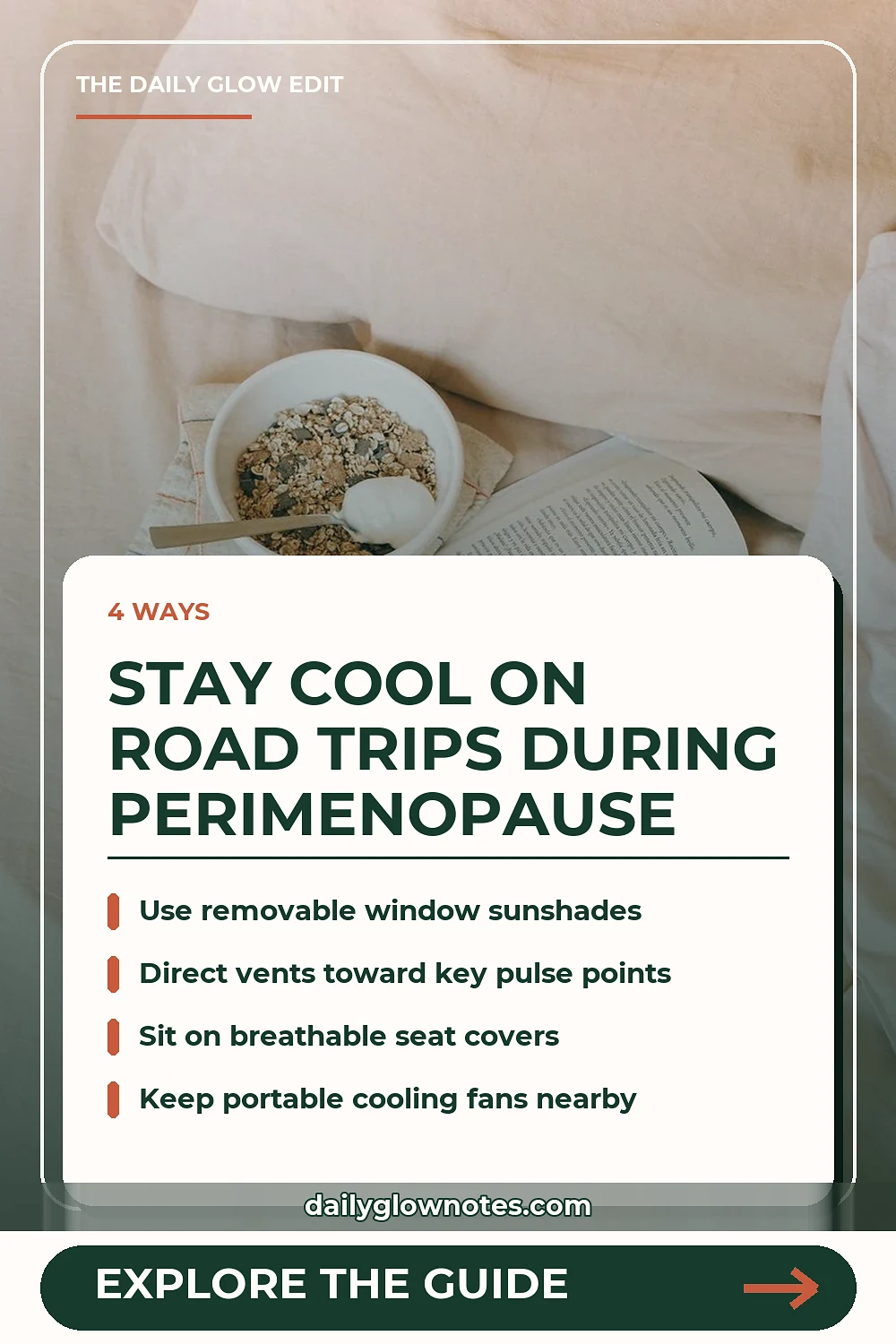
- Use Removable Window Shades: Apply a mesh or electrostatic sunshade to the passenger side window to block intense direct rays without obscuring the side mirror.
- Adjust Airflow Vectoring: Position the dashboard vents to direct cool air toward your pulse points—such as your wrists, chest, and neck—rather than blasting air directly into your face, which can dry out your skin and eyes.
- Invest in Breathable Seat Layers: Many car seats, especially those made of leather or synthetic materials, retain body heat. Placing a natural linen, bamboo, or wooden bead seat cover between yourself and the upholstery promotes continuous airflow behind your back and thighs.
Essential Personal Cooling Gear for the Passenger Seat
Having targeted cooling items within arm's reach prevents you from having to rummage through luggage while the car is in motion. Keep a dedicated travel comfort kit at your feet or in the door pocket.
A double-walled, insulated stainless steel water bottle filled with ice water is your most valuable asset. Sipping cold water helps regulate internal body temperature from the inside out. Pair this with a quiet, USB-rechargeable neck fan or a handheld misting fan for instant targeted relief during sudden warm surges. Stashing fragrance-free cooling wipes in your glove box also offers a quick way to refresh your face, neck, and inner arms during long stretches between highway rest stops.
Dressing for Long-Distance Vehicle Comfort
What you wear on a road trip heavily influences how your body handles trapped cabin heat. Tight waistbands, synthetic fabrics, and restrictive layers trap moisture and elevate body temperature when seated for extended periods.
Opt for loose-fitting, moisture-wicking, or natural fiber clothing such as linen, organic cotton, or modal. Layering is essential: start with a lightweight, breathable tank top and wear an open, unbuttoned lightweight shirt over it. If the car air conditioning grows too chilly, you can easily slip the outer layer back on without needing to undo your seatbelt. Choose soft, non-binding waistbands that do not constrict your abdomen while sitting.