
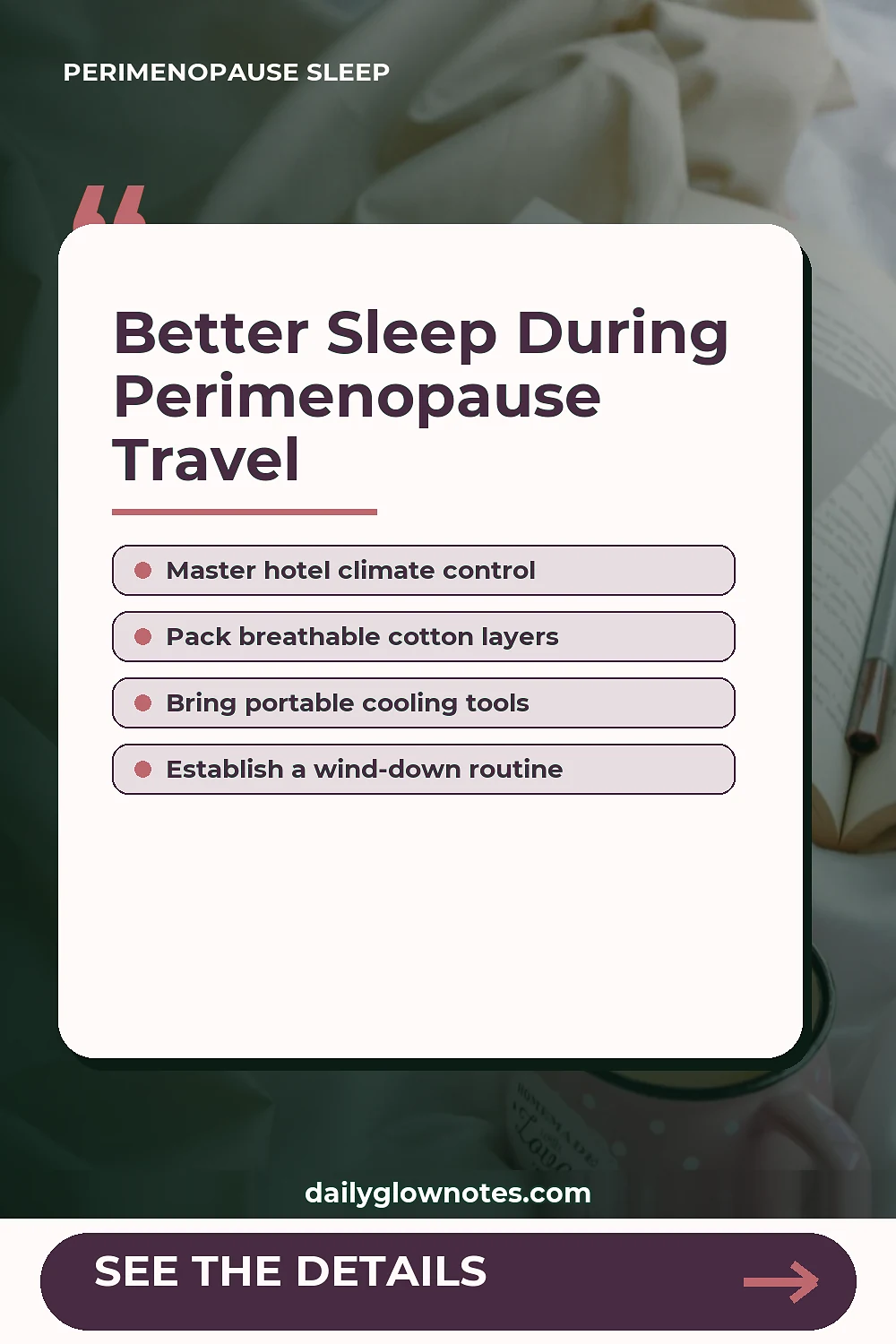
Packing your bags for a getaway should feel exciting, yet stepping out of your familiar bedroom routine can quietly sabotage your rest. For many women navigating perimenopause and midlife changes, unfamiliar hotel rooms introduce a cascade of sensory hurdles. Unpredictable thermostat controls, heavy synthetic duvets, and ambient street noise often conspire against your body's natural thermal regulation. When internal temperature fluctuations meet a stuffy guest room, falling and staying asleep becomes an uphill battle. Preparing ahead of time ensures you maintain your well-being regardless of your location.
Why Travel Disrupts Midlife Sleep
Maintaining restorative sleep while traveling requires more than just crossing items off a standard packing list. It calls for a deliberate strategy focused on creating a portable micro-climate that supports your comfort. By anticipating the common friction points of staying away from home, you can curate a travel toolkit designed specifically to keep you cool, calm, and well-rested. Hormonal shifts during this life stage make the central nervous system much more sensitive to environmental changes, meaning minor annoyances at home can become major sleep disruptors on the road.
Mastering Hotel Climate Control and Room Setup
The moment you unlock your hotel door, the climate battle begins. Central air conditioning units in many accommodations are notoriously finicky, either blasting arctic air or failing to cool the space adequately. Before unpacking your weekend bag, assess the room. Locate the thermostat, check the airflow, and do not hesitate to request a room change if the ventilation feels stagnant or if the room smells heavily of synthetic deodorizers.
Bedding is another frequent culprit behind restless nights. Many hotels default to thick polyester-blend duvets and heavy decorative throws that trap body heat and provoke night sweats. Stripping back heavy layers immediately upon arrival makes a noticeable difference. If the property cannot provide breathable cotton alternatives, you can easily mitigate this by bringing your own lightweight textiles. Layering your sleep environment gives you total control, allowing you to adapt effortlessly as your body temperature shifts through the night without waking your traveling companions.