
Winter brings crisp air, cozy layers, and a unique set of challenges for adult skin. If you have ever noticed an increase in chin and jawline breakouts as soon as the weather turns chilly, you are not imagining things. The combination of freezing outdoor winds and heavy wool or synthetic scarves creates a micro-climate of friction and trapped moisture that can easily irritate delicate skin barriers. When your skin is constantly rubbing against a textured winter accessory while simultaneously battling dry indoor heating, maintaining a clear and balanced complexion requires a thoughtful seasonal adjustment.
Protecting your complexion during the colder months does not require overhauling your entire beauty philosophy. Instead, it is about shifting toward a cold weather face mask friction blemish care routine that prioritizes physical comfort, gentle cleansing, and strong moisture retention. By understanding how environmental stressors impact your skin, you can proactively minimize irritation and keep your complexion calm all season long.
Understanding the Winter Barrier Challenge
Cold air holds significantly less moisture than warm air, leaving the skin's outer lipid layer vulnerable to dehydration. When your natural moisture barrier is compromised, tiny micro-cracks form on the surface, making it much easier for bacteria, dirt, and trapped oils to cause inflammation. Add a coarse winter scarf rubbing against your lower face every time you step outside, and you create the perfect storm for mechanical irritation and stubborn blemishes.
Many people make the mistake of responding to winter breakouts with harsh acne treatments or aggressive physical scrubs. Unfortunately, stripping already vulnerable skin usually backfires, leading to increased redness, flaking, and even more breakouts as the skin attempts to compensate for the lost moisture. Supporting winter barrier support for breakout prone skin means stepping away from stripping agents and focusing heavily on soothing, nourishing, and protective habits.
Smart Scarf Hygiene and Fabric Choices
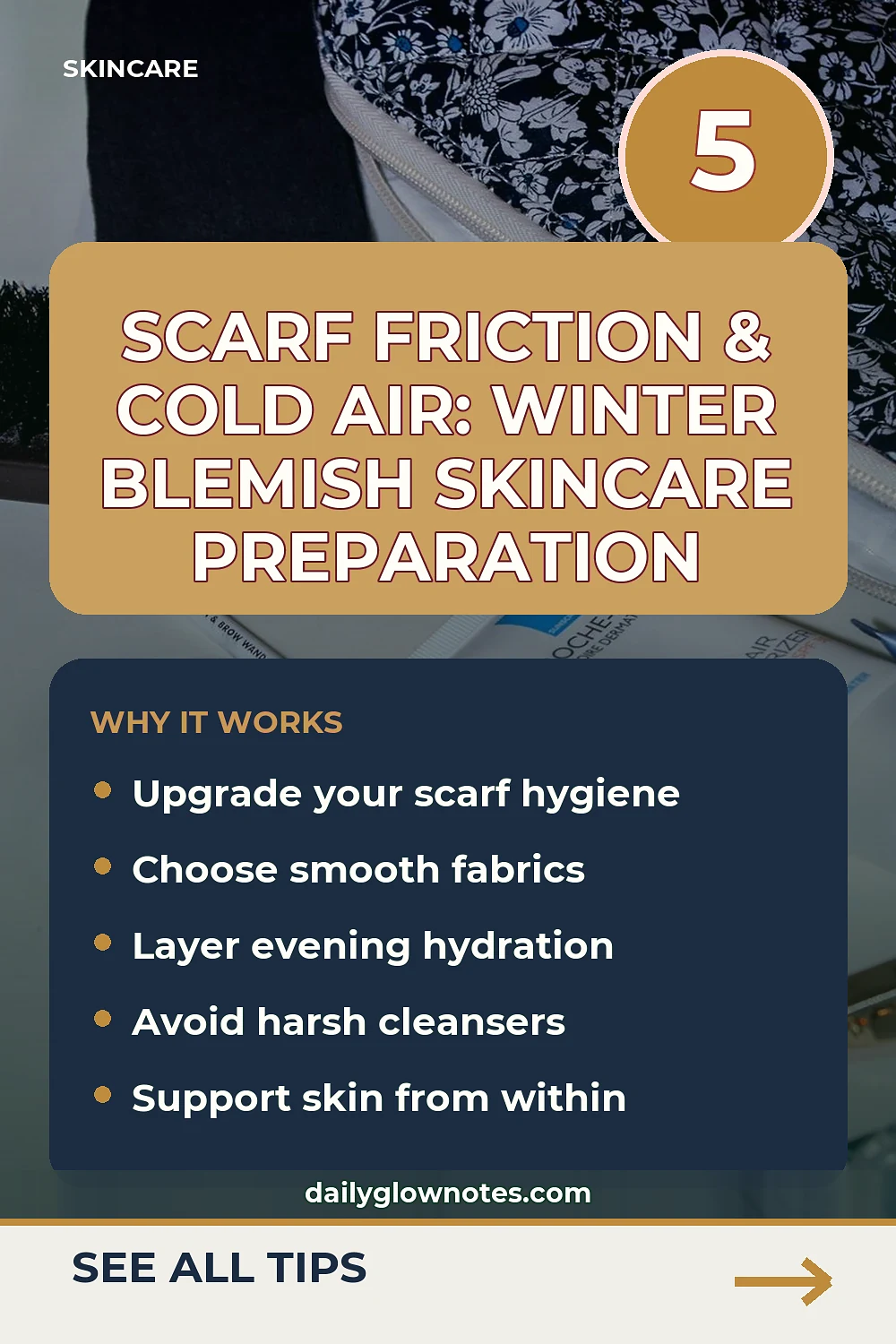
One of the most overlooked triggers for winter jawline breakouts is the cleanliness and material of your winter accessories. Scarves, turtlenecks, and face coverings collect dead skin cells, residual laundry detergent, natural facial oils, and outdoor pollution throughout the day. When you wrap that fabric tightly around your lower face, you press all of those accumulated impurities directly into your pores.
Washing your winter scarves and reusable masks frequently using gentle, fragrance-free detergents can drastically reduce unexpected flare-ups. Furthermore, paying attention to fabric composition makes a noticeable difference. Pure cashmere, soft cotton blends, and smooth silks cause significantly less friction than scratchy wool or heavy synthetic fibers. If you love a traditional wool scarf, consider wearing a soft cotton layer underneath to create a gentle buffer between the textured fabric and your skin.
Crafting Your Winter Evening Recovery Routine
Your nighttime ritual serves as the ultimate reset button after a day of exposure to biting winds and heated indoor spaces. Begin your evening by dissolving makeup and daily grime with a rich, non-foaming cleansing milk or balm that respects your natural pH balance. Avoid very hot water, as it strips essential lipids away and leaves the skin feeling tight and reactive.
After gently patting your face dry with a clean, soft towel, focus on hydration layering. Apply a soothing essence or a hydrating serum containing ingredients like glycerin or hyaluronic acid onto slightly damp skin to lock in moisture. Follow this immediately with a nourishing, barrier-supporting moisturizer that contains ceramides or squalane. If you commute daily through urban environments, you might also find our guide on Subway & Transit Skin Protection: Preventing Commute-Induced Breakouts helpful for managing city-specific stress factors.