
The alarm sounds, and before your eyes are fully adjusted to the morning light, your hand reaches instinctively for the bedside table. Within seconds, the cool glow of your phone illuminates your face. You tell yourself you are just checking the time, but a muscle-memory swipe opens your work inbox. A flagged message from a supervisor, an urgent request from a client, or a long thread of overnight updates floods your screen. Before you have even taken a deep breath or swung your feet out of bed, your mind is already at your desk.
For many women navigating demanding professional roles, this digital dawn patrol feels like efficiency. It seems like a smart way to get a head start on the day, anticipate challenges, and eliminate surprises. However, this silent habit carries a heavy energetic tax. Checking work emails before eating breakfast shifts your nervous system from a state of rest to one of immediate defense, draining your cognitive and emotional reserves long before your workday officially begins.
The Invisible Cost of the Bedside Inbox
When you wake up, your body is in a natural state of transition. Your cortisol levels naturally rise to help you wake up, a process known as the cortisol awakening response. Introducing work stressors during this delicate window artificially spikes this response, sending immediate threat signals to your brain. Instead of a gradual, sustained release of energy, you experience a sudden surge of adrenaline.
This immediate transition into work mode bypasses the essential mental buffer your mind needs to prepare for the day. If you struggle with waking up in general, you might also find that how you interact with your alarm sets a tense tone for the morning. In fact, understanding how morning alarms can fuel daily stress can help you see how these early physical habits accumulate to deplete your resilience before the afternoon even arrives.
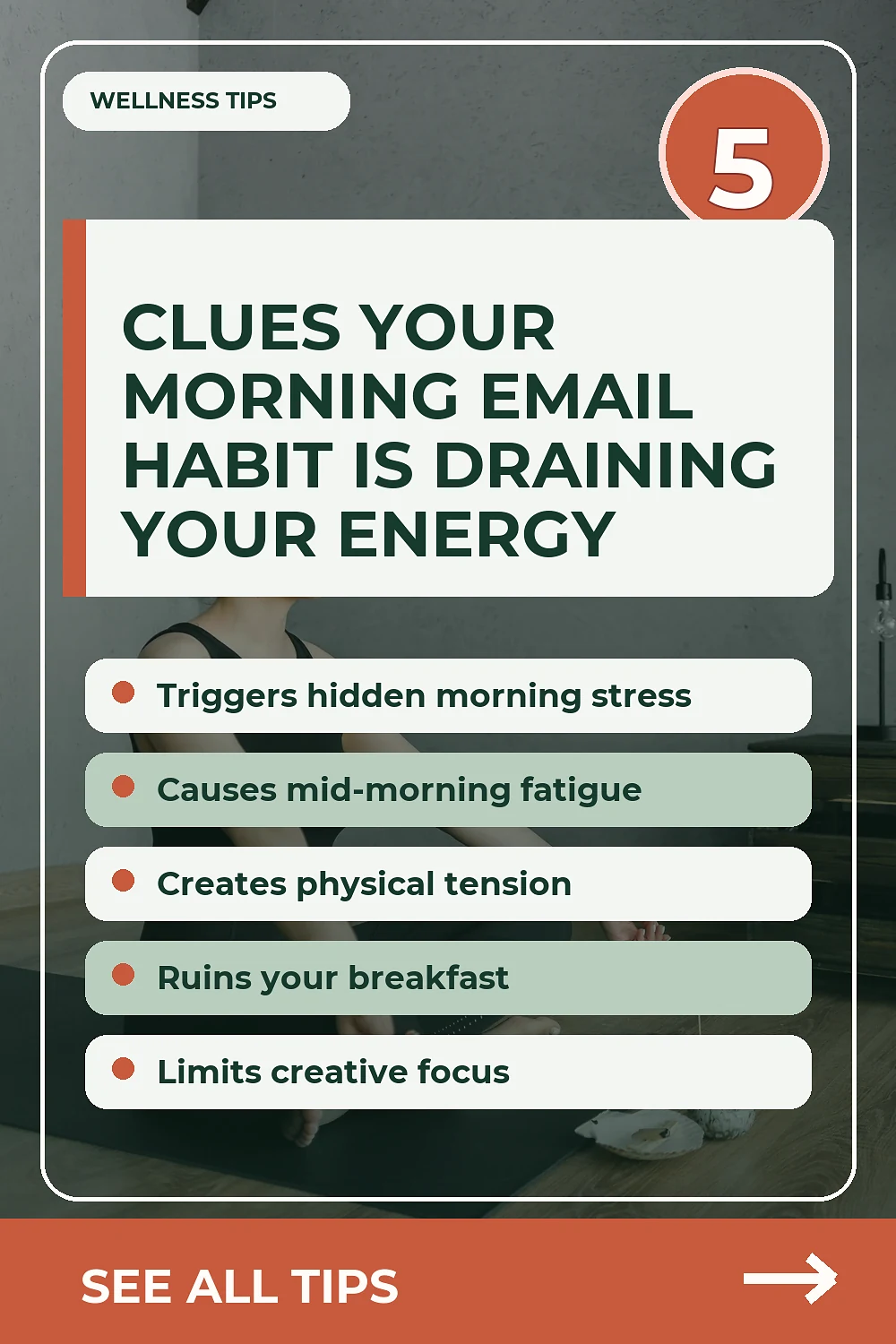
Five Clues Your Morning Digital Habit is Sapping Your Vitality
Because checking your phone is so deeply ingrained, you might not connect your afternoon fatigue or subtle irritability with your 6:30 AM inbox scroll. Here are five quiet signs that this morning routine is actively draining your energy:
- The Phantom Vibration and Anticipation: You feel a persistent, subtle sense of urgency or dread the moment you open your eyes, even on mornings when no urgent tasks are pending. Your brain has been conditioned to expect a micro-crisis every time you wake.
- The Accelerated Heart Rate: You notice a physical tightening in your chest or a sudden elevation in your heart rate while still under the covers. Your body is reacting to digital text as if it were a physical demand.
- The Breakfast Blur: You prepare and eat your morning meal on autopilot, barely tasting your food because your mind is busy drafting replies or mentally organizing your to-do list. The sensory pleasure of your morning is lost to mental noise.
- Mid-Morning Emotional Exhaustion: By 10:30 AM, you feel a deep wave of fatigue that coffee cannot fix. This slump occurs because you have already been actively working and managing stress for several hours before your official start time.
- Decreased Creative Focus: You find it difficult to engage in deep, creative, or strategic thinking later in the day. Your cognitive bandwidth has been spent reacting to minor administrative requests first thing in the morning.