
You wake up, and before your feet even touch the floor, the mental checklist begins. The dog is already shifting by the door, the children will be awake in twenty minutes, and the quiet of the house feels less like peace and more like a ticking clock. When your mind is already running at full speed, the impending transition to a loud, active household can feel incredibly jarring. Instead of trying to force your thoughts to stop entirely, the secret to finding calm lies in establishing a single physical point of focus before the day demands your attention.
For those living in busy households filled with family, pets, or roommates, mornings rarely build up gradually. Instead, they tend to start all at once. The sudden transition from silence to a chorus of questions, clattering dishes, and immediate requests can overwhelm a nervous system that has not had time to ground itself. When you wake up with a racing mind, this sudden shift can feel like trying to jump onto a moving train. By choosing to anchor your senses early, you can meet the morning on your own terms.
The Power of One Quiet Sensory Anchor
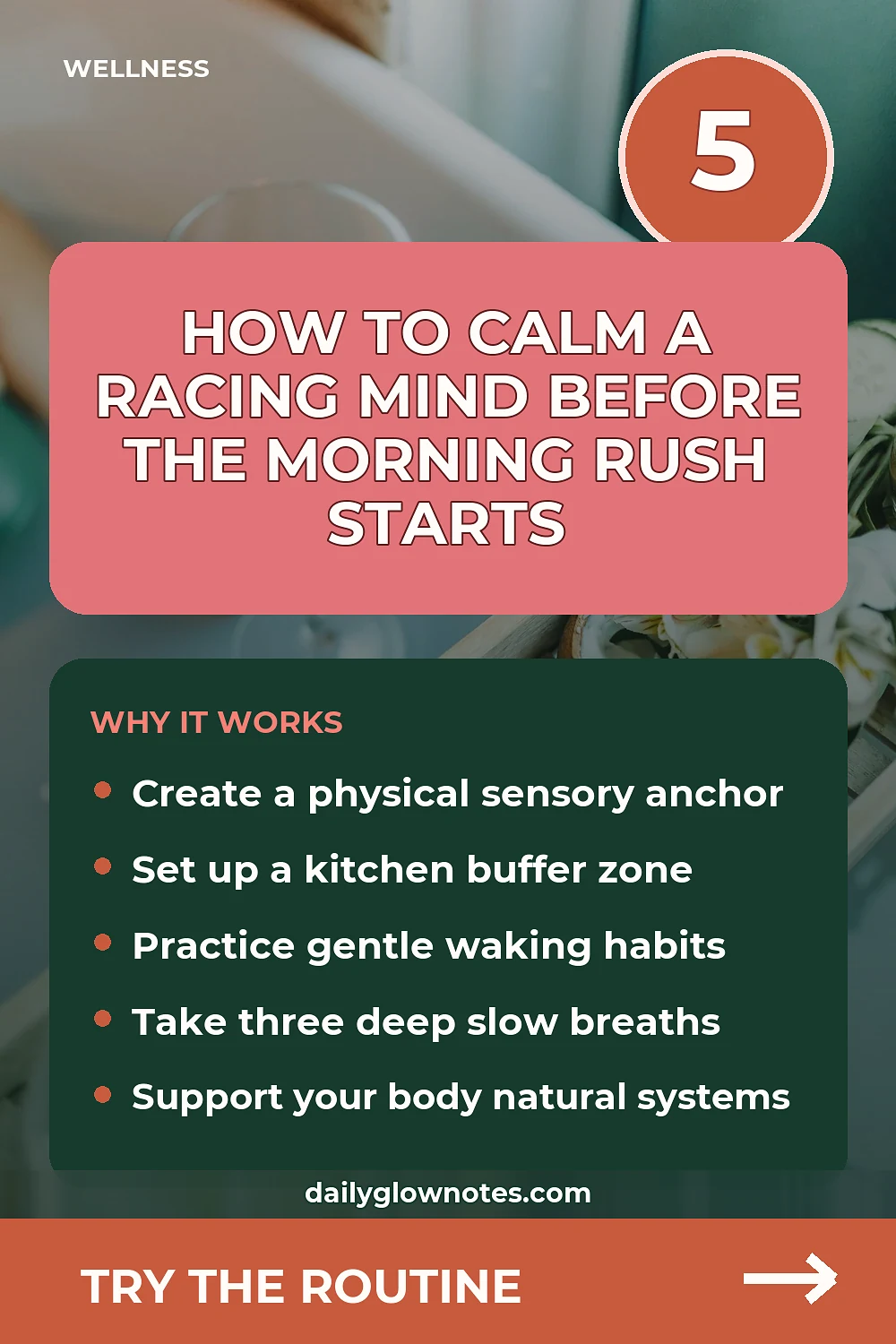
When your thoughts are spinning, abstract mental exercises often fall flat. Your brain needs something physical, tangible, and immediate to focus on. This is where a sensory anchor comes in. By focusing your attention on a single, calming physical sensation, you give your mind a safe place to rest, even if only for a few minutes.
Picture a quiet corner of your kitchen. The house is still dim, and a soft, diffused light is just beginning to filter through the window. You hold a heavy ceramic mug filled with warm water or herbal tea. You feel the texture of the clay, the heat radiating against your palms, and the weight of the cup in your hands. Beside it sits a neatly folded linen towel on a simple wooden tray. For three minutes, this is your entire world. You do not look at your phone, you do not check your calendar, and you do not mentally organize the tasks ahead. You simply inhabit the physical sensation of holding the mug. This simple ritual acts as a cognitive speed bump, gently slowing down your internal tempo before the external volume of the house turns up.
Breaking the Cycle of Early Morning Mental Racing
Why does the mind race so early in the morning? Often, our waking habits set us up for immediate stress. If your first action of the day is battling a loud alarm, you may be starting your day in a state of hyperarousal. To understand how these early habits affect your nervous system, it can be helpful to explore how to stop the snooze loop: how your morning alarms fuel daily stress.
When we repeatedly interrupt our sleep cycles with alarms, we trigger a cascade of stress hormones that makes quiet reflection nearly impossible. By establishing a more gentle waking routine, you give your mind the space it needs to settle into a sensory anchor rather than immediately launching into survival mode. This small shift in how you wake up can dramatically reduce the friction of the transition from sleep to activity.