
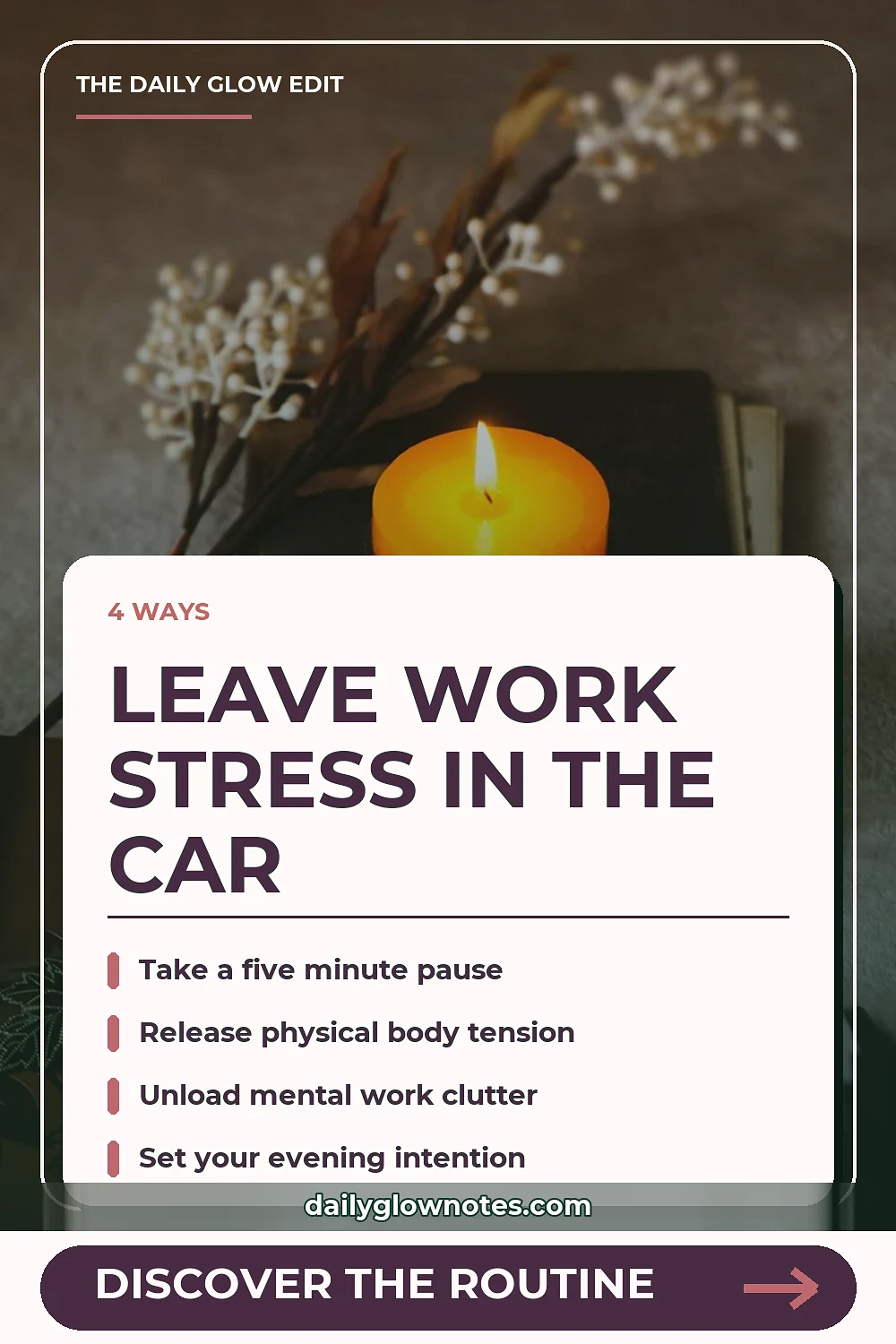
Pulling into your driveway while your mind is still racing through unresolved emails and project deadlines is an all-too-familiar experience. For many adult women, the end of the workday does not actually feel like an ending. Instead, it feels like an abrupt gear-shift from high-stakes professional pressure directly into domestic responsibilities, with zero breathing room in between. This lack of a transition often leads to lingering irritability, mental fatigue, and a sense that you are never truly off the clock. Developing a dedicated calm commute transition routine to leave work stress in the car can completely transform how you show up for your evening.
Why the Commute Home Needs a Boundary
When your brain remains in hyper-focus mode, minor annoyances at home can feel magnified. You might find yourself snapping at family members or zoning out while staring at dinner preparations, completely drained of emotional energy. Establishing a reliable ritual in the quiet sanctuary of your parked vehicle creates a crucial psychological buffer. It signals to your nervous system that the workday is officially closed, allowing you to shed professional armor before you ever turn the house key in the lock.
Step One: The Five-Minute Engine Off Pause
The moment you park your car in your driveway or garage, resist the immediate urge to grab your bag, open the door, and rush inside. Turn the ignition off, keep your hands resting lightly on the steering wheel, and simply sit in the stillness. Those first five minutes of parked silence are sacred. This deliberate pause interrupts the momentum of a chaotic day. It gives your body a chance to settle, acknowledging that you have safely arrived in a different environment. You do not need to meditate or force your mind blank; simply allow the ambient sounds of the evening to filter through the glass while you breathe normally.
Step Two: Shifting Focus with Sensory Grounding
Workplace stress often keeps our thoughts trapped in abstract worries about the future or looping replays of past conversations. To break this cycle, you need to bring your awareness squarely back into the present physical moment using your senses. Take a moment to notice the soft warm light of the setting sun filtering through your windshield, or feel the texture of the steering wheel beneath your fingers. Inhale deeply and notice the scent inside your car. Sensory grounding acts as an immediate anchor, pulling your active mind away from digital pressures and reminding you that right here, inside your vehicle, you are safe and currently removed from demands.