
Working on the retail or customer service floor during peak seasons brings a unique kind of sensory fatigue. The constant hum of chatter, bright fluorescent overheads, endless register beeps, and demanding customer queries can leave your nervous system buzzing long after your shift begins. When you step off the floor for a brief fifteen-minute break, it often feels like your mind is still racing at full speed. Establishing a calm routine for retail workers dealing with loud holiday crowds can transform those short moments away into genuine reset points, allowing you to catch your breath and rebuild your inner steadiness.
Stepping Out of the Sensory Noise
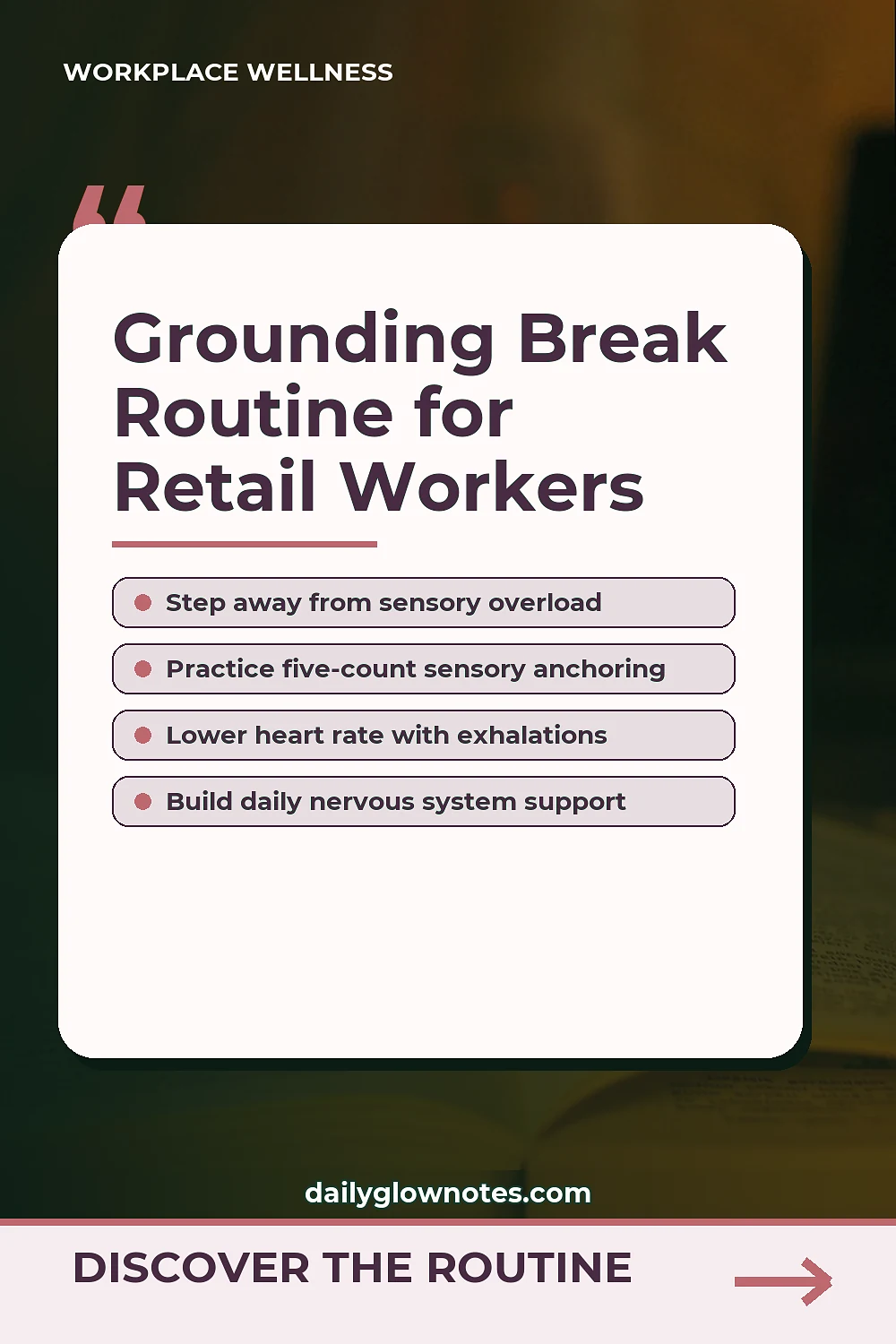
The transition from a chaotic retail floor to a breakroom requires a deliberate boundary. The moment your shift pause begins, resist the urge to immediately scroll through fast-paced social media feeds or read stressful news. Your sensory system is already overloaded from navigating a bright, noisy environment, and adding digital noise only prolongs the state of high alertness.
Instead, choose a seat that faces away from high-traffic doorways or bright overhead lights if possible. Allow your eyes to rest on a neutral surface or simply close them for two full minutes. This quiet pause signals to your body that the immediate demands of the floor have temporarily ceased, opening up space for genuine recovery.
The Five-Count Sensory Anchor
When high noise levels leave you feeling scattered, physically anchoring yourself in your immediate environment helps pull your attention out of your racing thoughts. The five-sense grounding practice is particularly effective during micro-breaks because it requires no equipment and takes less than three minutes to perform.
- Notice three physical textures: Feel the weight of your feet flat on the floor, the texture of your uniform, or the smooth surface of your water glass.
- Listen for two neutral background sounds: Shift your focus away from distant customer voices and focus on steady, unobtrusive sounds like the soft hum of a refrigerator or distant traffic.
- Focus on one physical sensation: Take a slow sip of cool water, noticing the temperature and movement as you swallow.
By systematically directing your attention to neutral physical inputs, you dial down the physiological feeling of being overwhelmed without needing a quiet environment.
Restoring Breath and Lowering Heart Rate
Fast-paced interactions naturally cause shallow breathing, which keeps your body in a subtle fight-or-flight response. To counteract this continuous tension, spend a few minutes practicing deliberate extended exhalations. Inhale softly through your nose for a count of four, hold gently for a moment, and exhale slowly through your mouth for a count of six.
Extending the length of your exhale directly communicates safety to your nervous system. Even three or four cycles of this pattern can noticeably soften shoulder tension and steady an elevated heart rate. If your mornings feel equally rushed before heading into a demanding shift, combining this breathwork with a five-minute morning journal practice to stop mental racing before breakfast can help set a balanced baseline before your day even starts.