
Evenings after a heavy day often arrive with a specific kind of fatigue. Your calendar is clear, your work is done, and yet the simple question of what to eat feels entirely out of reach. Standing in front of the refrigerator, staring at random ingredients, can trigger a surprising wave of frustration when mental bandwidth is already fully depleted. This friction points to decision fatigue—the silent toll of making choices all day long. Creating a decision-light dinner setup for mentally tired evenings is a practical way to protect your remaining energy and invite a sense of calm into your night.
When cognitive energy runs low, lowering sensory and operational demands becomes an act of self-care. Similar to designing a low-stimulation morning routine that protects your focus before the workday begins, the evening meal can be structured to require minimal mental effort. Instead of inventing a recipe from scratch, you rely on a predictable framework that eliminates the guesswork.
The Core Principle of Pre-Decided Plates
The secret to a low-effort evening meal is removing the choice entirely before you get tired. When you decide what you will eat days in advance, you bypass the nightly negotiation in your head. This might mean designating specific nights for specific types of simple assembly meals, such as grain bowls on Tuesdays or warm toast variations on Thursdays. By establishing these gentle anchors, you stop viewing dinner as a creative puzzle and start seeing it as a predictable ritual of transition.
This approach mirrors how we manage other digital and mental clutter. For instance, addressing the inbox overload habit that can make stress feel louder helps free up mental RAM during the day, and applying that same streamlining logic to your kitchen habits prevents evening overwhelm. When fewer micro-decisions are required, your nervous system can begin to unwind.
Building Your Low-Effort Ingredient Palette
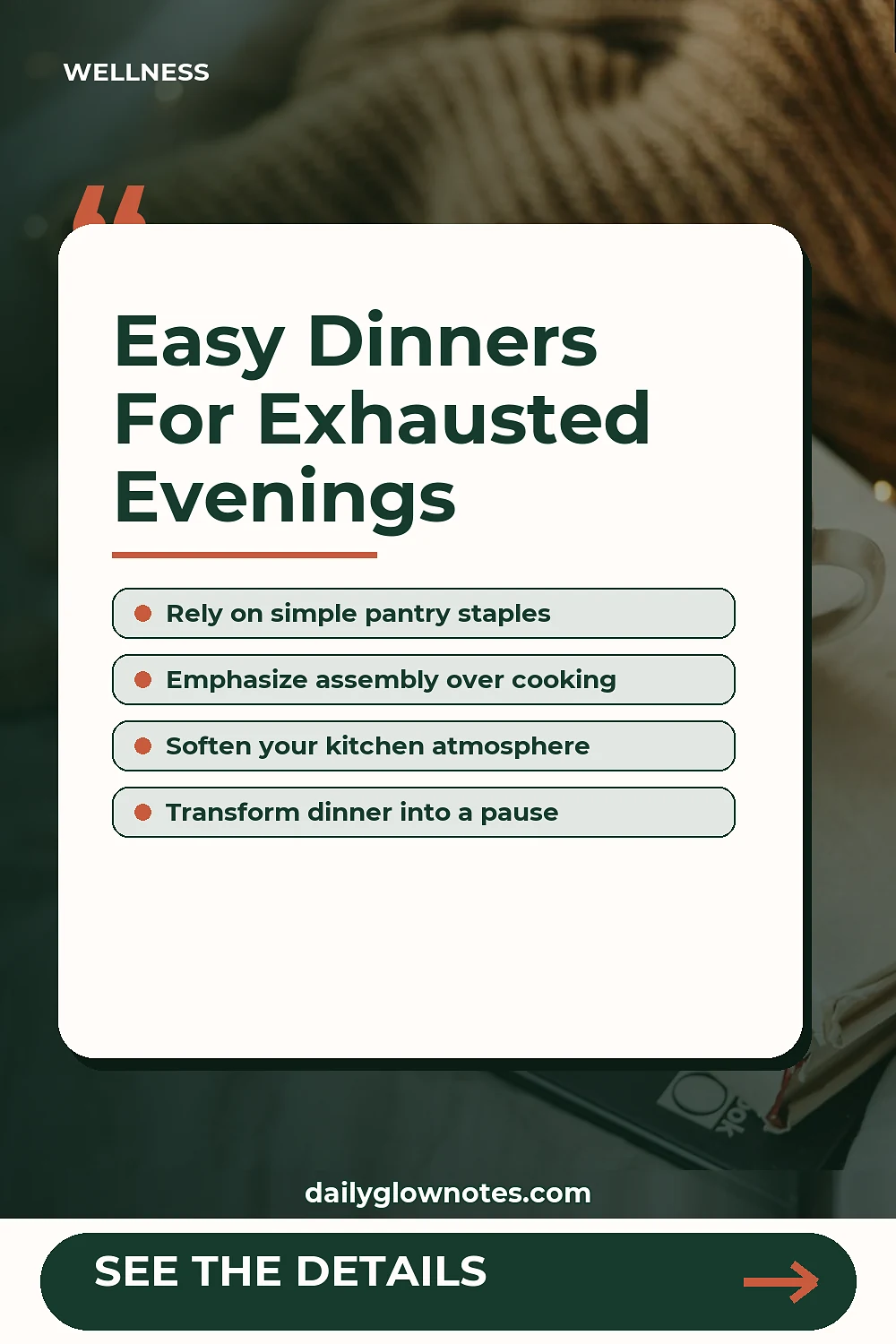
A decision-light setup relies on ingredients that require little preparation yet offer satisfying nourishment. Keeping a curated handful of reliable staples on hand ensures you can assemble a meal on autopilot. Think of pre-cooked grains, sturdy greens, canned proteins, and versatile condiments that instantly pull a dish together.
Instead of chopping a dozen vegetables, you might rely on roasted vegetables prepped earlier in the week or frozen options that cook in minutes. The goal is assembly rather than cooking. You are simply combining pre-existing elements into a warm, grounding bowl or plate, keeping the physical and mental steps to an absolute minimum.
Stocking your pantry with reliable, nutrient-dense items also prevents the temptation to order heavy takeout that might leave you feeling sluggish. By having quick options ready, you bridge the gap between being too tired to cook and wanting a wholesome meal that supports your digestion and sleep quality later in the night.