
Stepping off the train or pulling out of the office parking lot often feels like crossing a finish line, yet your mind keeps running at full speed. By the time you open your front door, the mental exhaustion from back-to-back meetings, notifications, and lingering task lists follows you right into your living room. Trying to unwind by pulling out a smartphone on the ride home only prolongs this overstimulated state, swapping work stress for endless digital noise.
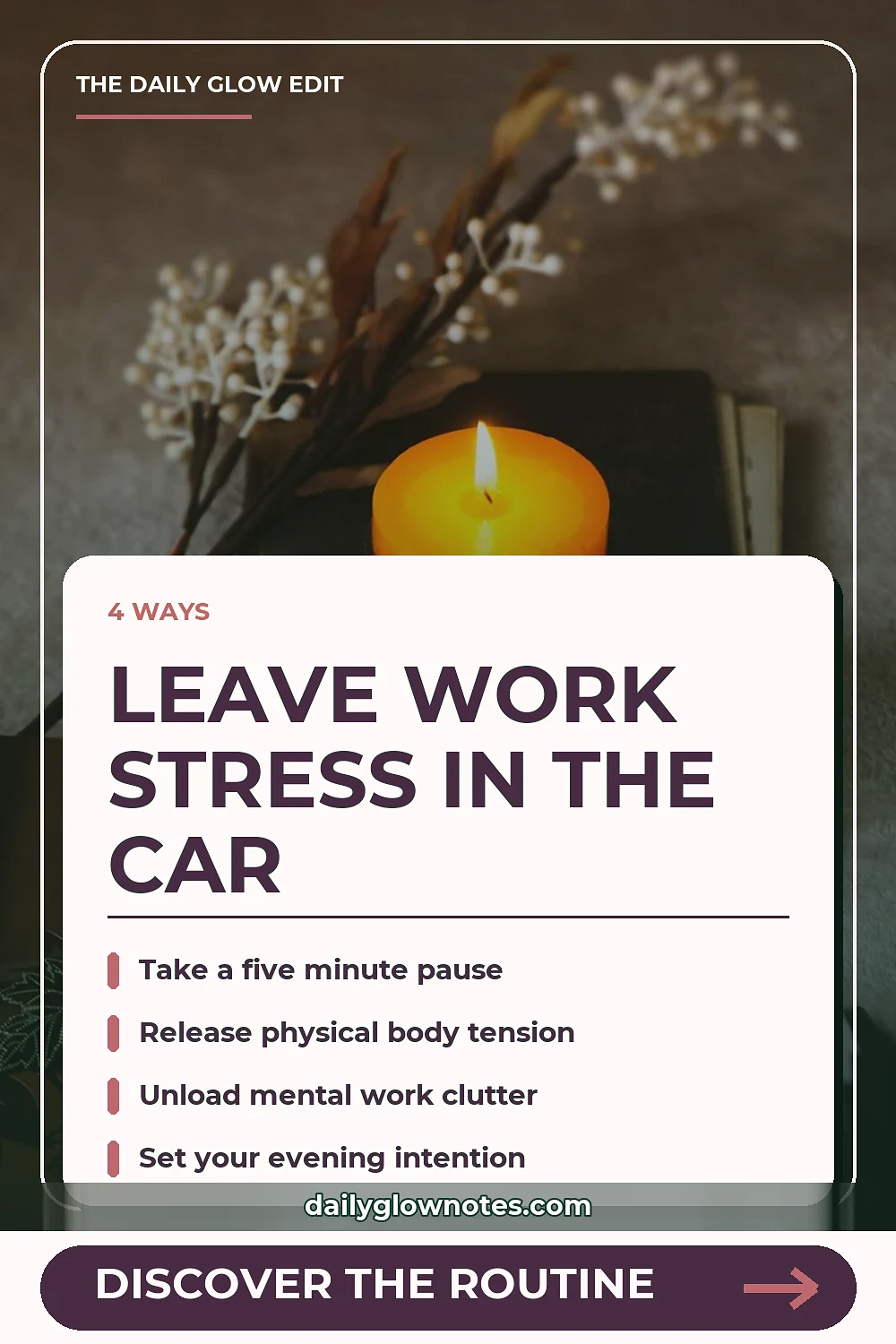
Establishing a quiet commute-to-home reset without more screen time allows your nervous system to mark a clear boundary between the demands of your workday and the comfort of your evening. Rather than treating travel time as dead space to fill with messages, you can transform it into a gentle sensory transition that helps lower daily tension naturally.
The Sensory Overload of Modern Transitions
When you spend eight hours looking at screens, processing decisions, and responding to incoming requests, your brain stays in a state of hyper-vigilance. Transitioning straight from work tasks into home responsibilities without a breather makes it difficult to settle down later in the night. Relying on digital entertainment during your ride home keeps your visual and cognitive pathways active, preventing your body from initiating its natural relaxation response.
By deliberately setting your phone aside during your journey, you give your brain permission to slow down. Unplugging reduces sensory input and signals to your internal clock that the high-demand portion of your day is officially over.
Designing a Screen-Free Transit Boundary
A successful commute reset relies on clear, simple physical cues that require minimal effort. The goal is not to perform a complex meditation routine, but rather to allow your attention to rest on neutral, non-demanding experiences.
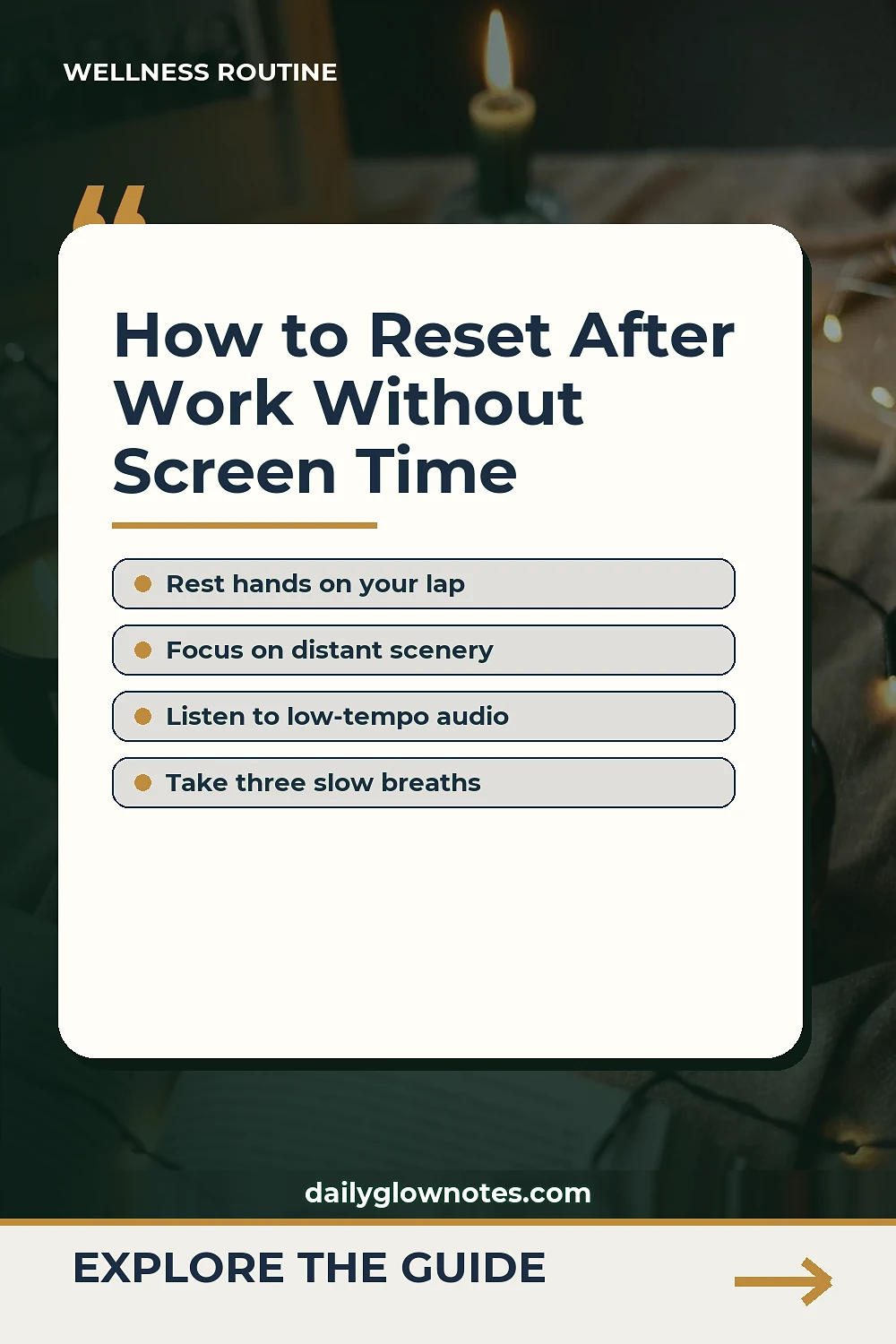
- Rest Your Hands: Place your hands flat in your lap or lightly around a warm travel mug. Avoid touching your phone or resting your fingers on your keyboard bag.
- Focus on Distance: Look out the train or bus window and focus on far-off objects. Glancing at distant scenery relaxes the ocular muscles that tighten during hours of close-up screen work.
- Establish an Audio Anchor: If silence feels jarring, swap social media feeds for low-tempo instrumental music or ambient soundscapes that do not require active processing.
If you find that digital distractions are hard to resist because of work habits, taking a closer look at the inbox overload habit that can make stress feel louder can help you establish clearer workplace boundaries before you even depart.
Grounding Your Body Before Entering Your Home
Physical awareness is one of the most effective tools for discharging residual work stress. When tension accumulates throughout the afternoon, it often manifests as tight shoulders, shallow breathing, or a clenched jaw. A quiet commute-to-home reset brings gently focused attention back to these physical sensations.
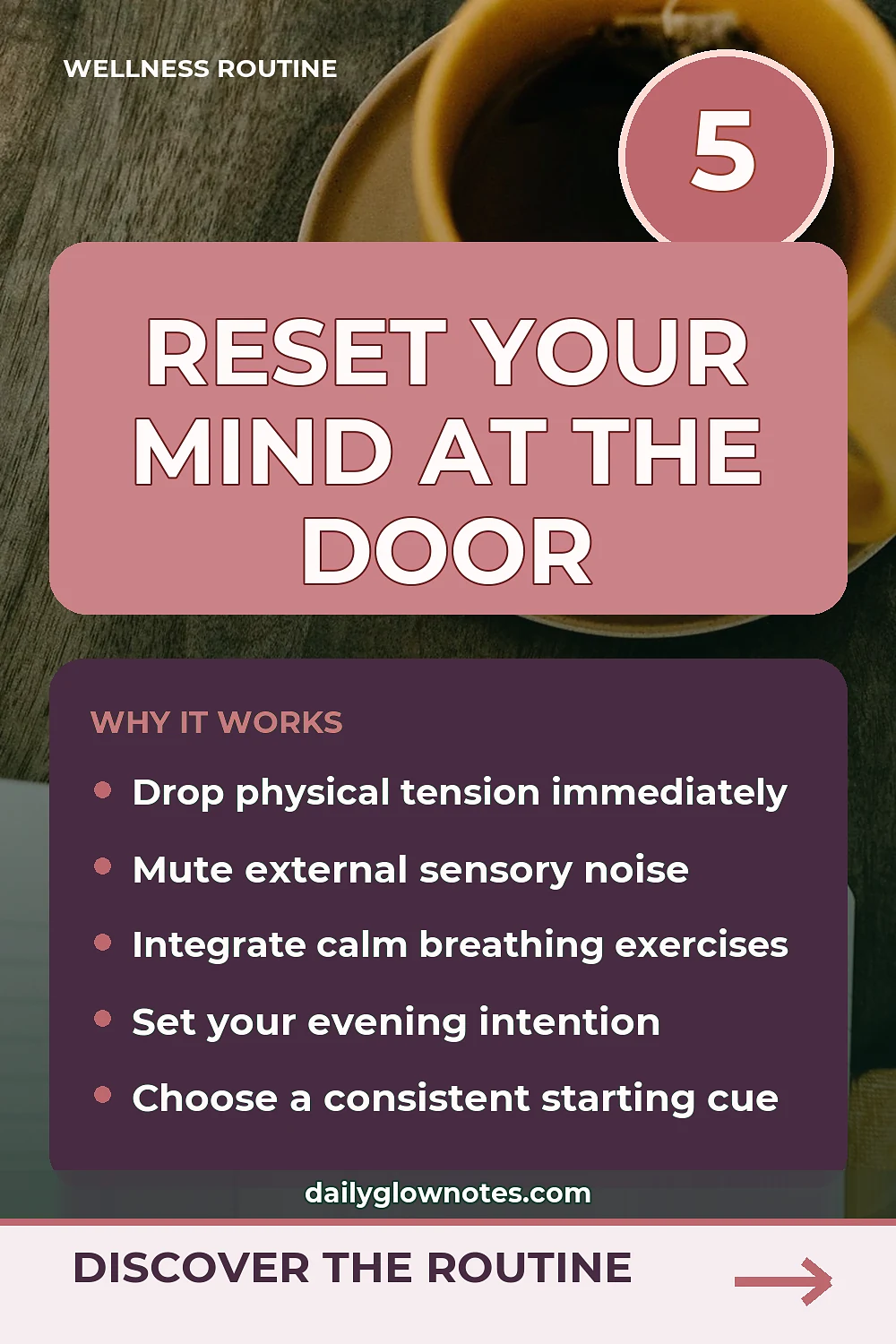
Start by taking three slow, deliberate breaths, lengthening your exhale to be slightly longer than your inhale. Notice the weight of your body supported by the seat and the feel of your feet grounded on the floor. Soften your jaw and let your shoulders drop away from your ears. These small physical adjustments interrupt the cycle of chronic tension and support overall stress resilience.