
Have you ever turned off the lights, pulled up the covers, and suddenly felt your brain shift into high gear? Instead of welcoming sleep, your mind decides that 2:00 AM is the absolute best time to review tomorrow's meeting agenda, replay an awkward conversation from three years ago, or draft a mental grocery list. This nocturnal mental loop can leave you staring at the ceiling, feeling wired and exhausted all at once. When everyday stress follows you into the bedroom, trying to force yourself to simply stop thinking rarely works. What you need instead is a deliberate boundary between your waking responsibilities and your resting space.
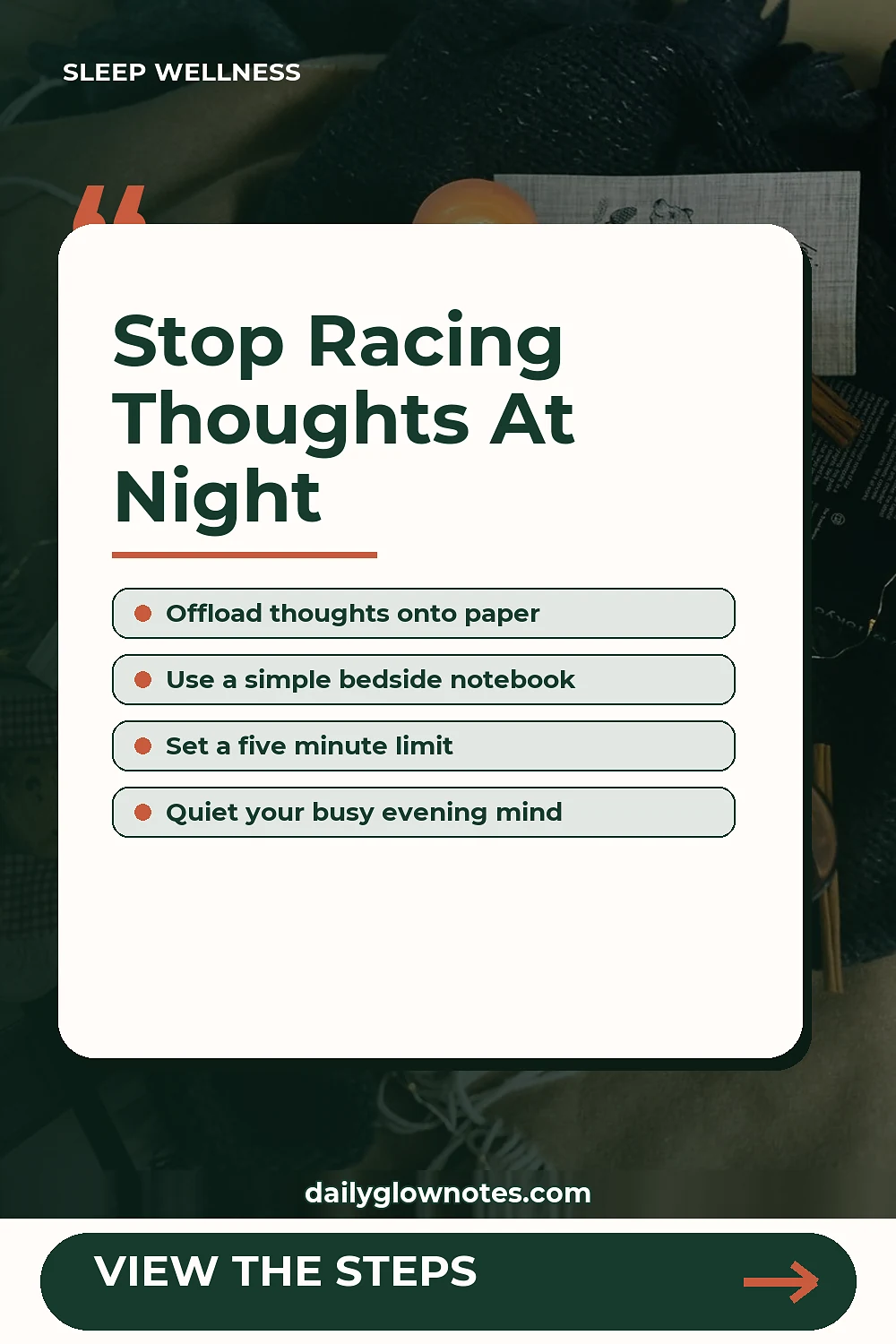
Creating a physical separation from your daily stressors is where a intentional bedside worry-parking routine comes in. By dedicating just five minutes before sleep to offload your cognitive load onto paper, you signal to your nervous system that your active duties are officially paused. This simple, low-stimulation habit reduces the sensory and mental clutter that often keeps adults tossing and turning, paving the way for a much smoother transition into deep, restorative rest.
Setting the Stage for Low-Stimulation Wind-Down
The environment in your bedroom plays a massive role in how easily your mind can let go of the day. Bright overhead lights, glowing screens, and chaotic clutter tell your brain that it is still daytime and high alertness is required. To prepare for a successful worry-parking session, start by dimming the lights at least thirty minutes before you plan to close your eyes. Swap out scrolling on your phone for softer, analog cues that signal safety and quiet.
This physical decluttering goes hand in hand with managing digital boundaries earlier in the evening. For instance, falling down a digital rabbit hole or addressing late-night notifications can instantly spike your adrenaline. If you find yourself constantly battling digital fatigue, you might benefit from learning strategies like those outlined in The Inbox Overload Habit That Can Make Stress Feel Louder to reduce unnecessary mental stimulation long before your head hits the pillow. Keeping your sleeping quarters free from work laptops and glowing devices creates an immediate sanctuary for your nervous system.
The Mechanics of the Bedside Notebook
The core tool of this routine is remarkably analog: a plain, unlined notebook and a simple pen kept right on your nightstand. There is no need for elaborate bullet journaling or beautifully penned gratitude lists. The goal here is raw, unfiltered brain-dumping. When a persistent thought or tomorrow's to-do item pops into your head, you simply write it down.
The act of writing physical words bridges the gap between abstract worry and tangible reality. When thoughts bounce around inside your head, they feel monumental and urgent because your brain is trying to hold onto them so you do not forget. Once those same thoughts are captured on paper, your brain subconsciously recognizes that the information is safe. It no longer has to expend energy rehearsing it on a loop. You are essentially delegating your memory storage to the notebook for the night, allowing your physical body to finally relax.