
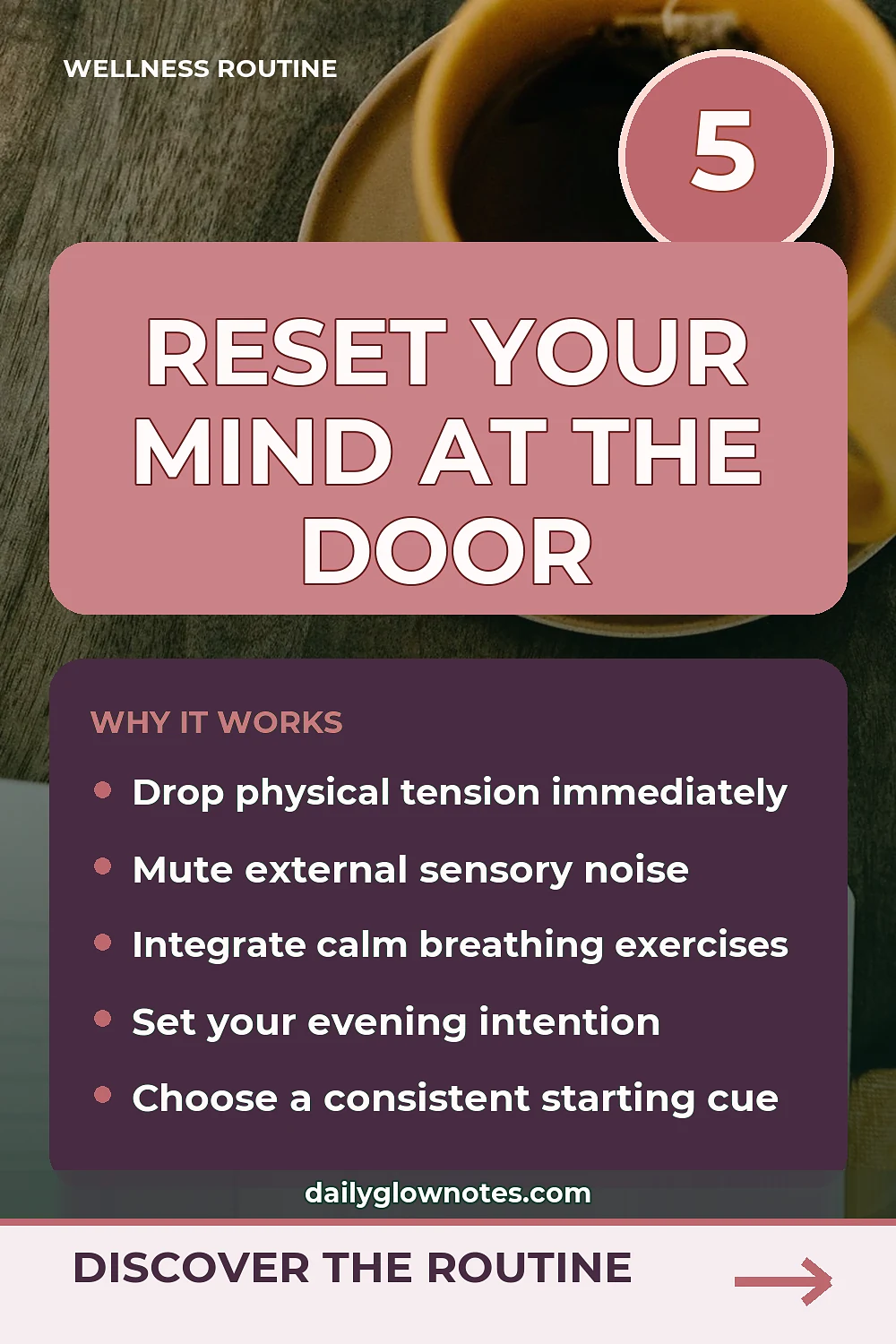
Stepping through your front door after a long, mentally taxing day often feels like carrying an invisible backpack full of bricks. The transition from the outside world into the sanctuary of your home is rarely smooth. Instead of an immediate sense of relief, many of us bring the weight of the office, overflowing inboxes, and endless decision-making straight into our living spaces. Establishing a reliable five minute entryway decompression routine can change how you experience the rest of your evening, creating an intentional boundary between the demands of the day and your personal downtime.
When your nervous system has been running on high alert for hours, sensory overload is almost guaranteed. Bright lights, constant notifications, traffic noise, and human interactions drain your cognitive reserves. By the time you arrive home, your brain is still firing at a rapid pace. Dropping your keys and collapsing onto the couch without pausing rarely works to clear your head; instead, you might find yourself scrolling endlessly on your phone while remaining mentally tethered to work. Conscious decompression right at the threshold helps signal to your mind that the shift has officially begun.
The Psychology of the Threshold
Physical spaces hold psychological cues. If your entryway is cluttered with mail, discarded shoes, and heavy bags, it acts as a visual extension of mental clutter. Stepping into chaos only reinforces feelings of overwhelm. Creating a calm transitional zone allows you to shed the day piece by piece. This micro-habit aligns closely with other small daily adjustments, much like tackling 3 Tiny Resets for Morning Inbox Overload Before It Takes Over, where tiny structural shifts prevent minor friction from snowballing into chronic exhaustion.
Addressing sensory clutter is just as vital as managing physical items. Before you interact with anyone else in the household or check your phone, your brain needs a brief pause to process the quiet. This is not about achieving instant perfection or meditating for an hour. It is about a realistic, low-effort pause that honours your need for transition.
Step One: The Physical Drop
As soon as you close the front door, resist the urge to rush further into the house. Stand for a moment and consciously release what you are holding. Set your tote bag down on your bench or designated hook. Place your shoes neatly rather than kicking them off haphazardly. This small act of mindful placement grounds you in the physical present. You are anchoring your awareness to the weight of your shoes hitting the floor and the tactile feel of the door handle.
Notice the physical tension in your shoulders, jaw, and neck. Without forcing relaxation, simply acknowledge where you are holding stress. Many adults find that pairing these physical cues with natural calming supplements like Restilen can be part of a supportive evening ritual, helping to smooth out the jagged edges of a demanding schedule. While physical routines provide the structural anchor, internal support can gently encourage a calmer baseline.