
You walk through the door, and the weight of the day follows you inside. Perhaps it was the relentless hum of fluorescent office lights, the unpredictable cadence of public transit, or simply the endless stream of notifications pinging in your pocket. When the world outside feels too loud, your home shouldn't just be a place to sleep; it needs to function as a sensory sanctuary. Creating a quiet evening sensory checklist isn't about rigid perfectionism or adding more chores to your plate. It is about intentionally stripping away the excess noise so your nervous system can finally exhale.
Curating Your Visual Horizon
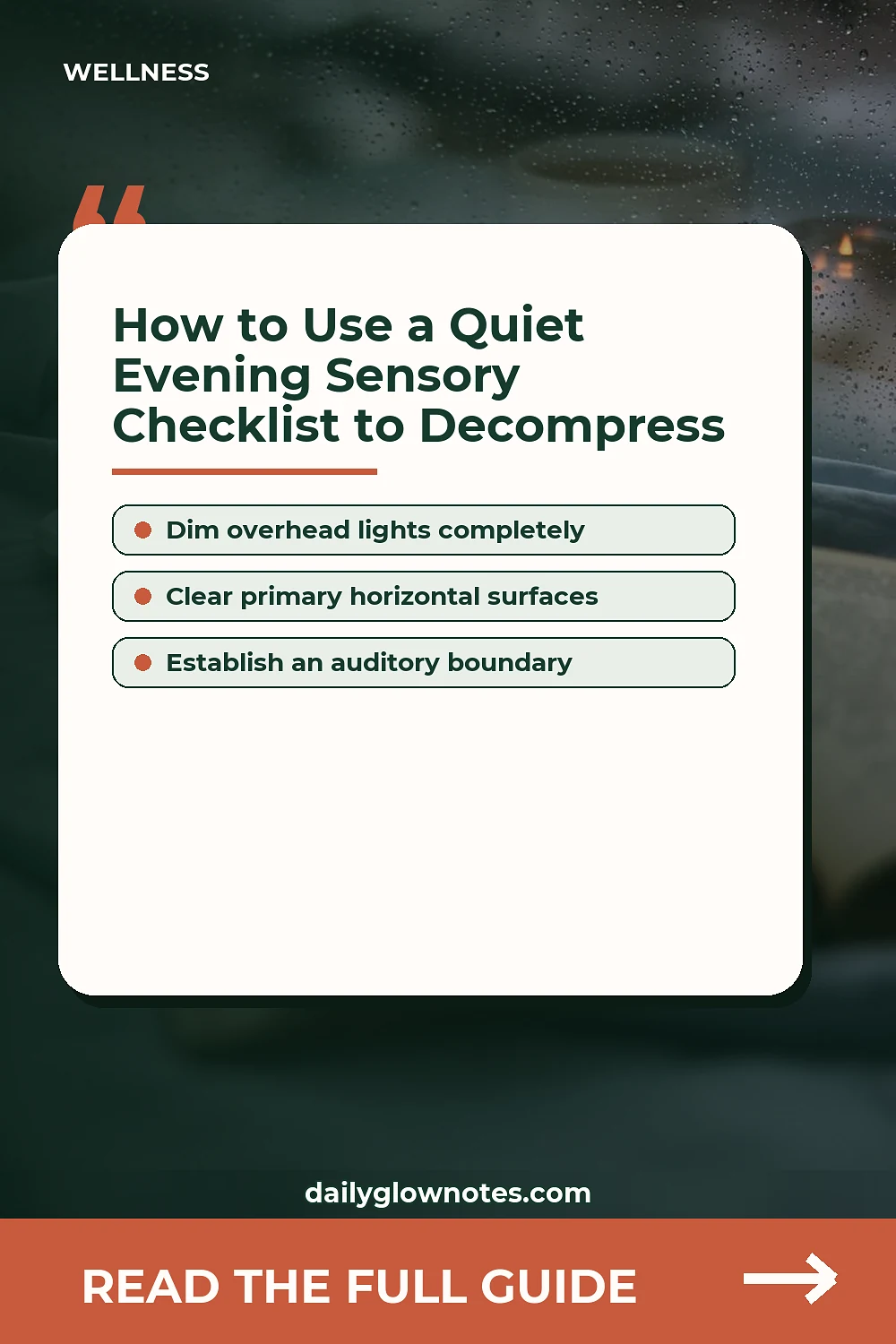
Our eyes are often the first point of sensory overload. We spend hours processing rapid-fire visual data—emails, traffic, screens, and crowded streets. By the time you reach your living room, your brain is still scanning for information. Start by dimming the overhead lights completely. Rely instead on warm, low-level lighting like a single floor lamp with a soft bulb or a few unscented candles. This shift in lighting tells your brain that the high-alert phase of the day has ended.
Next, look at your surfaces. A coffee table covered in mail, unopened packages, and stray devices keeps your mind in a state of 'to-do' mode. Spend three minutes clearing your primary horizontal surfaces. You don't need to deep clean the entire house; just clear the space where you intend to rest. When your eyes land on uncluttered wood or fabric rather than stacks of paper, your mind naturally softens. This visual silence is the foundation for everything else.
Establishing an Auditory Boundary
Noise pollution doesn't stop just because you are indoors. The hum of the refrigerator, the distant traffic, or even the persistent notification sounds from a phone left on the counter can keep you in a state of low-grade vigilance. To counteract this, create an auditory seal for your evening. Close your curtains or blinds early; they act as a physical barrier against the visual and sonic bleed of the outside world.
Consider layering your own soundscape, but keep it minimal. Avoid aggressive podcasts or high-tempo playlists that demand your active engagement. Instead, opt for ambient textures—think lo-fi beats, instrumental acoustic tracks, or even the simple sound of a kettle boiling. If your household is noisy, a small white noise machine or a fan can act as a buffer, smoothing out the jagged edges of household sounds. By controlling what enters your ears, you reclaim your focus.