
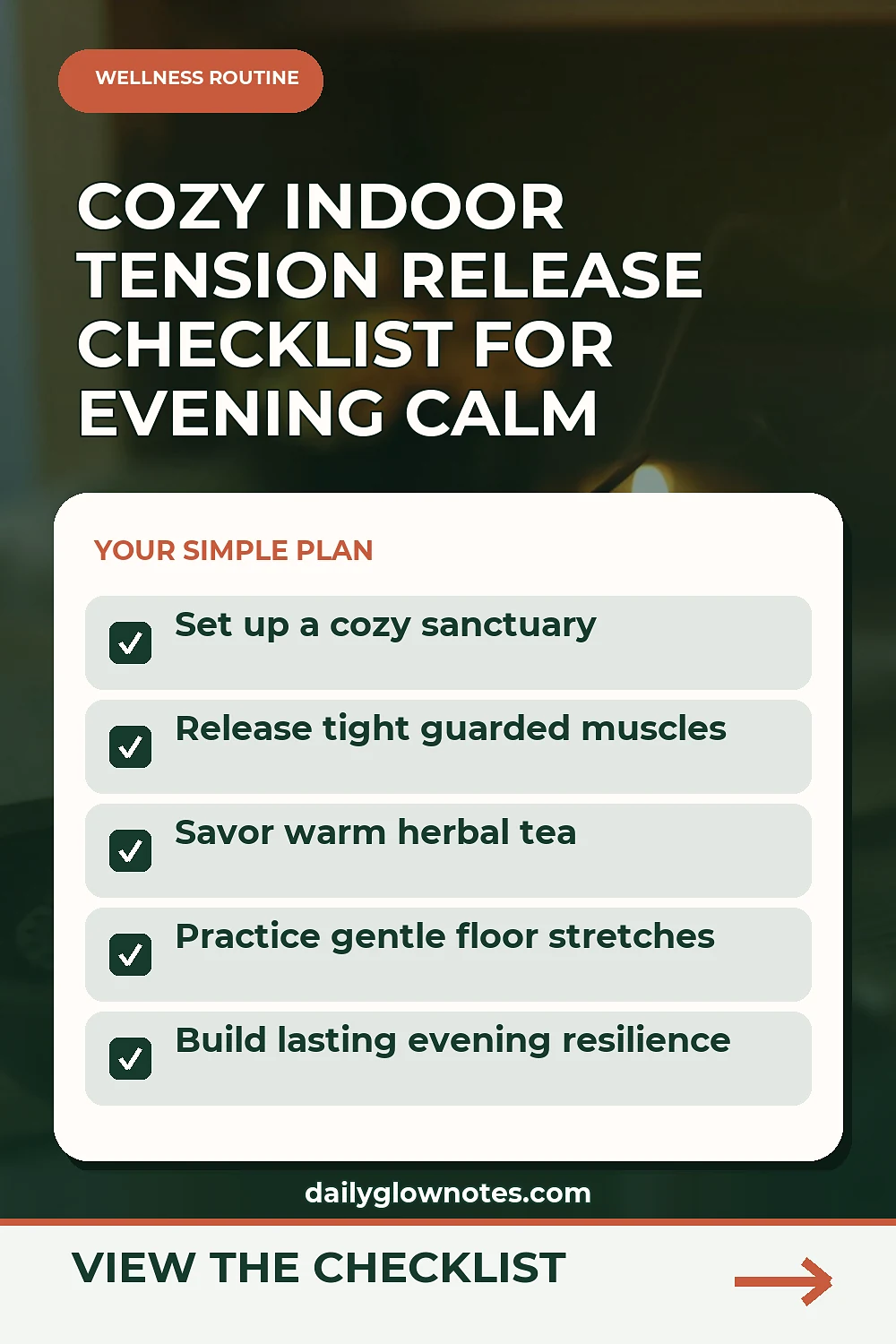
Long hours spent sitting at a desk, staring at screens, and managing endless digital demands leave physical traces that linger long after the workday ends. If you find yourself holding tension tightly in your shoulders, clenching your jaw, or feeling a persistent stiffness across your upper back by evening, you are experiencing the cumulative toll of modern routine. This cozy indoor tension release checklist for stay at home days offers a gentle, screen-free pathway to unwind comfortably, helping your physical self transition away from daytime demands and into a restful state.
Transitioning out of work mode requires more than simply closing your laptop lid. When stress accumulates quietly throughout the day, the nervous system stays locked in a low-grade state of readiness. Creating a deliberate sanctuary within your living space signals to your body that it is safe to let go. By blending sensory comforts like warm herbal tea, soft lighting, and gentle movement, you can actively guide your physical form back to ease. Establishing this intentional boundary between obligations and personal time prevents the residual friction of the day from spilling into your sleeping hours.
Preparing Your Physical Sanctuary for Evening Decompression
The transition from productivity to rest begins with the environment itself. Bright overhead lighting and chaotic surroundings can inadvertently keep the mind and body on high alert. Dimming the lights or relying on the warm, flickering glow of a candle helps cue your internal clock that the evening has arrived. Setting up a cozy corner with plush throw blankets and supportive cushions invites you to physically settle in rather than wandering through the house.
This environmental shift also ties closely into how we handle digital fatigue. When the evening feels heavy or cluttered, it often mirrors how we managed our attention earlier in the day. Similar to how The Inbox Overload Habit That Can Make Stress Feel Louder explores how unmanaged digital clutter amplifies daily strain, failing to clear our physical space can make bodily discomfort feel much more pronounced. By deliberately dimming the lights, silencing non-essential notifications, and setting up a quiet atmosphere, you build a protective buffer between the demands of the day and your evening recovery.
Gentle Floor Stretches to Melt Away Guarded Muscles
Once your space feels inviting, inviting your muscles to release their grip becomes the next natural step. Accumulated tension frequently settles into the hips, neck, and lower back. Instead of rigorous workouts, evening movement should focus entirely on slow, unforced stretches that encourage the nervous system to soften.
Spend a few minutes on a comfortable mat or rug moving through restorative floor shapes. Child's pose, gentle seated twists, and legs-up-the-wall pose require minimal effort while offering maximum relief for tight connective tissue. As you breathe deeply into each shape, focus on releasing the subtle gripping in your jaw and shoulders. This simple physical reset works wonders, functioning much like the quick recalibrations discussed in 3 Tiny Resets for Morning Inbox Overload Before It Takes Over, but tailored specifically to wind down the physical body at the end of the day.
Incorporating sustained holds during these stretches allows the fascia to gradually elongate without triggering a protective contraction reflex. When you move slowly and mindfully, you teach your nervous system that it no longer needs to guard against sudden impacts or ongoing stressors, paving the way for deeper relaxation.