
5-Step Evening Decompression Reset for High-Stress Remote Workdays becomes easier to understand when the main ideas are organized into practical, realistic steps. This guide explains the core considerations and shows how to apply them thoughtfully in everyday life.
Closing the laptop lid at the end of a demanding remote workday rarely feels like an instant transition into peace. For many corporate professionals working from home, the physical workspace is just steps away from the kitchen or the living room, blurring the lines between productivity and personal time. Without a clear boundary, lingering emails, unfinished task lists, and mental static can easily follow you into the evening. Developing an after work decompression routine for remote corporate workers is essential for releasing physical tension and signaling to your nervous system that the workday is officially over. By creating a deliberate post work nervous system reset, you can step out of high-alert mode and reclaim your personal evening.
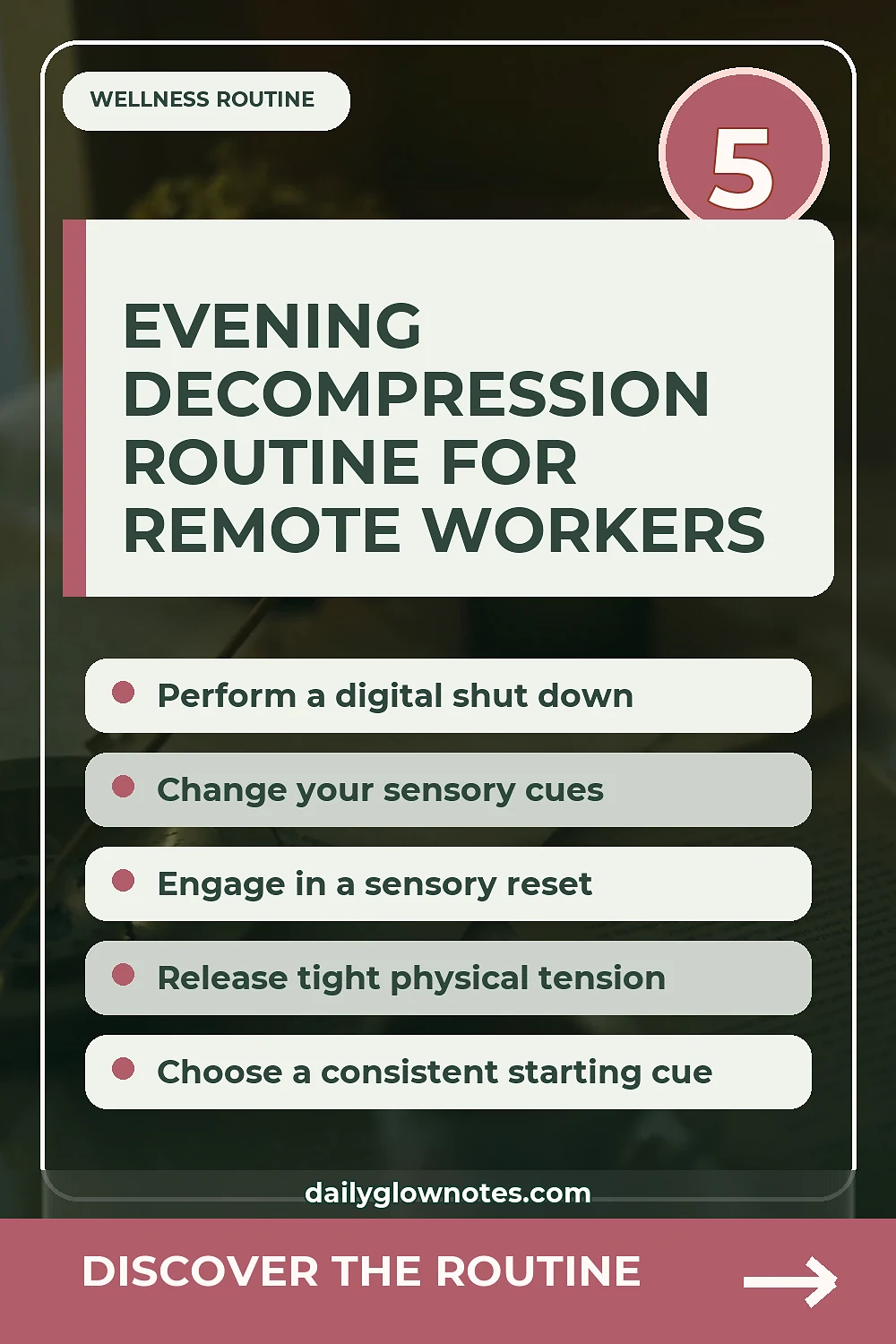
Transitioning away from modern digital demands requires more than simply walking into another room. When your day involves hours of staring at spreadsheets, messaging channels, and video calls, your brain stays wired for problem-solving. Diving straight into evening chores or scrolling social media often prolongs this stimulation. Instead, establishing a reliable sequence of small, comforting actions helps bridge the gap between professional output and restorative rest. Here is a practical five-step framework designed to help you decompress, unwind, and settle into a peaceful evening.
Step 1: Perform a Physical and Digital Shut Down Ritual
The first step toward a genuine evening reset is creating a hard stop. Many remote workers fall into the habit of glancing at notifications well into the evening, keeping cortisol levels elevated. Start your transition by closing all work applications, shutting down your computer, and physically removing your work materials from sight if your desk is in a shared living area. You might also find it helpful to review The Inbox Overload Habit That Can Make Stress Feel Louder to understand how subtle evening check-ins keep your mind tied to professional pressures. Once the tech is away, take sixty seconds to tidy your desk surface, creating an orderly environment you can return to fresh the next morning.
Step 2: Change Your Environment and Sensory Cues
Your physical surroundings play a powerful role in psychological safety and relaxation. Working in the same room where you attempt to relax can confuse your mind about which mode you are supposed to be in. To counteract this, introduce distinct sensory shifts as soon as your workday concludes. Change out of your daytime clothes into something soft and comfortable, dim the overhead lights, and turn on a small lamp or light a candle with a grounding scent like lavender or cedarwood. These subtle environmental cues tell your brain that the professional environment has closed for the day and a comforting evening space has begun.