
Closing the laptop at the end of a demanding workday rarely means your mind stops working. For many working women and working moms, the physical transition from office or desk to home is instantaneous, but the mental shift takes much longer. You walk through the front door carrying deadlines, unread emails, and lingering decisions, only to pivot directly into domestic responsibilities, cooking, and family care. Without a deliberate boundary, that unreleased workplace tension spills over into your evening, making it difficult to truly unwind, enjoy your personal time, or settle into a restorative sleep later on. Establishing a dependable after work decompression routine for working moms is not an indulgence; it is an essential boundary that protects your emotional well-being and nervous system.
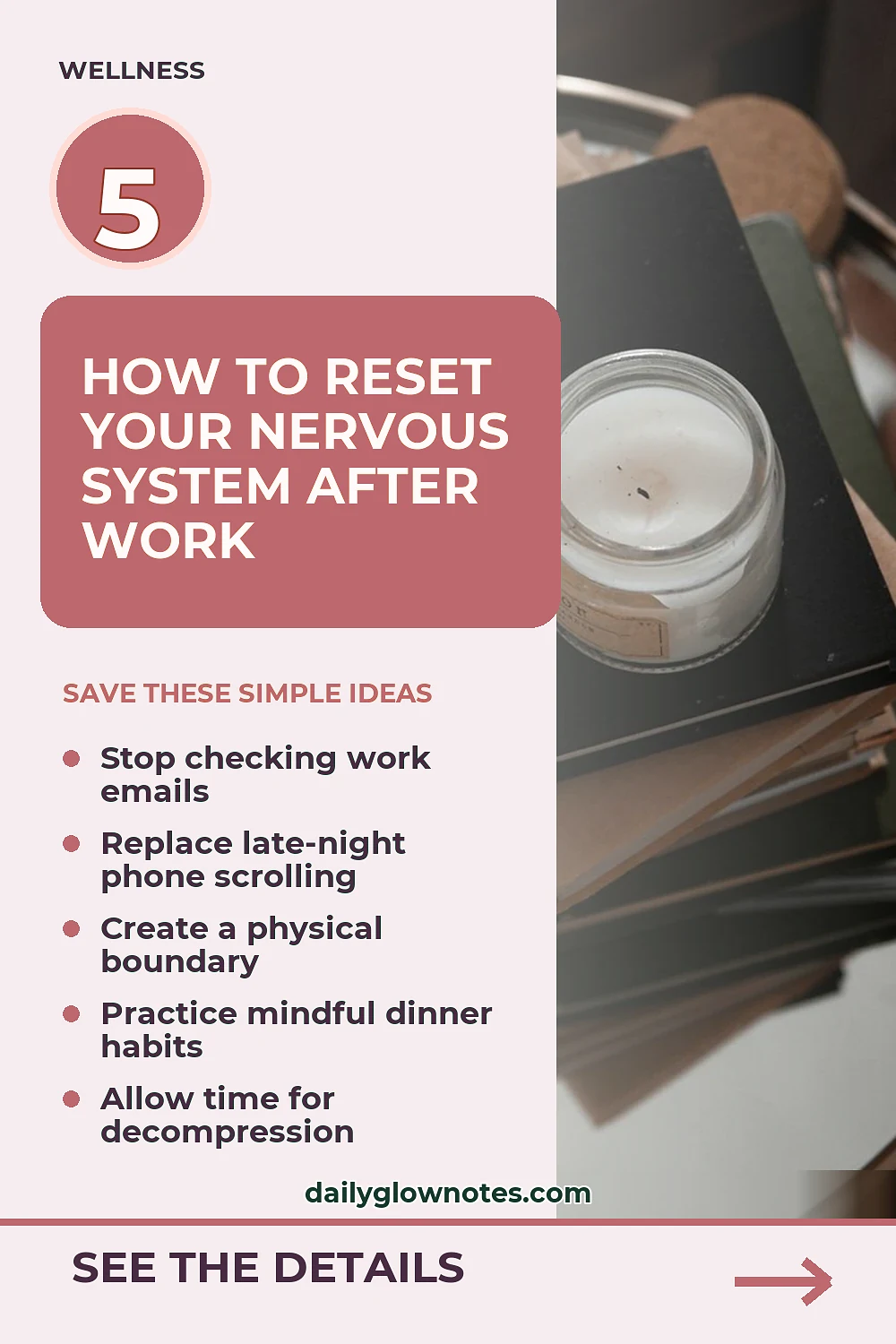
When cortisol levels remain elevated long after your shift ends, your body stays locked in a low-grade fight-or-flight response. You might find yourself snapping at small domestic irritations, feeling physically exhausted yet mentally wired, or staring at the ceiling when your head finally hits the pillow. Creating a reliable post work nervous system reset allows you to signal to your brain that the workday is officially over. By dedicating just fifteen minutes to a structured transition ritual, you can bridge the gap between high-responsibility career demands and peaceful home life without needing an elaborate spa trip or hours of free time.
The Five-Minute Sensory Boundary Shift
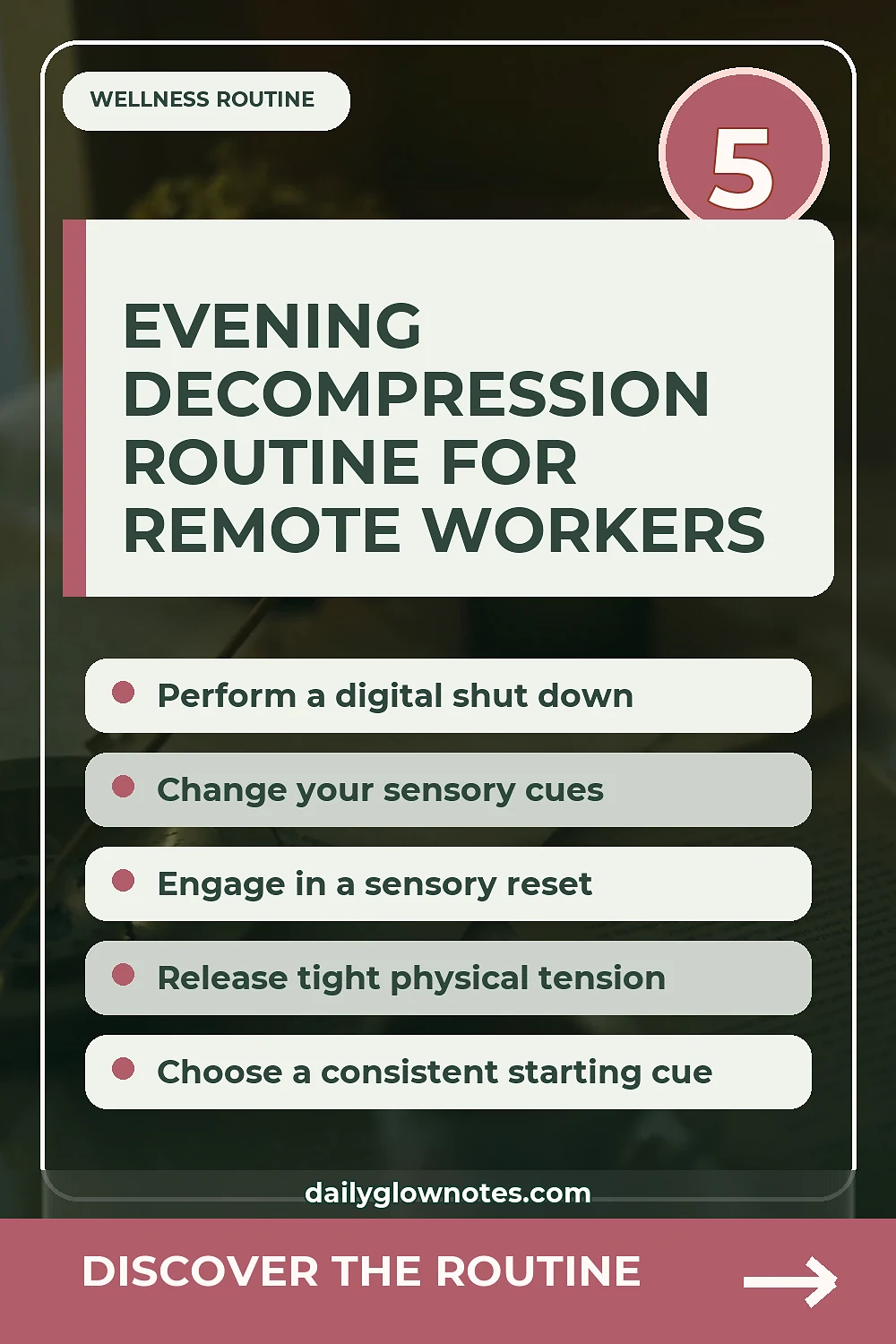
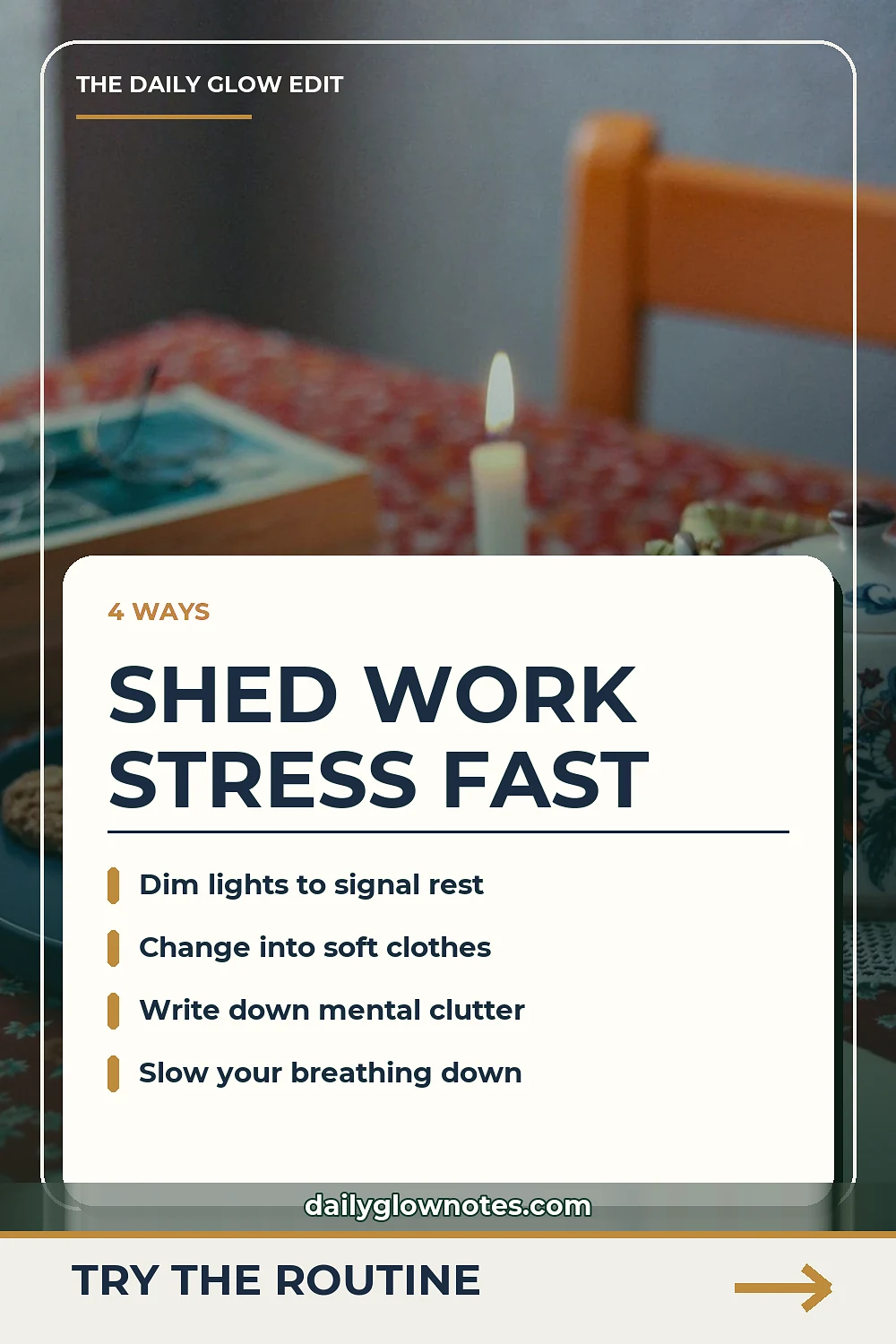
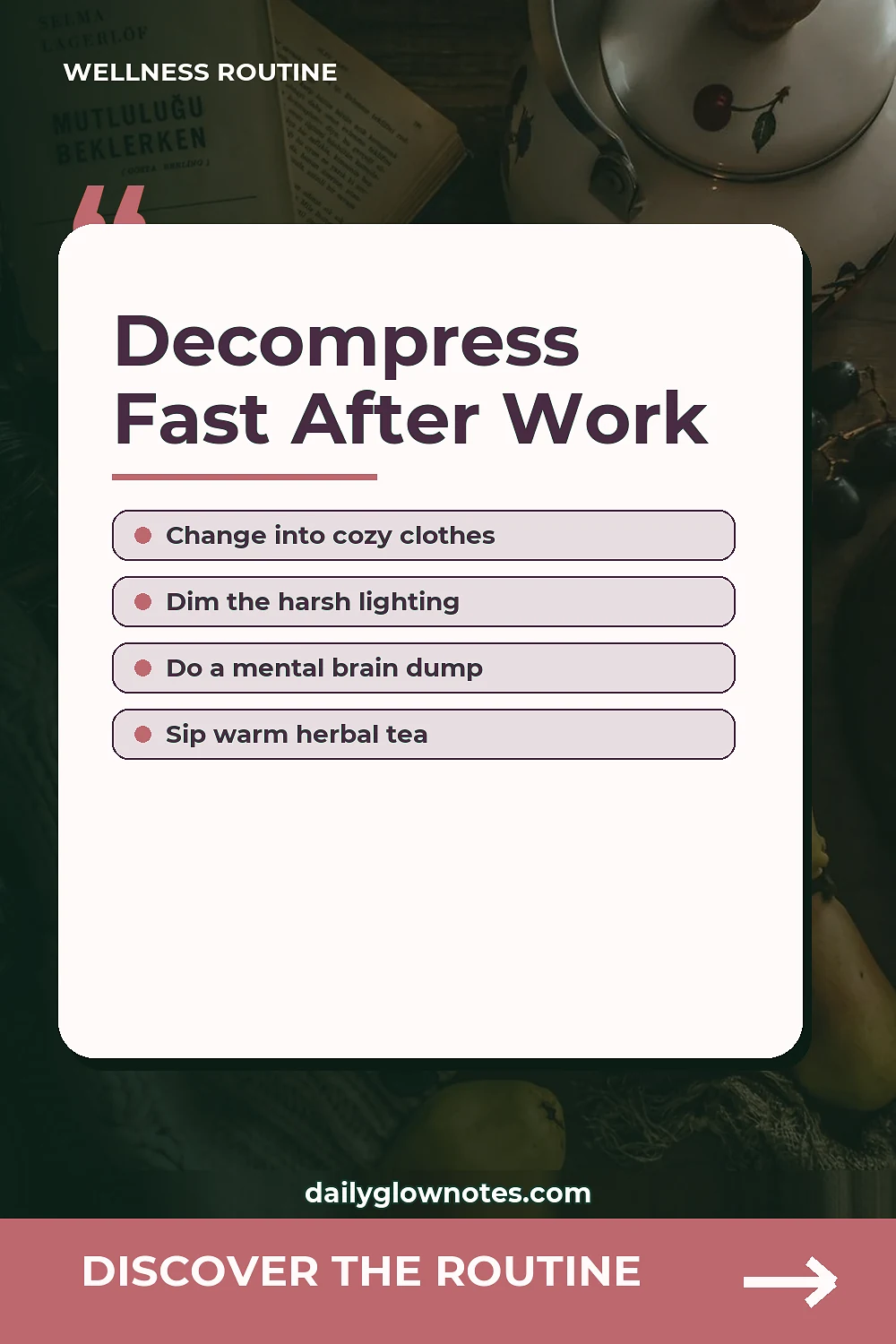
The first stage of an effective evening transition focuses entirely on disrupting sensory continuity. When your eyes, ears, and skin remain stimulated by the same environment and inputs as your workday, your brain struggles to recognize a change in context. Start by altering your immediate physical surroundings as soon as you step into your personal space. Change out of structured work clothing into something soft and comfortable. This physical shedding of work attire acts as a tactile cue for your nervous system. Next, dim the overhead lights and introduce a calming ambient element, such as a warm cup of herbal tea or a soft knit throw blanket draped over your favorite armchair. If you enjoy creating a comforting environment, you might also find inspiration in a shopping free relaxation toolkit using household items for busy evenings to set the mood without adding extra chores to your plate. By actively engaging your senses with comforting textures, low lighting, and warmth, you gently pull your awareness away from digital screens and back into the physical present moment.
The Ten-Minute Mental Dump and Mind Clutter Clearing
Once your physical environment feels grounded, the next challenge is clearing the mental backlog that accumulates over eight or nine hours of problem-solving. Your working memory is likely cluttered with unfinished tasks, lingering conversations, and tomorrow is to-do list. Trying to simply force yourself to stop thinking about work rarely works because the brain interprets those unaddressed thoughts as unresolved threats. Instead, use a brief writing exercise to get everything out of your head and onto paper. Sitting quietly with a notebook for a few minutes allows you to externalize your mental load. You can explore simple techniques like 10 quiet evening journal prompts to clear mental clutter before bed to help guide your thoughts away from professional anxieties and toward personal ease. Writing down what is left undone reassures your subconscious mind that nothing will be forgotten, making it much easier to let go of the day's pressures before you engage with your family or evening routines.