
Closing the laptop at the end of a long remote workday rarely means your nervous system gets the memo immediately. For many work-from-home women, the physical boundary between office and home blurs instantly, leaving behind a persistent undercurrent of tension. You might find yourself staring at dinner ingredients while mentally drafting tomorrow's emails, or feeling physically exhausted yet entirely unable to switch off. This phenomenon is often fueled by subtle everyday habits that accidentally prolong workday stress long after your working hours have officially ended. Understanding these patterns is the first step toward reclaiming your evenings and achieving a true post work nervous system reset. When you work from home, the lack of a traditional commute removes the natural physical and temporal buffer that historically allowed the brain to process the day's events. Without this transition, cortisol and adrenaline levels can remain elevated, keeping your body in a low-grade state of fight-or-flight long after you have logged off.
1. Checking Your Inbox One Last Time Before Dinner
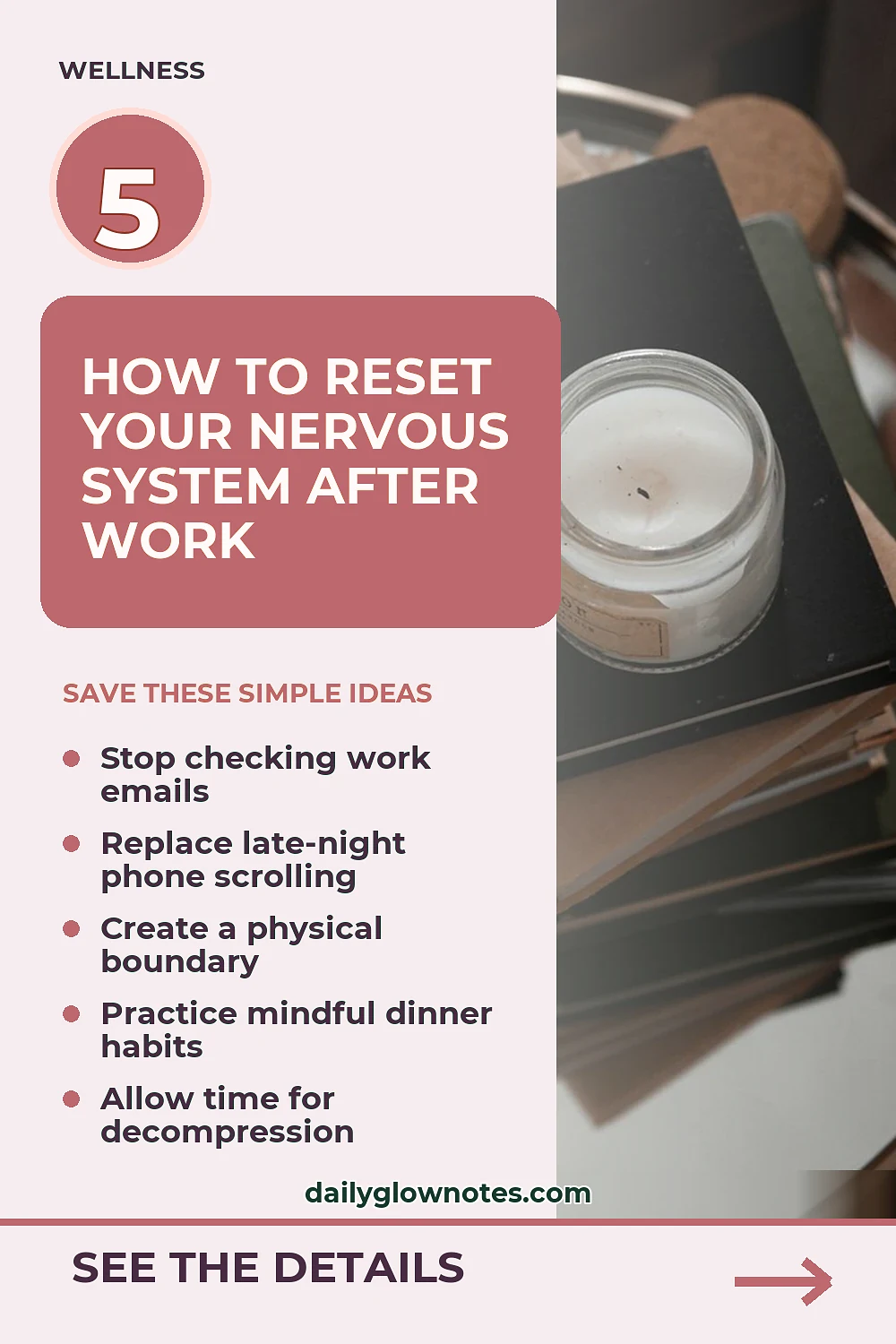
The temptation to peek at your smartphone just once more before cooking or relaxing feels harmless, but it triggers an immediate cognitive reload. When you read a work-related message, your brain instantly resumes problem-solving mode, flooding your system with alertness hormones. This specific habit is explored in depth in our guide on The Inbox Overload Habit That Can Make Stress Feel Louder, which highlights how micro-interruptions destroy your evening peace. Instead of closing loops, late check-ins open new mental tabs that remain active while you try to unwind. To combat this urge, try putting your phone in a designated drawer in another room at the end of your workday, treating digital sunset as a strict boundary for your peace of mind.
2. Using High-Stimulation Scrolling to Numb Out
Collapsing on the sofa with your phone to scroll through fast-paced feeds feels like a well-deserved break, but it often keeps your nervous system in a state of high alert. Rapidly consuming variable content overloads your visual and emotional processing centers, tricking your brain into staying vigilant. Breaking this pattern requires intentional replacement habits. You can discover actionable ways to protect your attention in our article on How to Break the Late-Night Scrolling Habit and Finally Quiet Your Mind, which offers realistic strategies for evening digital boundaries. Substituting your phone with a physical book, a gentle stretching routine, or listening to ambient music can dramatically alter your evening recovery trajectory.