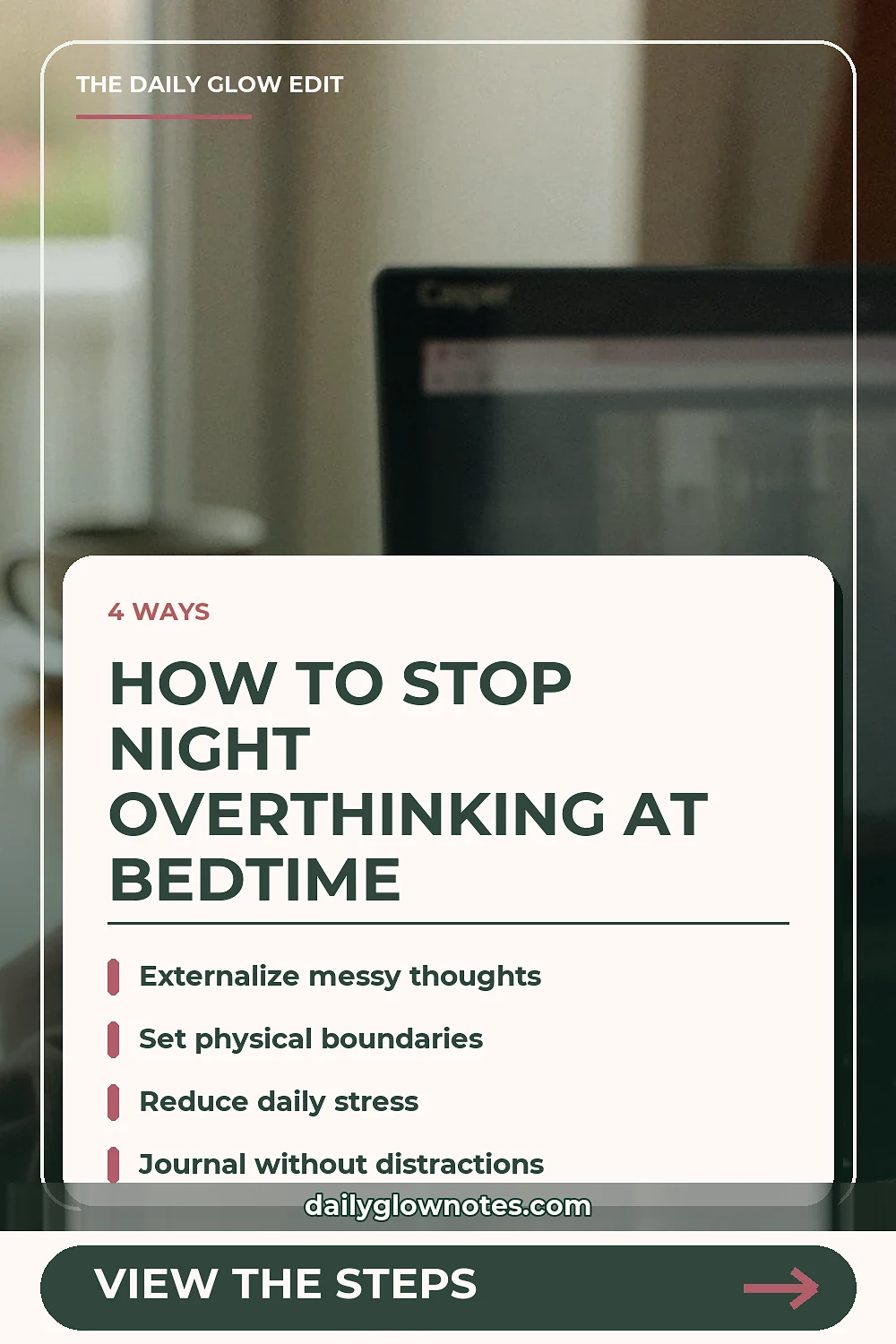

You finally close your laptop, turn off the overhead lights, and slide under the covers, expecting instant relief. Instead, your mind treats the silence as an invitation to replay every awkward conversation from three years ago, draft tomorrow's to-do list, and worry about things entirely outside your control. If you have ever found yourself locked in a late-night scrolling loop just to quiet the mental chatter, you are far from alone. This exact habit of reaching for a glowing screen is often tied to the inbox overload habit that can make stress feel louder than it actually is, keeping your nervous system in a state of high alert. When modern life demands constant connectivity, the boundary between working hours and resting hours often blurs completely, leaving our brains exhausted yet wired.
Why Your Brain Keeps Spinning Long After Dark
When evening arrives, our brains crave a distinct boundary between the demands of the day and the restorative peace of sleep. Without a deliberate pre bed screen transition routine, our cognitive gears keep spinning at daytime speed. The goal is not to enforce an impossible, rigid set of rules that leaves you feeling restricted. Rather, the secret lies in building a gentle, sensory-rich bridge that signals to your mind that it is finally safe to power down. Understanding the psychological roots of evening restlessness can help you approach your bedtime routine with curiosity rather than frustration. When we spend our entire days consuming rapid-fire information, our nervous systems become accustomed to constant stimulation. Silence and darkness can feel uncomfortable at first because our minds are suddenly forced to process the backlog of thoughts we successfully avoided while busy during daylight hours.
Step 1: Create a Physical Lighting and Temperature Shift
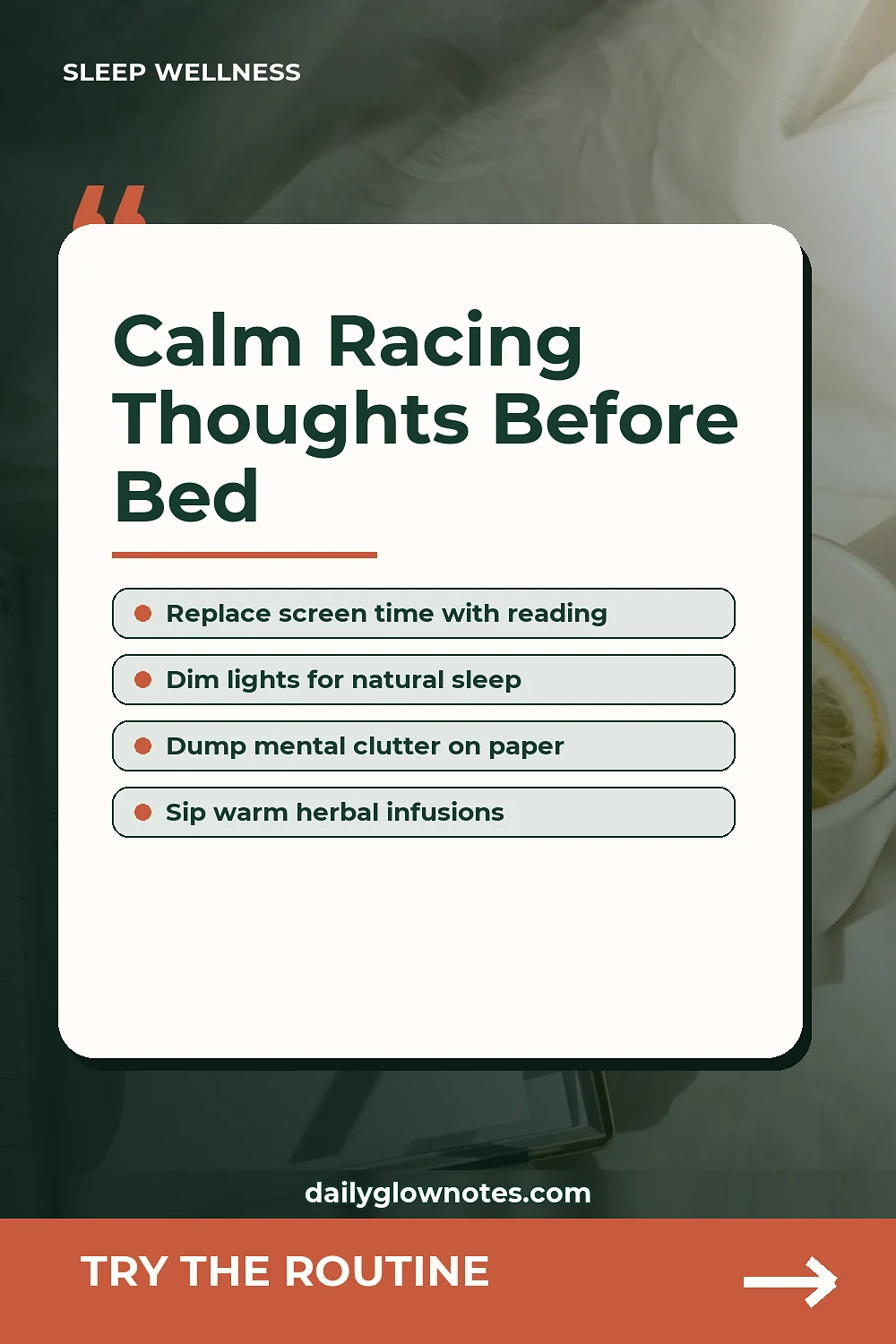
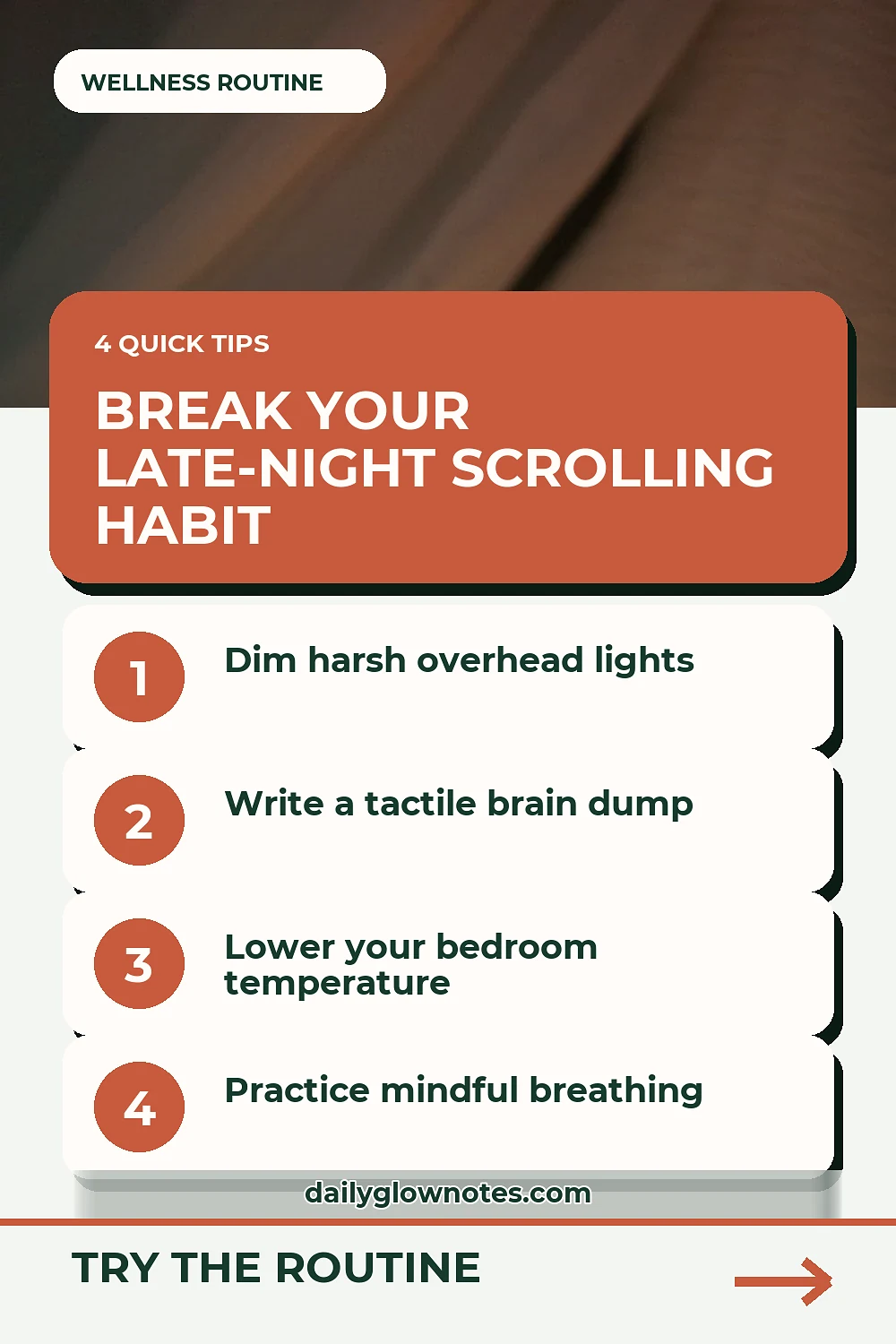
The first step in any effective wind-down sequence is changing your sensory environment. Overhead lighting tells your internal clock that the sun is still high, tricking your brain into staying alert. As you begin your evening transition, switch off harsh lamps and rely solely on dim, warm ambient lighting—like a bedside lamp with a low-wattage bulb. You can also experiment with amber-toned bulbs or smart lighting that automatically dims as the evening progresses, mimicking the natural descent of the sun.
Alongside lighting, pay attention to physical temperature. Lowering the ambient room temperature slightly or sipping a warm cup of herbal tea creates a pleasant tactile contrast that anchors you in the present moment. This simple shift directs your awareness away from racing thoughts and grounds you in your physical senses, making it much easier to let go of the mental clutter accumulated throughout the day. By consciously tending to your physical comfort, you give your body the primary signals it needs to begin producing melatonin naturally.