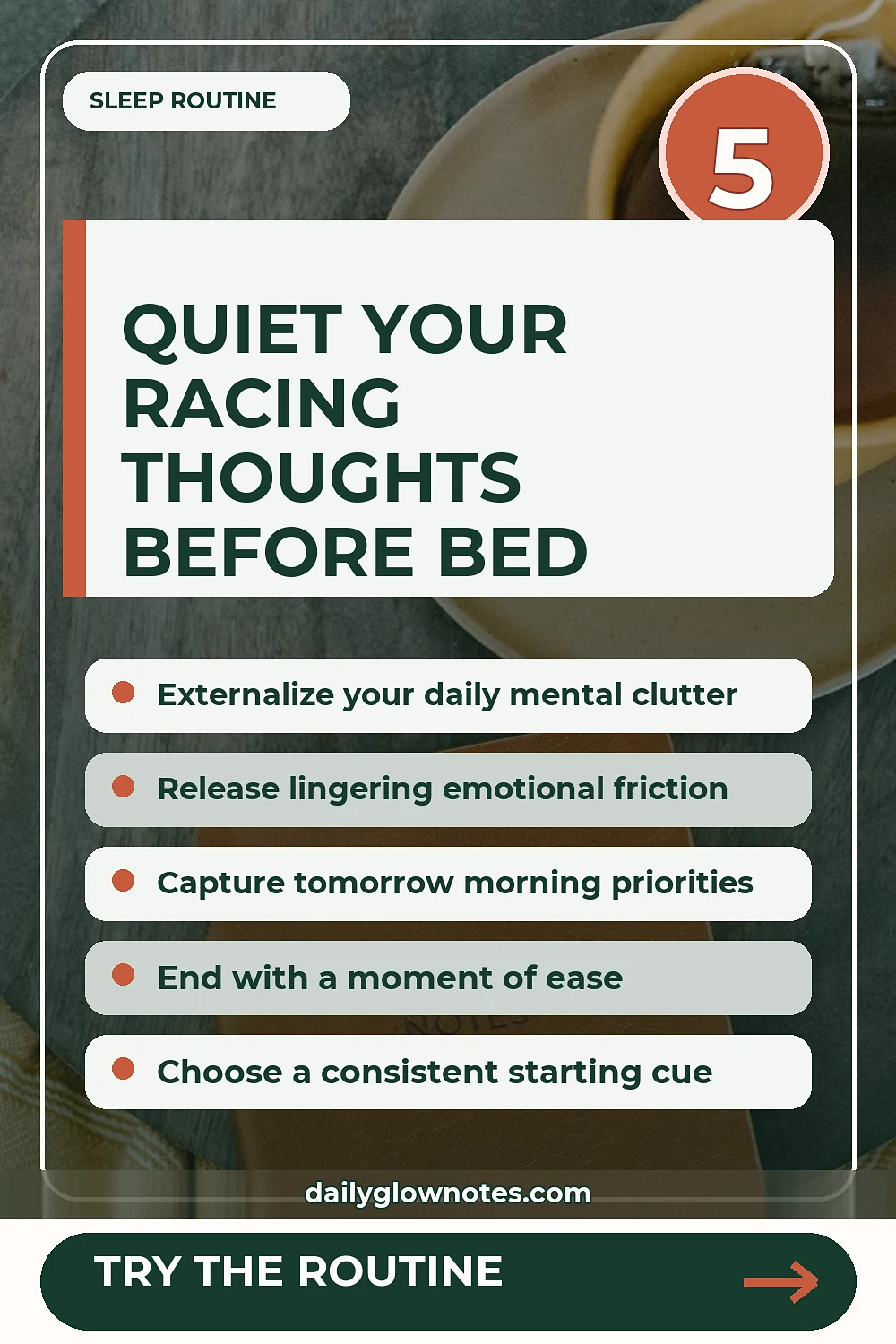


Staring at the ceiling while your mind replays every conversation, unresolved task, and minor detail from the day is an exhausting experience. If you find yourself trapped in a loop of mental chatter the moment the lights go out, you are certainly not alone. Many adult women trade relaxing evening hours for phone scrolling, only to discover that digital distraction actually fuels restlessness rather than curing it. Developing a reliable pre bed wind down routine for racing thoughts is essential for signaling to your nervous system that the workday is truly over and restorative rest can finally begin.
Creating a predictable, low-tech sequence allows your brain to transition away from high-alert problem-solving mode. By replacing mindless scrolling with intentional grounding activities, you gently guide your focus away from tomorrow's to-do list and back into the physical present moment. Let us explore practical ways to quiet mental chatter, set up a cozy physical environment, and reclaim your evenings for deep relaxation through consistent, compassionate daily habits that honor your need for peace.
The Hidden Cost of Evening Screen Time on Mental Chatter
Reaching for your smartphone to unwind feels comforting after a long day, but glowing screens often keep the brain engaged in active processing. Notifications, news updates, and endless social media feeds stimulate cognitive alertness just when you need it to fade. Furthermore, trying to force your eyes closed immediately after putting down a device leaves your mind buzzing with unstructured data. Breaking this habit loop requires substituting digital stimuli with tactile, analog tasks that require minimal mental effort. As you reduce blue light exposure, your body naturally begins to produce adequate melatonin, supporting a smoother transition into deep, uninterrupted sleep cycles.
Setting the Stage with a Warm, Low-Light Environment
Your physical surroundings play a powerful role in regulating your internal state. Transitioning from bright overhead lighting to soft, warm lamp illumination tells your biological rhythms that evening has arrived. Dimming your environment reduces visual stimulation and encourages your shoulders to drop away from your ears. Keeping your bedside table clear of clutter and setting out simple comforts, such as a soft linen journal and a reliable pen, makes your wind-down space inviting and friction-free. Incorporating blackout curtains and maintaining a cool room temperature further enhances this sanctuary, preparing your body for optimal physiological rest.
Clearing Mental Clutter Through Intentional Brain Dumping
When thoughts spin in circles, writing them down is often the fastest way to stop the loop. Getting unfinished tasks and sudden worries out of your head and onto paper acts as an external hard drive for your brain, letting go of the fear that you might forget something important. If you enjoy structured reflection, you might find it helpful to explore evening journal prompts designed to gently release lingering tensions before sleep. The physical act of closing the journal serves as a symbolic boundary between the demands of the day and the quiet of the night, offering profound psychological closure.