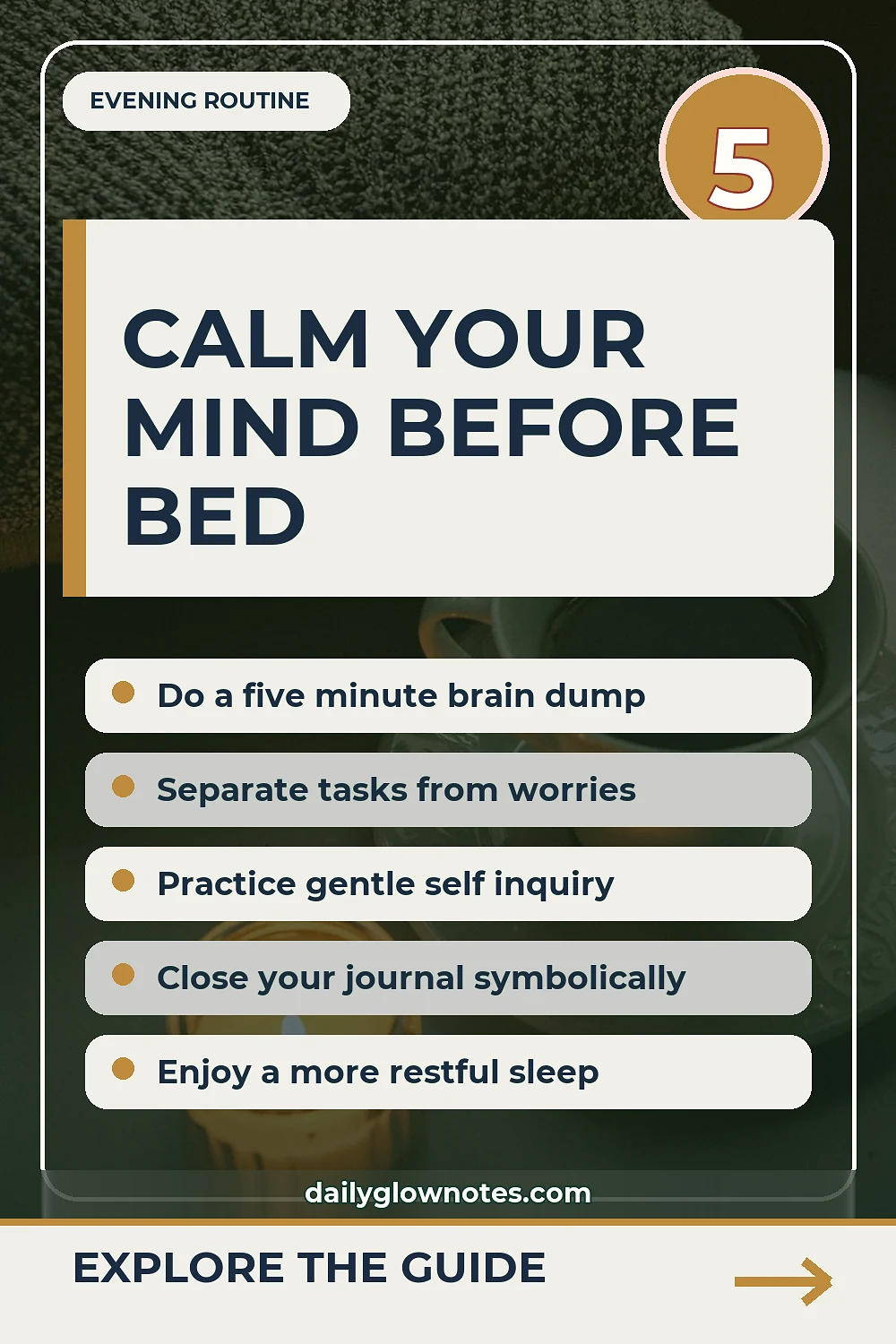

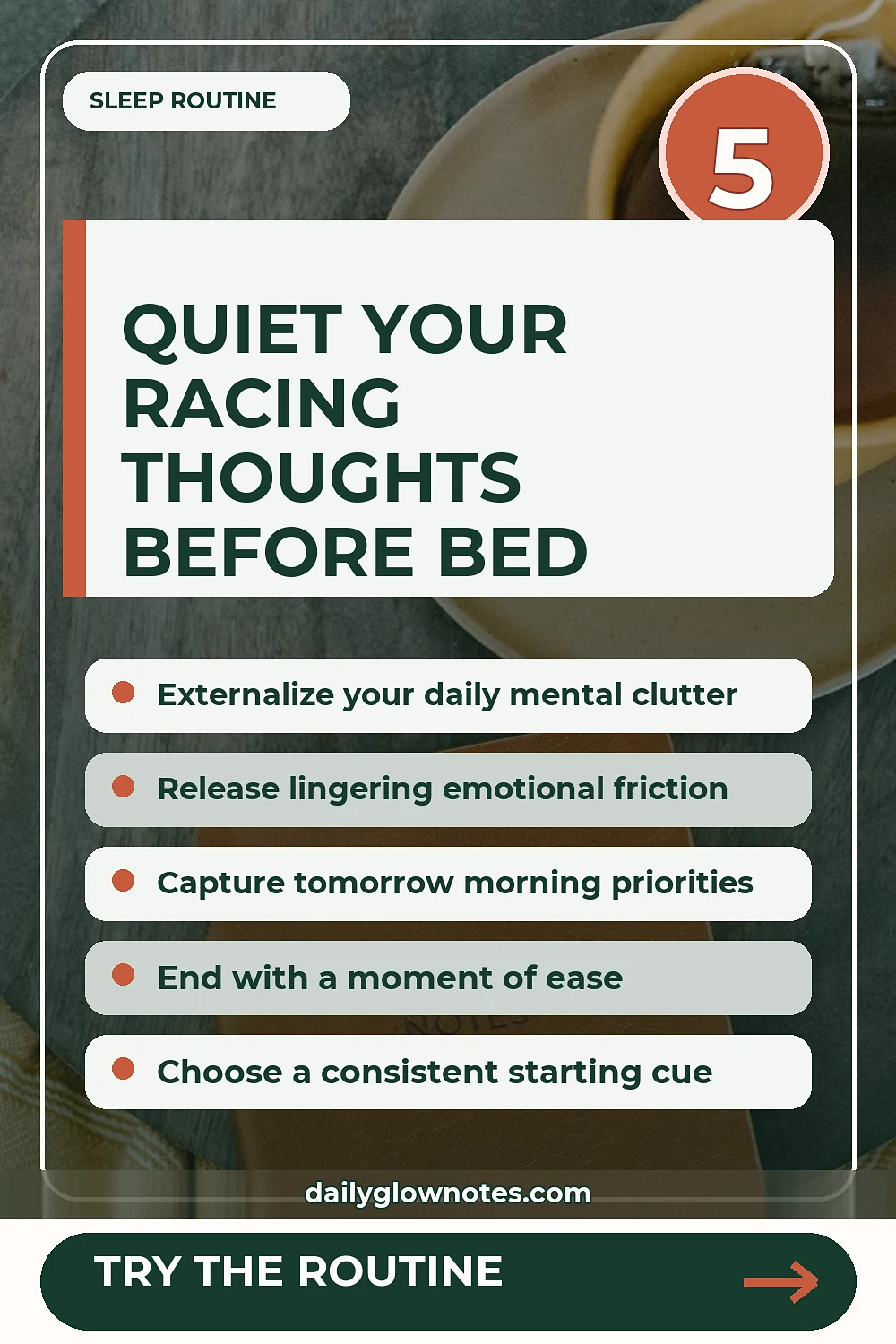
You turn off the bedside lamp, pull the blankets up to your chin, and wait for sleep to arrive. Instead, your brain decides this exact quiet moment is the ideal time to replay an awkward conversation from Tuesday, organize tomorrow morning's grocery list, and worry about an upcoming deadline. If you regularly rely on wind down habits for racing thoughts at night, you already know how exhausting it is when your body is completely exhausted while your mind remains wide awake. The transition from a high-productivity day to a restorative night requires more than just closing your eyes; it requires an intentional boundary between the day you just lived and the rest you desperately need.
When cognitive loops keep looping, simply telling yourself to relax rarely works. The brain keeps working because it fears forgetting important tasks or unresolved emotional friction. By bringing an analog notebook and a pen to your nightstand, you create a tangible container for mental clutter. This physical act of externalization tells your nervous system that your thoughts are safely captured and no longer need to be actively managed in the dark.
The Psychology of Externalizing Evening Mental Clutter
Our brains process daily stress through continuous working memory cycles. When evening arrives, these cycles often refuse to power down. Writing things down on paper acts as an external hard drive for your thoughts. Research and everyday experience both show that transferring swirling ideas from your head to a physical page reduces cognitive load immediately. You stop holding information out of fear of forgetting, which naturally lowers tension.
This is where incorporating simple mindfulness activities can anchor your evening. Rather than forcing your mind into complete silence—which usually backfires and causes more frustration—you allow thoughts to flow freely onto the paper without judgment. You are not writing a polished journal entry or creating a masterpiece; you are simply emptying your pockets of mental debris before stepping into sleep.
Setting Up Your Simple Bedside Journaling Space
Your physical environment plays a massive role in signaling safety and rest to your brain. Piling high-stress work papers or digital devices next to your bed will only trigger alertness. Instead, create a dedicated, inviting corner on your nightstand.
Place an open notebook and a comfortable pen alongside a small ceramic dish or a softly flickering candle, drawing inspiration from cozy ambient lighting that softens the harshness of the evening. Keeping your setup minimal and welcoming makes the act of journaling feel like a comforting ritual rather than an administrative chore. When your surroundings feel calm, your internal state slowly follows suit.