
Your head hits the pillow after a long day, and suddenly your brain decides it is the perfect time to replay an awkward conversation from three years ago, draft tomorrow morning's presentation, and wonder if you left the flat iron on. Transitioning from high-productivity mode into a state of genuine rest can feel nearly impossible when your mind refuses to switch off. If you find yourself staring at the ceiling while mental loops keep you wide awake, you are not alone. Busy schedules and constant digital connectivity train our brains to stay switched on, making nighttime relaxation a deliberate practice rather than an automatic state.
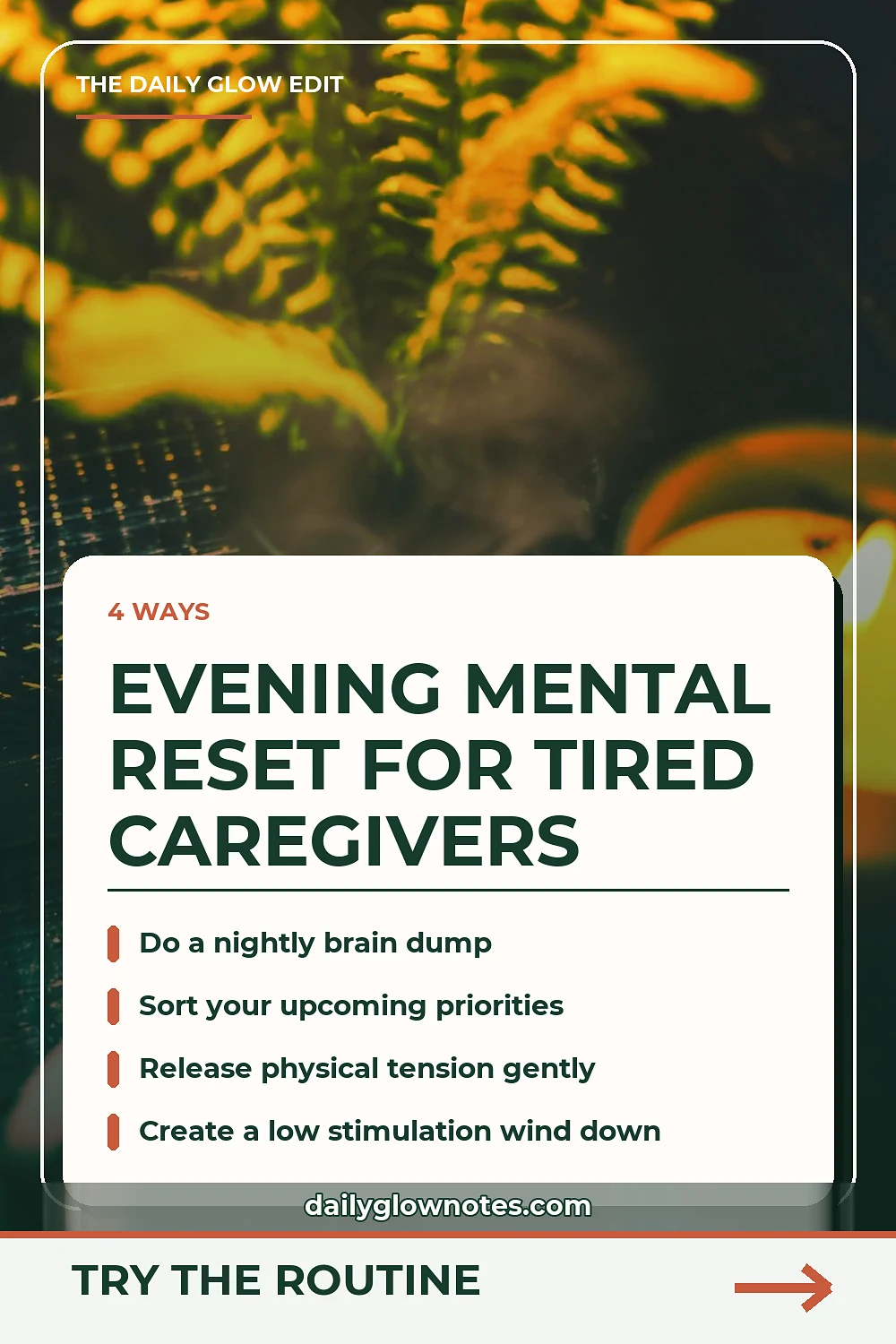
Externalizing your mental clutter through writing is one of the most effective ways to signal to your nervous system that the workday is officially over. Unlike generic gratitude lists that sometimes feel forced when you are already overwhelmed, a structured brain-dump approach separates actionable tasks from recurring worries. Here is how you can use evening mindfulness journal prompts for racing thoughts to clear your head, quiet your nervous system, and reclaim your sleep.
The Five-Minute Brain Dump to Clear Mental Clutter
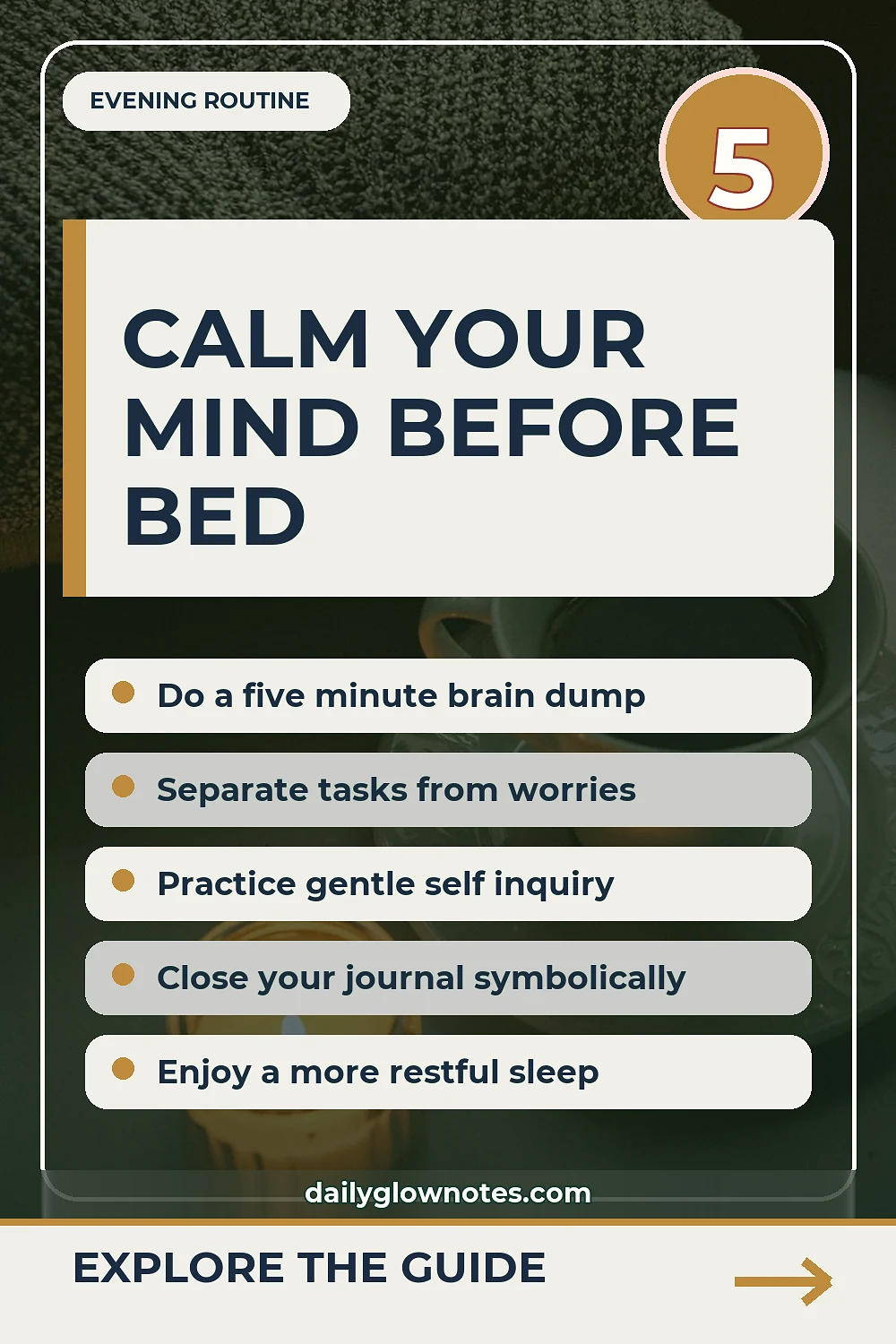
Before you can relax, you need to empty the working memory holding onto your lingering thoughts. Grab a minimalist notebook and a pen, keeping your bedside reading light soft and warm to avoid bright blue-light exposure from screens. Set a timer for five minutes and write without editing, filtering, or worrying about handwriting quality. Let everything spill out onto the paper.
This initial release is not about neatness or profound self-discovery; it is about transferring the weight of your thoughts from your head onto the page. When your brain realizes that the todos, ideas, and anxieties are safely captured outside of your skull, it finally feels safe enough to let go. If you are looking for other ways to unwind without spending money, you might enjoy exploring a shopping free relaxation toolkit using household items for busy evenings to expand your calm-down routine beyond the page.
Engaging in this tactile act of writing stimulates different neural pathways than typing on a digital device. The friction of the pen against the paper grounds your sensory awareness in the present moment. As you watch the ink form words, you actively participate in distancing yourself from the emotional charge of the thoughts. This physical ritual acts as a bridge between the chaos of the day and the stillness of the night, anchoring your awareness away from future projections.
Categorizing Tasks Versus Uncontrollable Worries
Once your timer goes off and your raw thoughts are on paper, take a slow, deep breath and review what you wrote. The next step is sorting your mental noise into two distinct categories: actionable tasks for tomorrow and uncontrollable worries that belong to yesterday or next week.
For the actionable items, write them down on a separate sticky note or tomorrow's planner so your brain stops panicking about forgetting them. For the vague worries or things outside of your immediate control, practice acknowledging them without trying to solve them at midnight. Telling yourself, 'This is a problem for tomorrow during daylight hours,' helps create a psychological boundary between your daytime responsibilities and your nighttime sanctuary.
Sorting your thoughts helps reduce the cognitive load that keeps your nervous system in a state of hyper-arousal. When everything feels equally urgent, your body responds by releasing stress hormones that block sleep initiation. By organizing these items into structured categories, you visually prove to your mind that you have a handle on your responsibilities, which deactivates the emergency response centers in your brain.